THE LETTERS KEEL KEPT
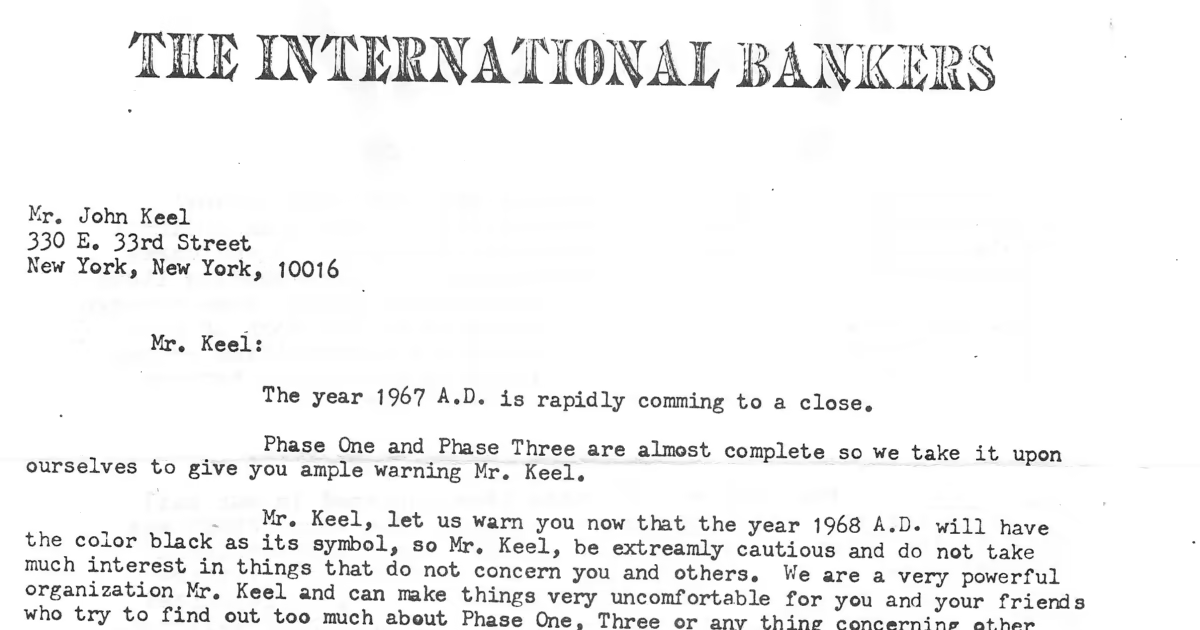
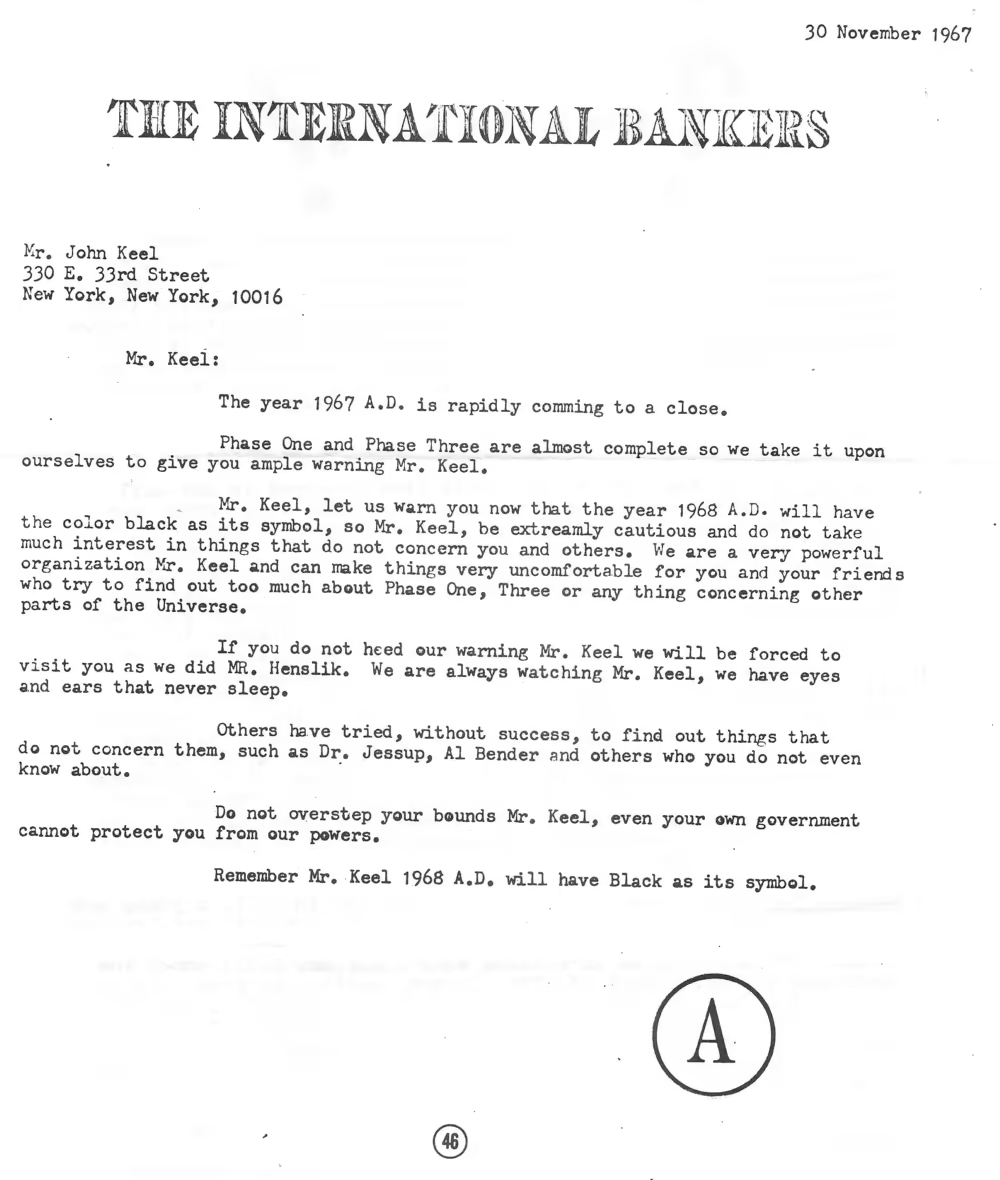
Exhibit A: the International Bankers letter, 30 November 1967.
Scan from John Keel's ANOMALY no. 3, December 1969.
Opening
In December 1969 the journalist John A. Keel printed a page of his mail. Keel, who had spent 1966 and 1967 chasing UFO reports, Men in Black stories and the winged thing West Virginians called Mothman, ran a small newsletter called ANOMALY out of a post office box in Manhattan. In its third issue, under the heading "Anomalies", he reproduced three letters from what he called his collection of "crank" letters and "anomalous mail": a typed warning on the letterhead of "The International Bankers", a ransom-note paste-up sent to a young Long Island investigator, and a two-page message to the editors of Saga magazine from someone calling himself VOK. Keel said some of the letters he received made direct threats, that he had passed a few to the FBI and others to Postal Inspectors, and that four had turned out to be the work of mischievous "UFO buffs". The rest, he wrote, were still unidentified.
Timeline
1953. Albert K. Bender of Bridgeport, Connecticut, shuts down his International Flying Saucer Bureau and says three men in black suits warned him off the subject. Gray Barker's 1956 book about him, They Knew Too Much About Flying Saucers, makes the Men in Black part of UFO lore.
1957. Barker and his friend James Moseley send the contactee George Adamski a letter on genuine State Department stationery, signed "R. E. Straith", appearing to back his claims. Moseley admits the prank in 1985, after Barker's death.
April 1959. Morris K. Jessup, an astronomer and UFO author who had received the strange "Carlos Allende" letters, is found dead in his car in Florida. His death is ruled a suicide.
1967. Joseph Henslik of Greenlawn, Long Island, says he photographed a UFO and was then visited by two men in black who demanded the pictures. Keel later said he had a tape of Henslik admitting the story was a hoax that Barker and Moseley had coached him through.
Fall 1967. An Air Mail envelope with no stamp and no postmark turns up in Keel's mailbox at 330 East 33rd Street. "FREE" is typed in the corner, the way soldiers in Vietnam could send mail without postage. Inside is the International Bankers letter, dated 30 November 1967.
11 December 1967. Keel writes to Lynn Catoe, the Library of Congress researcher compiling a UFO bibliography for the Air Force, and mentions hoax letters from "The International Bankers".
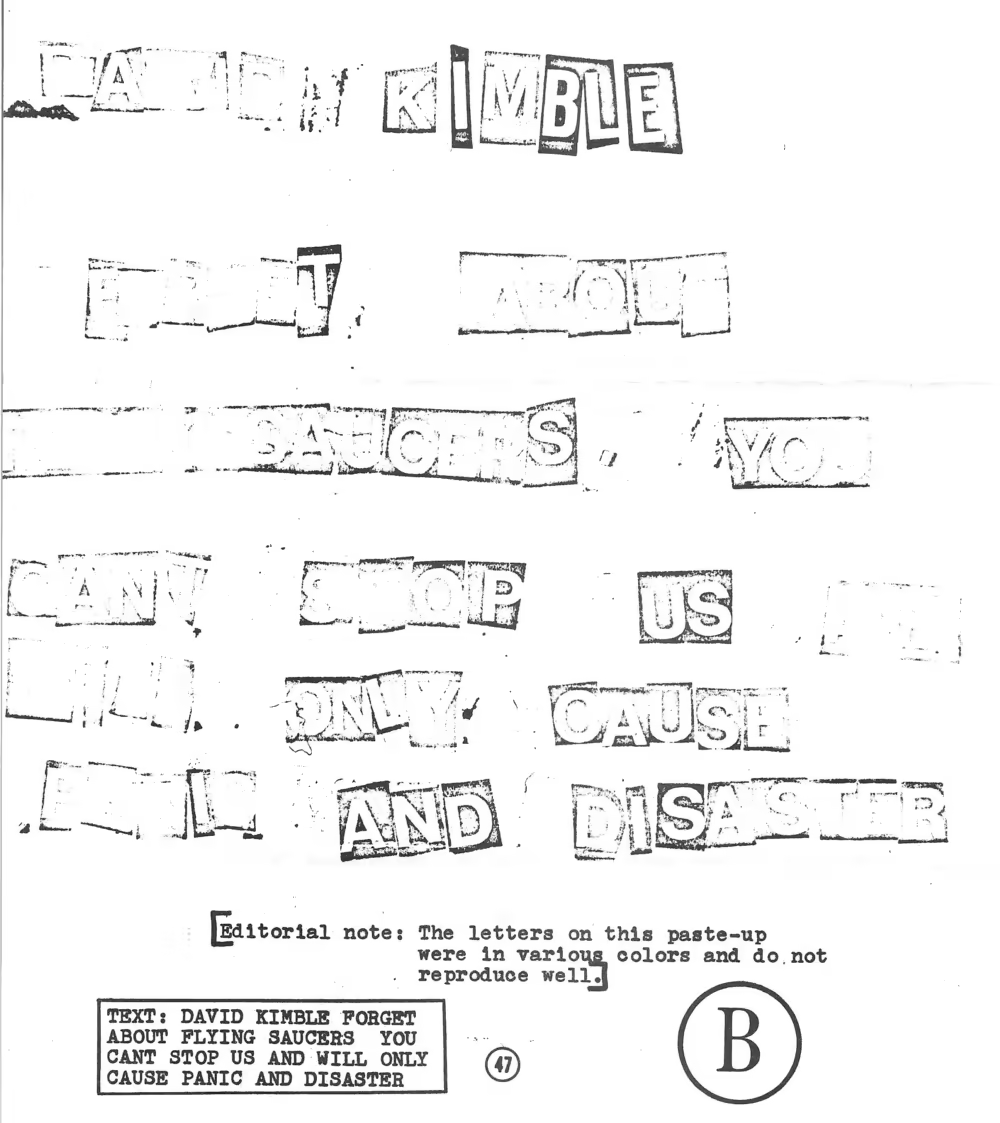
14 January 1968. A paste-up of letters cut from magazine advertisements and held on with Scotch tape is mailed from Farmingdale, New York, to "David Kimble" care of radio station WBAB in Babylon. Kimble was the on-air pseudonym of a New York police academy student who had been looking into Men in Black cases.
4 April and 6 June 1968. Martin Luther King Jr. and Robert F. Kennedy are assassinated.
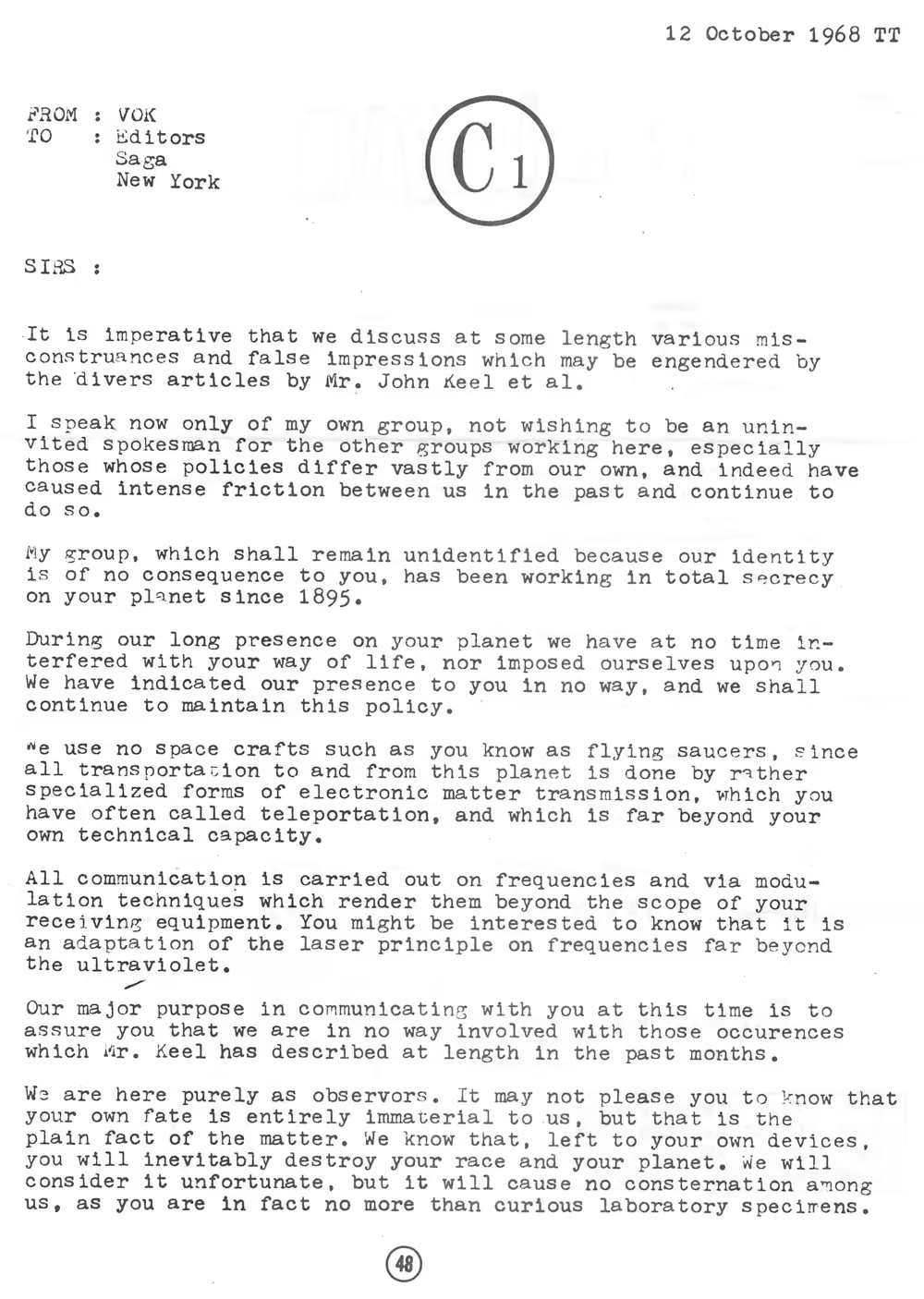
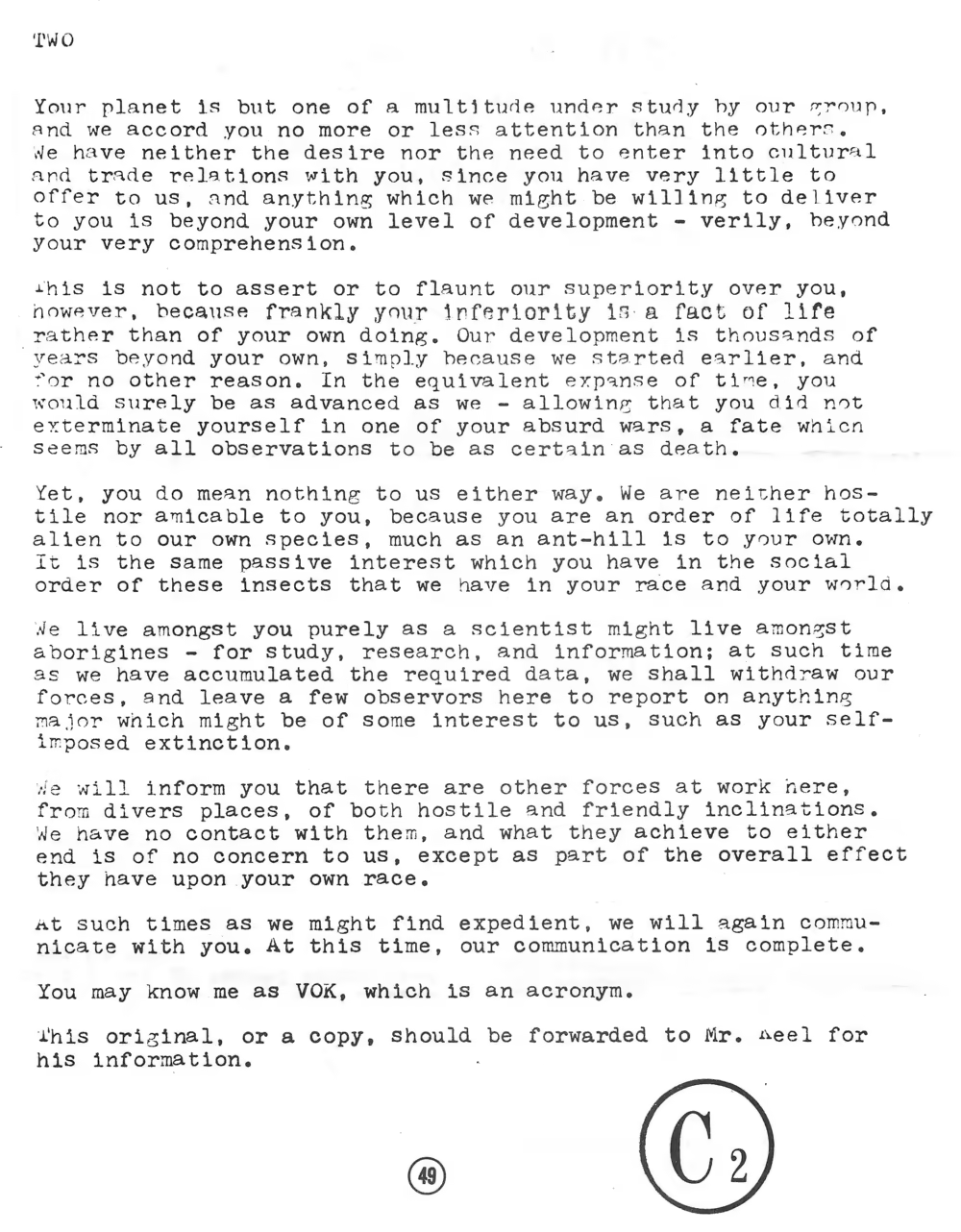
14 October 1968. A brown manila envelope with "VOK" typed on it is postmarked in Pittsfield, Massachusetts, and reaches the editors of Saga, which had been running Keel's UFO articles. The letter inside is dated 12 October.
December 1969. Keel publishes all three in ANOMALY no. 3, pages 45 to 49.
Key figures
John Keel was a professional writer who came to believe the UFO phenomenon was less about visiting spacecraft than about something that played with the people who looked into it. His collection of odd mail is part of the evidence he offered for that, and he presented it with more caution than his reputation suggests: he labelled one letter a "classic crank letter" and said in print that four had been traced to pranksters.
Gray Barker and James Moseley are the reason any letter in this field has to be treated carefully. Barker sold Men in Black stories for a living and, by Moseley's account, privately treated much of the subject as a joke. Moseley later confessed to the Straith letter. Neither man has been tied to these three letters, but the International Bankers letter names Henslik, a case Keel himself linked to them.
"David Kimble" is a young man whose real name Keel kept out of print. The VOK letter's author has never been identified.
Physical and documentary trail
On the paper: the three letters themselves, reproduced in facsimile in ANOMALY no. 3, with Keel's notes on how each arrived. Exhibit A is typed on what Keel called well-printed, high-quality bond, slightly yellowed at the edges, on an electric typewriter, and misspells "coming". It warns Keel that "the year 1968 A.D. will have the color black as its symbol", threatens to "visit you as we did MR. Henslik", and names Jessup and Bender as others who tried "to find out things that do not concern them". Exhibit B reads, in coloured cut-out letters, "DAVID KIMBLE FORGET ABOUT FLYING SAUCERS YOU CANT STOP US AND WILL ONLY CAUSE PANIC AND DISASTER". Exhibit C, typed and signed only "VOK, which is an acronym", says its writer's group has worked "in total secrecy on your planet since 1895", travels by teleportation, has nothing to do with "those occurences which Mr. Keel has described", and asks that a copy be sent to him.
What is missing is any trace of who sent them. Keel does not say which four letters were traced, or to whom. No FBI or Postal Inspection record of these three has been published, and the originals are not known to have survived. One small inconsistency: Keel says the International Bankers letter came in the fall of 1967, and it is dated 30 November.
A total of four proved to be the work of mischievous "UFO buffs". The remainder are still unidentified or unsolved.
Competing explanations
Pranks from inside the UFO scene. The best-documented explanation for mail like this is people who knew the field. Barker and Moseley had already forged official stationery for a joke, the Henslik story ran through their circle, and Keel himself traced four letters to buffs. The International Bankers letter reads like someone who knew Keel's cases and the folklore: Bender, Jessup, Henslik, all in one paragraph.
Something stranger. Keel's view was that the senders, whoever they were, behaved like the phenomenon itself: unstamped mail with no postmark, deliberate misspellings, prophecies vague enough to come true. He noted that 1968 did turn out to be a black year.
Ordinary cranks. People who read UFO magazines and wrote to the writers, as people still do. VOK's lofty tone and the Kimble paste-up both fit someone enjoying the idea of frightening a stranger.
Finding
The letters are real, Keel received them, and he was more careful about them than the legend around him: he called one a crank letter and said four of his collection were pranks. The International Bankers letter's "black year" is the kind of prediction that can't miss, since almost any year brings disasters to point to, and it was written by someone who knew exactly which UFO stories would rattle him. The strongest reading is that these came from inside the small world of 1960s ufology, where forging a threatening letter had already been done once as a joke.
What still will not resolve: who sent them. Keel never named the four pranksters, and the FBI and Postal Inspectors' files on his complaints, if they exist, have not been released.
Evidence signature
4/9 Solid
- Witnesses
- one person, or a tradition
- Instruments
- photo, film or physical traces
- Paper
- official records at the time
How well documented the case is, not whether it's true. A strong record can still have an ordinary answer, and a thin one can still be real.
You decide · THE LETTERS KEEL KEPT
What do you think happened?
One vote per case, anonymous. You'll see how other readers voted once you've voted.