CIRCLEVILLE LETTERS
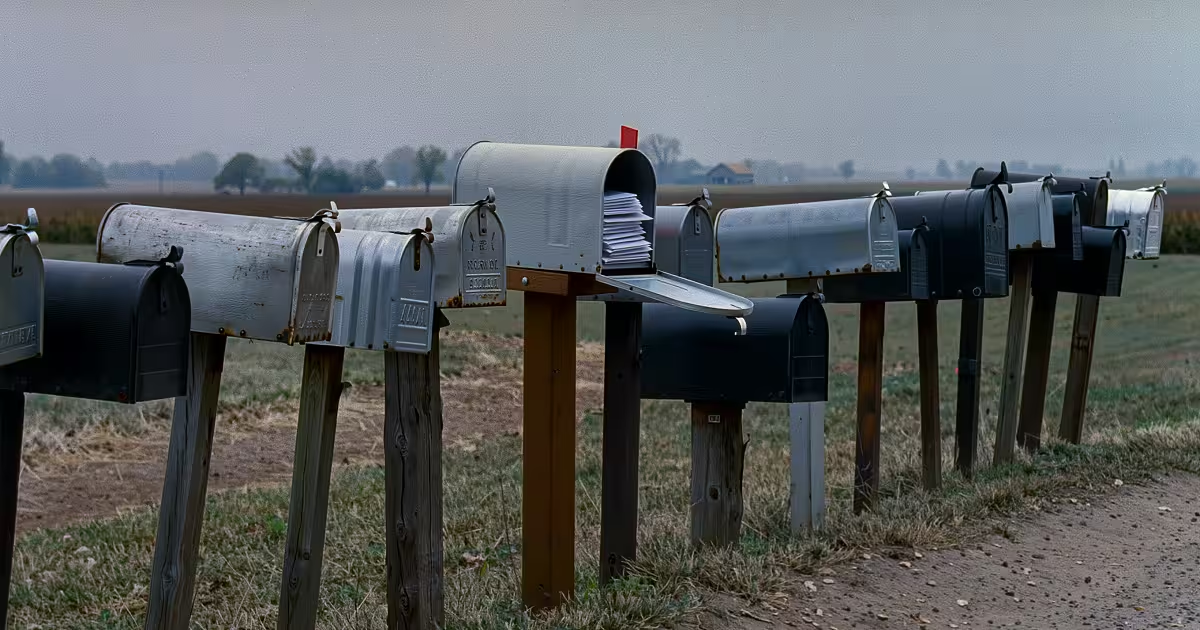
Ohio rural mailbox. Stack of block-capital envelopes, no text readable.
Illustration, not a period photograph.
Opening
In 1976 anonymous letters began to arrive in Circleville, Ohio, accusing townsfolk of affairs, crimes, and secrets they thought were closed. The writer knew too much and wrote in block print. Mary Gillespie, a school-bus driver, got letters about an affair with the superintendent. Her husband Ron went out with a gun to watch a sign the writer had told him to watch and was found dead of a gunshot the writer had, in a way, predicted. A trap on Mary's bus later held a gun. The sheriff's brother-in-law, Paul Freshour, went to prison for attempted murder. Letters kept coming while he sat in a cell.
Freshour was released years later. The letters did not stop when they should have if he were the only hand. No conviction ever named the writer of the whole campaign. Circleville lived with the postmark for a generation.
The spine of the file is a town that could not make the mail stop. Circleville is block print and a dead husband and a prison that did not end the letters. It is not a signed confession in the sheriff's drawer.
Timeline
1976. Letters in Circleville, personal, vicious, informed. Mary Gillespie is a central target. Ron Gillespie takes a call or a note about a sign, goes out, dies by a gunshot written up as accident in some early talk and as something else in the family's mouth.
Early 1980s. A booby-trap on Mary's bus: a box, a gun, a string. Paul Freshour, once a sheriff's employee and Ron's brother-in-law by a tangle of marriages, is tried for the trap and convicted. He says he is clean of the letters.
While he is inside, letters continue, including some that could not easily have come from his cell without help. Handwriting fights. Freshour serves years, comes out, and the campaign still does not have a public author.
Documentaries and Unsolved Mysteries keep the town on a map. No trial closes the writer. The last letters fade rather than confess.
Key figures
The writer is the file and has no tried name that covers the whole span.
Mary Gillespie is the living target who kept driving a bus through a town that read her mail.
Ron Gillespie is the dead husband. His night with the gun is the first blood in the paper.
Paul Freshour is the man the county put in prison for the bus trap. He is not a proven author of every page that arrived before and after.
Physical and documentary trail
On the paper, 1976 into the 1990s give you four hard objects and no signed hand.
One: the body of anonymous block-print letters showing local knowledge.
Two: Ron Gillespie's death after going out on the writer's information.
Three: the bus trap and Freshour's conviction for that attempt.
Four: letters that continued after that conviction. Pickaway County case papers on the Circleville letters and the Freshour trial, are the official tray.
There is no fingerprint the county kept as the writer's. There is no confession that accounts for the full run. There is no second conviction.
I know where you live.
Competing explanations
One writer with a long grudge, Freshour or not. Fits the voice. Struggles with mail from a cell.
More than one hand, a family war using the same print. Possible in a small county. Not proved.
A frame on Freshour and a writer still walking. This is his reading. The continuing letters give it air.
Hybrid caution. A town was hunted by mail. A man died. A man went to prison. The letters outlived the sentence.
Later life of the case
Television hours and true-crime shelves. I keep those on the later-life shelf. The first letters and Ron's night stay first.
Finding
Someone in Circleville spent years putting other people's secrets on paper, Ron Gillespie died after going out on that paper, and letters kept arriving after Paul Freshour was locked up for a bus trap. Believe the mail. A town does not invent a decade of block print.
What still will not resolve: a name that covers the whole campaign, or a print match the county will stand on for the late letters. Either one would end the only job the file still has. The proving object is still the writer's hand, signed or printed on a page no cell could send.