CARROLL A. DEERING
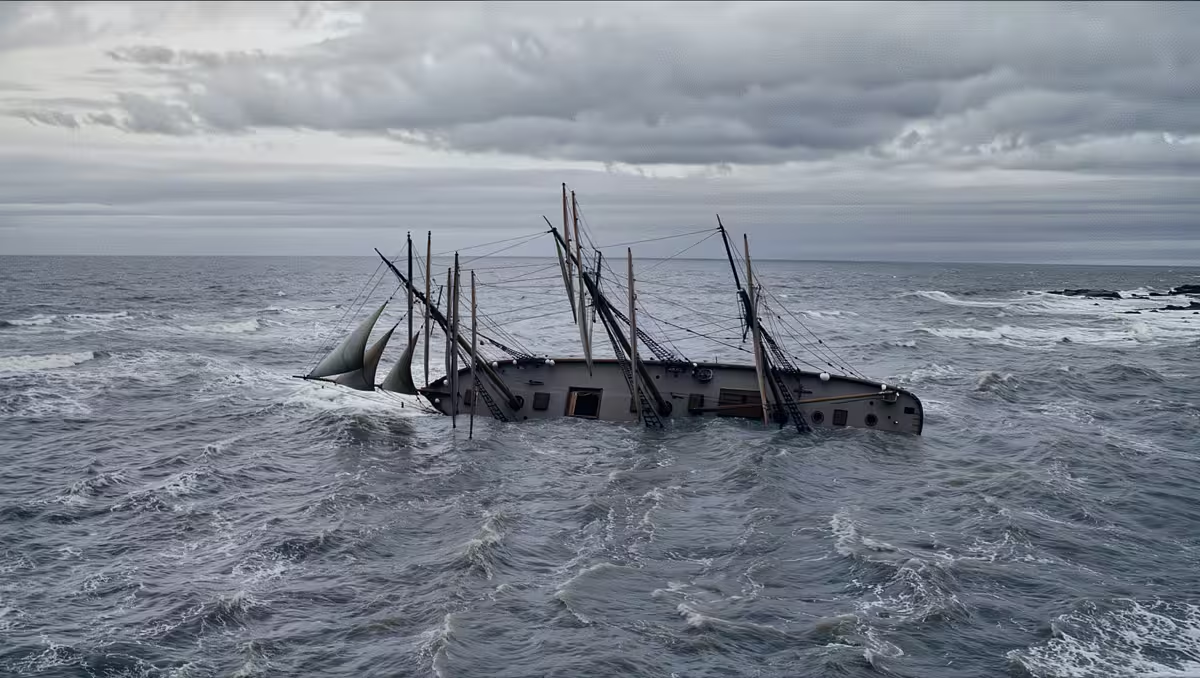
A five-masted schooner aground and heeling over in heavy surf.
Illustration, not a period photograph.

Opening
At dawn on 31 January 1921 a Coast Guard lookout at Cape Hatteras saw a five-masted schooner hard on Diamond Shoals with all sails set. She was the Carroll A. Deering, Bath-built, owned by the Deering company, last from Barbados toward Norfolk with a cargo of coal already delivered. When the sea finally let a boarding party on, the crew were gone. Food was in the galley. A cat was still aboard. The lifeboats were missing. Papers and some personal gear were gone. The steering gear had been disabled.
Two days earlier the Lookout lightship had been hailed by a red-haired man with a foreign accent who said the Deering had lost her anchors and asked that owners be told. The man did not look like Captain Willis Wormell to men who later saw Wormell's picture. Crew milled on the quarterdeck where crew did not belong. A bottle later found at Buxton held a note, in a hand Wormell's widow said was the engineer's, claiming capture by an oil-burning boat. Handwriting experts later found it was forged.
Timeline
August 1920 out of Norfolk for Rio with coalCaptain Wormell, a Maine master, first mate Charles McLellan, who drank and threatened in Barbados on the way home. Wormell sent letters from the south complaining of the mate. The mate stayed.
January 1921, homeward, no cargo28 January, hail to the Lookout lightship: anchors gone, notify owners, wrong man on the speaking deck, crew out of place. 30 January, another steamer sees her standing toward the shoals. 31 January, dawn, aground, sails set, no distress flag that the lookout reads as a living crew.
Days before anyone can boardThen the empty inspection: no crew, boats gone, chronometer and papers missing, steering disabled, food on. Federal inquiry. Piracy talk. The bottle in April. No conviction.
Hurricanes and rum-runners and Soviet plots fill later shelves. The shoals and the lightship hail are first.
Key figures
Willis Wormell is the captain who should have been on that hail and, by the lightship, was not.
Charles McLellan is the mate with a Barbados threat in his file. He is a suspect on paper. He is not a body on the shoals.
Captain Jacobson at Lookout owns the last spoken contact. Surfman Brady owns the dawn sighting.
The missing crew, including engineer Henry Bates if the bottle is his, are the exhibit. They left food and a cat.
Physical and documentary trail
The sources:
One: the Lookout lightship hail of 28 January, wrong speaker, anchors gone, crew on the quarterdeck.
Two: the dawn grounding on Diamond Shoals with sails set and no one answering.
Three: the boarding inventory, boats gone, papers gone, steering disabled, galley not empty, a cat.
Four: the federal investigation and the disputed Buxton bottle.
There is no identified lifeboat with those men. There is no trial that names a pirate. The bottle was later shown to be a forgery.
Deering captured by oil burning boat something like chaser. Taking off everything handcuffing crew.
Things you might not know
- She was almost new. The Deering company launched her at Bath, Maine, on 4 April 1919, less than two years before she was found. She was 255 feet long.
- The bottle note was a fake. Handwriting experts concluded the Buxton message was forged, and the fisherman who found it, Christopher Columbus Gray, admitted it.
- Herbert Hoover took an interest. As Secretary of Commerce, Hoover had several vanished ships looked into, including the freighter Hewitt, lost in the same area around the same time.
- She was blown up. The Coast Guard declared the wreck a hazard and destroyed it with dynamite on 4 March 1921.
- Her timbers became houses. Wreckage washed up on Hatteras Island and was used in buildings. Her bell and capstan are at the Graveyard of the Atlantic Museum in Hatteras.
Competing explanations
Mutiny, mate against master, boats away, ship left to the shoals. Fits Barbados and the wrong man at Lookout. Does not produce the men.
Piracy or a rum-runner boarding. The bottle invites it. Investigators could not keep the bottle as clean proof.
Weather and a decision to abandon that went wrong on the shoals. Possible. The disabled steering and missing papers sit less like a simple panic.
Later life of the case
The Deering became one of the classic ghost ships of the Outer Banks and a regular in Bermuda Triangle books, even though she grounded far to the north of it. Her bell and capstan are on show at the Graveyard of the Atlantic Museum in Hatteras, and timbers from the wreck went into buildings on Hatteras Island. For the most famous empty ship of all, see the Mary Celeste.
Finding
The Carroll A. Deering went on Diamond Shoals on 31 January 1921 with her sails set and nobody aboard but a cat, after a hail two days earlier that did not sound like Captain Wormell.
What still will not resolve: a boat with those men, or any record of the crew after the Lookout hail.
Evidence signature
5/9 Solid
- Witnesses
- several people
- Instruments
- nothing on record
- Paper
- formal investigation, court or declassified file
How well documented the case is, not whether it's true. A strong record can still have an ordinary answer, and a thin one can still be real.
You decide · CARROLL A. DEERING
What do you think happened?
One vote per case, anonymous. You'll see how other readers voted once you've voted.