SODDER CHILDREN
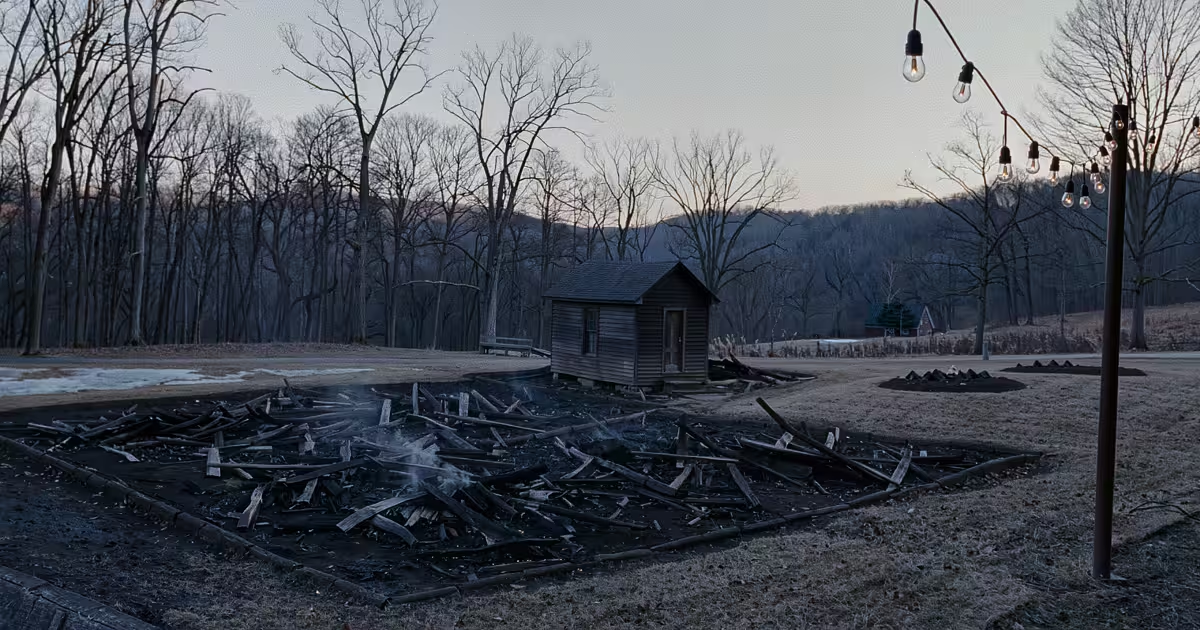
West Virginia house lot at dawn. Christmas lights and ash.
Illustration, not a period photograph.
Opening
In the first hours of Christmas 1945 the Sodder house in Fayetteville, West Virginia, burned. George and Jennie got out with four of the children who had been downstairs or reachable. Five who had been upstairs were not in the yard: Maurice, Martha, Louis, Jennie Jr, Betty. The fire department, two and a half miles off, did not arrive until morning. The lot was ash. A search found no bones the family would accept as those five.
A coroner said they had died in the fire. Jennie later burned animal bones and watched them survive heat that was supposed to have eaten her children. George cut himself going back through a window and still saw no one. They put a billboard on Route 16 and kept it there for decades.
The spine of the file is five names and an empty ash bed. The Sodders are a Christmas fire that did not give the parents remains. It is not a closed cremation the family signed.
Timeline
Christmas Eve 1945. George, Jennie, nine children in the house, one son away in the Army. Around 01:00 fire downstairs. The phone is dead. In some tellings the ladder they would have used is not where it should be. George, Jennie, John, George Jr, Marion and two-year-old Sylvia make the yard. The upstairs five do not.
Christmas morning. The crew from two and a half miles away arrives to ash. A search of the lot finds no remains the parents will take as Maurice, Martha, Louis, Jennie or Betty. The next day a coroner sits and writes five deaths by fire, faulty wiring, heat enough to destroy bodies.
The family does not rest on that sentence. Tips come: a hotel, a passing child, a face in a later photograph Jennie thought was Louis grown. No child is walked back into Fayetteville in a way a court keeps. The billboard on Route 16 asks the country to look.
George dies in 1969 still saying he wants to be convinced. Jennie outlives the useful life of the sign. Sylvia, the baby who got out, carries the house after them.
Key figures
George and Jennie are the parents who would not sign the ash. Jennie's later bone-burning is not 1945 paper, and it is still why the file will not sit still.
The five missing children are the exhibit. They had beds upstairs. They do not have graves the family accepted.
The four who escaped and the soldier son are the living remainder. They do not claim to have watched the five leave by the road.
Fayetteville officials own a fast inquest on Christmas week. The parents owned the roadside sign.
Physical and documentary trail
On the paper, 24-25 December 1945 give you four hard objects and no five coffins.
One: the burned house and the list of who stood in the yard when it came down.
Two: the delayed fire department and the Christmas Day search that found no remains the family took as theirs.
Three: the coroner's finding of five deaths by fire and wiring.
Four: the family's later searches and the Route 16 billboard. Fayetteville coroner's inquest on the Sodder fire, December 1945, is the official tray the parents refused.
There is no identified bone from that lot tied to those five by a lab the family trusted. There is no confirmed sighting after dawn on the 25th that a court kept.
If they did die in the fire, we want to be convinced. Otherwise, we want to know what happened to them.
Competing explanations
Five children died in an unusually complete house fire. The inquest. It has to explain the missing bones against what Jennie later showed heat will leave.
They were taken before or during the fire. Tips, the missing ladder, the dead phone live here. No court named a taker.
A botched official search on Christmas morning. Possible in a small town. Does not by itself put the five on a road.
Hybrid caution. A house burned. Five children were not in the yard. The ash did not hand them back.
Later life of the case
True-crime features, the billboard photographs, the alleged grown Louis. I keep those on the later-life shelf. The yard on Christmas morning stays first.
Finding
Five Sodder children did not come out of the Fayetteville house when it burned in the first hours of Christmas 1945, and the lot did not give their parents bones they would accept. Believe George and Jennie for that absence. A mother does not invent an empty ash bed.
What still will not resolve: identified remains from that fire, or a living trail after dawn on the 25th that a court will keep. Either one would end the only question they asked. The proving object is still those five, in the ground or on a road, named by more than an inquest.