BEAUMONT CHILDREN
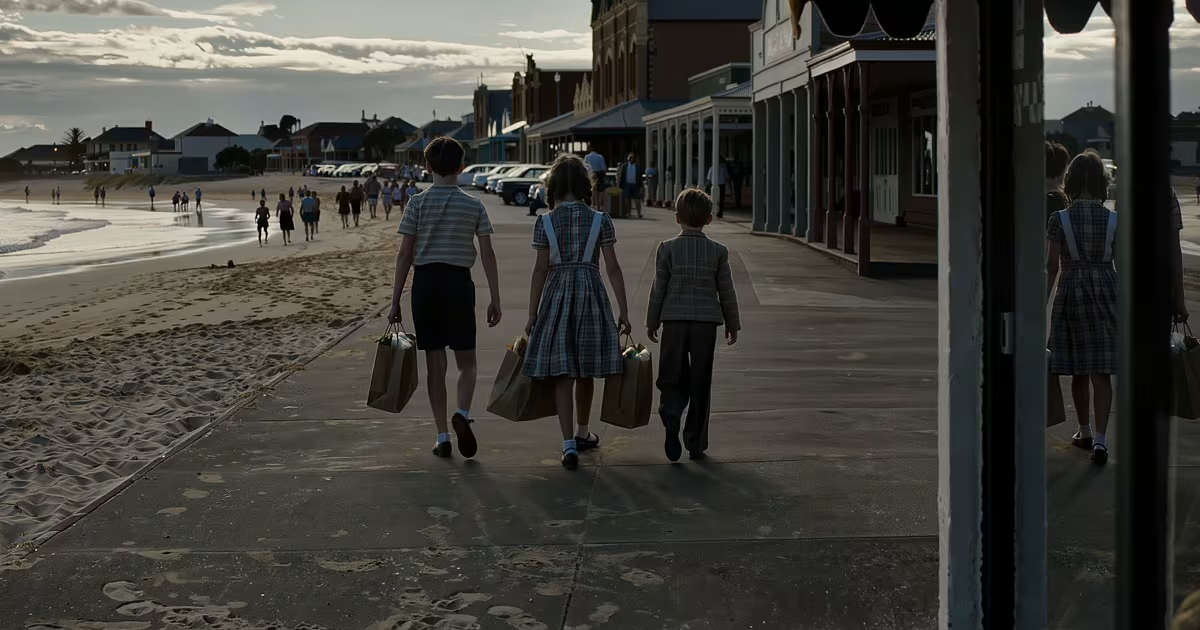
Adelaide beach morning. Empty esplanade and Australia Day flags distant.
Illustration, not a period photograph.
Opening
On 26 January 1966, Australia Day, Jane Beaumont, nine, Arnna, seven, and Grant, four, walked from their house on Harding Street toward Glenelg Beach, Adelaide. They were going to a bus. They had coins. They were seen on the afternoon streets and at the beach. They did not come home. A large search, a large inquiry, and sixty years of named suspects have not put the three children back on Harding Street.
The last certain sightings sit on that holiday afternoon: a woman who knew them, a shop, the sand. A tall blond man in some later memories. A blue car in others. None of those extras became a conviction. Jim and Nancy Beaumont lived the rest of their lives inside an open file.
The spine of the file is three children who left for the beach and did not return. The Beaumonts are an Adelaide holiday that would not close. It is not a courtroom with a finished name.
Timeline
Morning into early afternoon, 26 January 1966. The children leave Harding Street with permission and a little money. They are seen boarding or waiting on the Glenelg route, then on the Colley Reserve side of the beach. A family friend sees them around midday. Later witnesses put them with an adult. Those later witnesses have been argued for decades.
Evening. They are not home. Police that night. The search becomes national. Dredging, dunes, buildings, a later dig that finds nothing the family can take as theirs.
Inquests stay open in the only way that matters: no finding that names a person and a place for those three bodies. Suspects, including Bevan Spencer von Einem in later years, enter the paper and do not leave it as a closed charge for this crime.
Anniversary appeals still run. Nancy died without an answer. The beach is first. The later names are later life unless a court sits.
Australia Day in Adelaide is a packed beach and a short bus. The children had coins and permission. Midday sightings by people who knew them are the last hours that do not need a stranger in a car. The stranger enters later witness talk and has been argued ever since.
The search went under water and under sand and through buildings. Digs years after still failed to give Jim and Nancy a place they would accept. Suspect names entered the paper, including von Einem, and did not leave it as a charge sheet for this crime.
Key figures
Jane, Arnna and Grant are the file. They had a mother who packed them for a holiday beach, not for a mystery.
Jim and Nancy Beaumont are the parents who had to live inside the open days. They did not invent an empty house.
Glenelg witnesses own the last hours on the sand and the street. Their details drift. The afternoon does not.
South Australia Police own a file that has never been allowed to sleep.
Physical and documentary trail
On the paper, 26 January 1966 gives you four hard objects and no recovery.
One: the departure from Harding Street with money and permission for Glenelg Beach.
Two: same-day sightings on the bus route and at the beach.
Three: the night they did not return and the national search.
Four: the open investigative file. South Australia Police file on the Beaumont children, from 26 January 1966, is the official tray.
There is no clothing find the family accepted as final. There is no conviction. There is no place that a court has named as theirs.
Three children on a holiday afternoon is already a police file that is not allowed to sleep. A beach crowd makes an accident thinkable. It does not make three bodies optional forever.
They were going to the beach and they did not come back.
Competing explanations
An abduction by a person who used the holiday crowd. This is the working police door. It has never produced a dock for this crime.
An accident in water or dunes that a huge search missed. Possible on a packed beach. Harder as the days went on without a body.
A known later offender whose name entered the file. Possible. Not a conviction here.
Hybrid caution. Three children left a house. A beach and a city did not give them back.
Later life of the case
Anniversary specials and named suspects. I keep those on the later-life shelf unless a charge sheet appears. Harding Street that morning stays first.
Finding
Jane, Arnna and Grant Beaumont walked from Harding Street to Glenelg Beach on Australia Day 1966 and did not come home. Believe the parents. A family does not invent three empty beds.
What still will not resolve: a place that holds them, or a name a court will keep. Either one would end the only question Jim and Nancy asked. The proving object is still those three children, found, and tied to that afternoon by more than a sighting on the sand.