JOHN KEEL
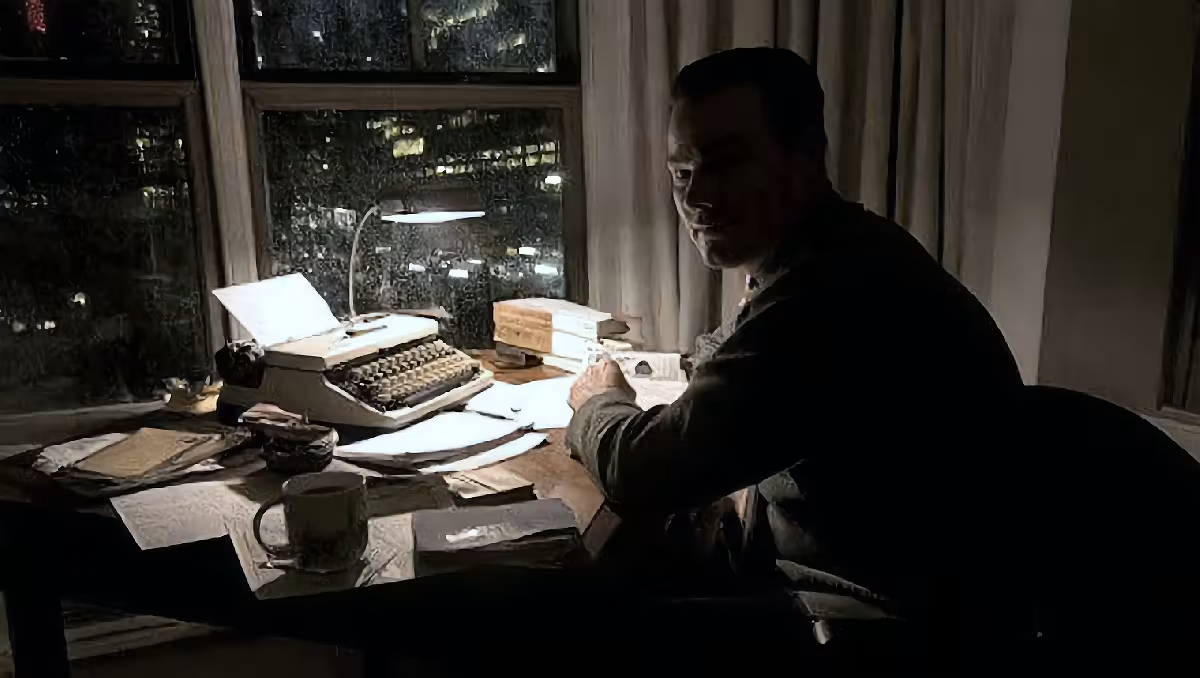
A man works at a typewriter by a rain-streaked window at night.
Illustration, not a photograph.

Opening
John A. Keel was a journalist who spent 1966 and 1967 driving between small towns, interviewing people who said they had seen lights, creatures and men in dark suits. He went in expecting visitors from other planets. He came out arguing that the whole idea was a mistake, and that the same unknown thing had been wearing different costumes for centuries.
His name for it was ultraterrestrials. His best-known book, The Mothman Prophecies (1975), turned a year of sightings in Point Pleasant, West Virginia, into a book that is still in print and a 2002 Hollywood film. He died in New York in 2009.
Timeline
25 March 1930Alva John Kiehle is born in Hornell, New York. His parents separate and he is raised by his grandparents in Perry, New York.
1947At seventeen he hitchhikes to Greenwich Village and becomes associate editor of the poetry magazine Poets of America.
1951 to 1954Drafted during the Korean War, he is posted to the American Forces Network in Frankfurt and rises to chief of production.
1954Out of the army, he sets off through the Middle East and Asia, looking for the Indian rope trick, fakirs and the yeti.
1957His first book, Jadoo, comes out of those travels.
1960sHe writes for television, including as head writer on the game show Play Your Hunch.
1966Playboy commissions a UFO article and rejects it. He is hooked anyway, and makes repeated trips to Point Pleasant as the Mothman sightings begin in November.
October 1967His Saga article "UFO Agents of Terror" popularises the phrase men in black.
1967By his own later account, this is the year his field work leads him to drop the extraterrestrial hypothesis.
May 1969He starts the newsletter ANOMALY, mailed from Box 351, Murray Hill Station, New York. Eleven issues appear by April 1974, and a farewell issue in February 1976.
1970UFOs: Operation Trojan Horse and Strange Creatures from Time and Space are published.
1975The Mothman Prophecies and The Eighth Tower.
2002The film of The Mothman Prophecies is released, with Richard Gere and Alan Bates each playing a version of Keel.
3 July 2009He dies of congestive heart failure at Mount Sinai Hospital in Manhattan, aged 79.
Key figures
Gray Barker, the West Virginia writer who built the men in black legend, was Keel's correspondent through the Mothman years. The naturalist Ivan T. Sanderson appears in ANOMALY more than once, including an obituary issue in 1973. Doug Skinner, a friend who maintains johnkeel.com, wrote the fullest short biography of him and was at his bedside when he died. His friend Larry "Ratso" Sloman was his other medical proxy.
Physical and documentary trail
Keel published constantly: the books above, a column in Saga, later a column called "Beyond the Known" in Fate, and the newsletter. The John Keel Archive on this site reproduces ANOMALY page by page. His letters to Barker survive and were used by the journalist John C. Sherwood, who in 2002 found real differences between what Keel wrote at the time and what he later put in the Mothman book. Keel declined to help him sort them out.
Three of his stranger letters are reproduced and discussed in The Letters Keel Kept, and his handling of the Indrid Cold story is a separate report.
Things you might not know
- He sold his first book with cobras. To promote Jadoo in 1957 he performed with cobras in the window of the Midtown Aquarium in Times Square.
- He had a newspaper column at fourteen. "Scraping the Keel" ran in the Perry Herald, and he published his own science fiction fanzine, The Lunarite.
- He had his own illumination at eighteen. In a furnished room off Times Square, he later said, the room filled with a pinkish glow and his mind flooded with information.
- Bates plays him backwards. In the 2002 film, Alan Bates's character is named Alexander Leek, Keel spelled in reverse, and Gere's journalist is John Klein.
- The Library of Congress hired him. He was a technical adviser there in 1968 and 1969, while the Library's Lynn Catoe was compiling a UFO bibliography for the Air Force.
- He bought a car with the film money. He called it the Mothmobile.
Competing explanations
Keel's own theory, set out in Operation Trojan Horse and The Eighth Tower, is that one non-human intelligence has staged fairies, airships, monsters and flying saucers across history, showing each era what it expects to see. He offered no mechanism beyond a "superspectrum" of energies outside normal perception, and no way to test it.
The sceptical reading treats him as a gifted reporter who could not resist improving a story. Sherwood's comparison of the Barker letters with the books is the strongest evidence for that, and Keel's own humour makes the line hard to draw. David Clarke, the British folklorist, has said Keel's line between fact and fiction was a very fine one. On the other side of the ledger, ANOMALY shows him labelling cranks and pranks as such in print, including four of his own threatening letters.
Later life of the case
The 2002 film introduced Keel to an audience that had never read him, and new editions followed, including foreign translations. Several collections of his magazine articles appeared from 2013 to 2016. The men in black, whom he did more than anyone to popularise, became a film franchise with almost nothing of his version left in it. His papers were saved by friends and family.
Finding
John Keel is the writer who took the UFO story away from spacecraft and gave it back to folklore, without ever deciding which parts he had seen and which he had shaped. His field work in 1966 and 1967 and his letters from it remain primary material for that wave, and his theory is one of the most influential alternatives to the extraterrestrial hypothesis the field has produced.
What still will not resolve: how much of The Mothman Prophecies is reporting and how much is storytelling. The Barker letters are the best tool anyone has for telling them apart, and Keel chose not to use them that way.
You decide · JOHN KEEL
What do you think happened?
One vote per case, anonymous. You'll see how other readers voted once you've voted.