JOHN MACK
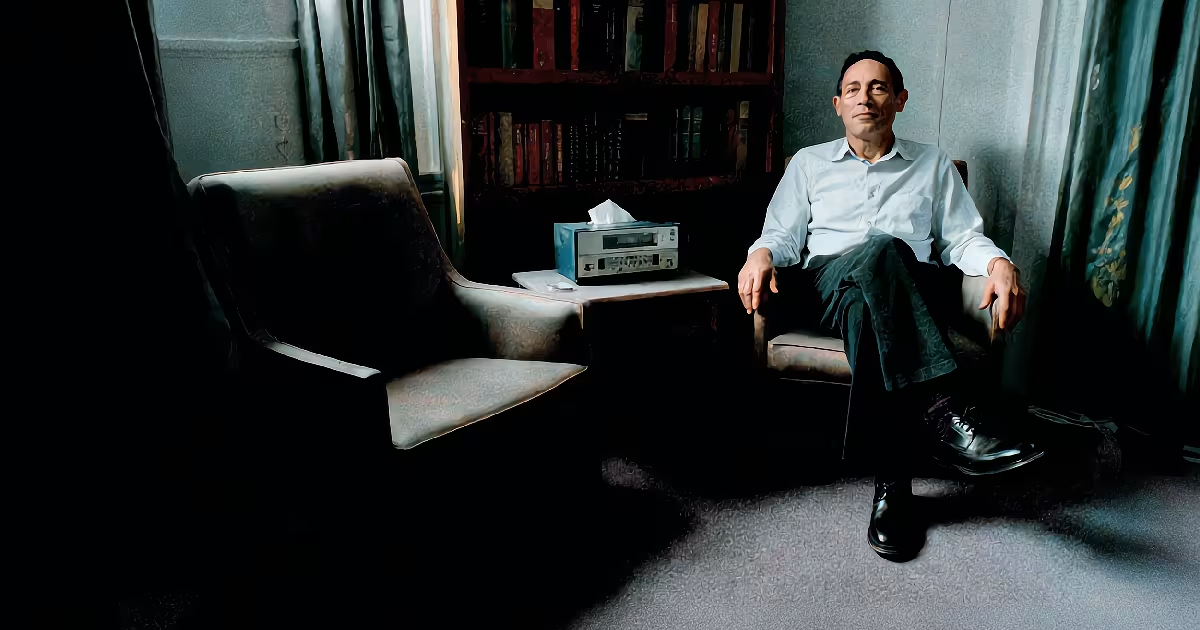
A man sits in an armchair in a quiet psychiatrist's office.
Illustration, not a photograph.

Opening
John E. Mack was a professor of psychiatry at Harvard Medical School and a Pulitzer Prize winner, honoured in 1977 for his biography of T. E. Lawrence. In 1990 he began working with people who said they had been taken by non-human beings, and over the next decade he saw about 200 of them.
His 1994 book Abduction made him the most senior academic ever to treat those accounts as something other than illness or fantasy. It also led Harvard Medical School to open a fourteen-month inquiry into his work. He kept his post. Ten years later he was killed by a drunk driver in London.
Timeline
4 October 1929John Edward Mack is born in New York City.
1951 to 1955He graduates from Oberlin College, then earns his MD at Harvard Medical School.
1959 to 1961He serves in the US Air Force, stationed in Japan.
1969He founds the department of psychiatry at the Cambridge Hospital, a Harvard teaching hospital.
1972He becomes a full professor of psychiatry at Harvard Medical School.
1977A Prince of Our Disorder: The Life of T. E. Lawrence wins the Pulitzer Prize for Biography.
1980sHe campaigns against nuclear weapons with Physicians for Social Responsibility.
10 January 1990He meets the abduction researcher Budd Hopkins and starts seeing experiencers himself.
1993He founds the Program for Extraordinary Experience Research (PEER), funded in part by Laurance Rockefeller.
1994Abduction: Human Encounters with Aliens is published.
May 1994Dean Daniel C. Tosteson appoints a committee, chaired by Dr Arnold Relman, to review Mack's clinical work.
November 1994With Dominique Callimanopulos, he interviews children at the Ariel School in Ruwa, Zimbabwe, about the craft and beings they reported in September.
August 1995The dean reaffirms Mack's academic freedom. He remains a member of the faculty in good standing.
1999Passport to the Cosmos, his second book on the subject, is published.
27 September 2004Walking home in north London from a T. E. Lawrence symposium, he is struck and killed by a drunk driver on Totteridge Lane. He was 74.
Key figures
Budd Hopkins introduced Mack to the subject. The historian of science Thomas Kuhn, a family friend, encouraged him to pursue the research. Laurance Rockefeller helped fund PEER. Arnold Relman, a former editor of the New England Journal of Medicine, led the Harvard review, and Mack's lawyers, Roderick MacLeish and Daniel Sheehan, fought it. Alan Dershowitz publicly criticised the inquiry. The modern abduction story he entered began with the Hill abduction of 1961. The nuclear physicist Stanton Friedman later wrote the Hills' book with Betty Hill's niece.
Physical and documentary trail
Mack's two abduction books set out his cases in detail, with names changed. His recorded sessions, including the Ariel School tapes, survive. The Relman committee's full report was not made public. Its outcome is known from the dean's 1995 statement, which reaffirmed Mack's academic freedom to study what he wished and to state his opinions. Mack's papers are at Rice University, in the archive now called the Center for the Impossible.
There are aspects of this which I believe we are justified in taking quite literally.
Things you might not know
- His Pulitzer had nothing to do with aliens. He won it for A Prince of Our Disorder, a psychological biography of Lawrence of Arabia, published in 1976.
- The inquiry was a first. No tenured Harvard professor had faced a formal review of his research like it. It ran for fourteen months.
- He died going home from a Lawrence conference. The subject that won him the Pulitzer was the reason he was in London.
- His family asked for leniency. The driver, Raymond Czechowski, pleaded guilty. Mack's family asked the court to be lenient, and he served about six months.
- His archive is the biggest at Rice. At 450 linear feet, his papers are the largest collection in the university's archive of anomalous research.
- His biographer broke the Pentagon UFO story. Ralph Blumenthal, who co-wrote the New York Times's December 2017 report on the Pentagon's UAP program, published the Mack biography The Believer in 2021.
Competing explanations
Mack's own position moved over time. He did not claim to know that experiencers were taken aboard spacecraft, and he said that how literally to take their accounts was one of the most complex questions in the work. In Abduction he wrote that he had found no psychiatric condition that accounted for them. Critics, including sleep researchers and memory scientists, argued that sleep paralysis, hypnosis and the expectations of a sympathetic therapist could produce detailed, sincere memories of events that never happened. Harvard's committee did not rule on what the experiencers had experienced; its concern was his method.
Later life of the case
PEER ran until 2002 and was followed by the John E. Mack Institute. Blumenthal's biography came out in 2021, a year before Congress held its first public UAP hearing in decades, and Mack's papers at Rice sit beside those of Jacques Vallée and Whitley Strieber in the same archive.
Finding
John Mack is the most credentialed person ever to put his career behind the abduction phenomenon. He studied it with the tools of clinical psychiatry, told the truth about what he found as he saw it, and survived an inquiry that most academics would not have. His work does not prove that anyone was taken. It does show that the experiencers he met were, in his professional judgement, not mentally ill.
What still will not resolve: what roughly 200 people went through. Mack's case notes at Rice, once open, are the largest clinical record anyone has of it.
You decide · JOHN MACK
What do you think happened?
One vote per case, anonymous. You'll see how other readers voted once you've voted.