JELLYFISH UAP
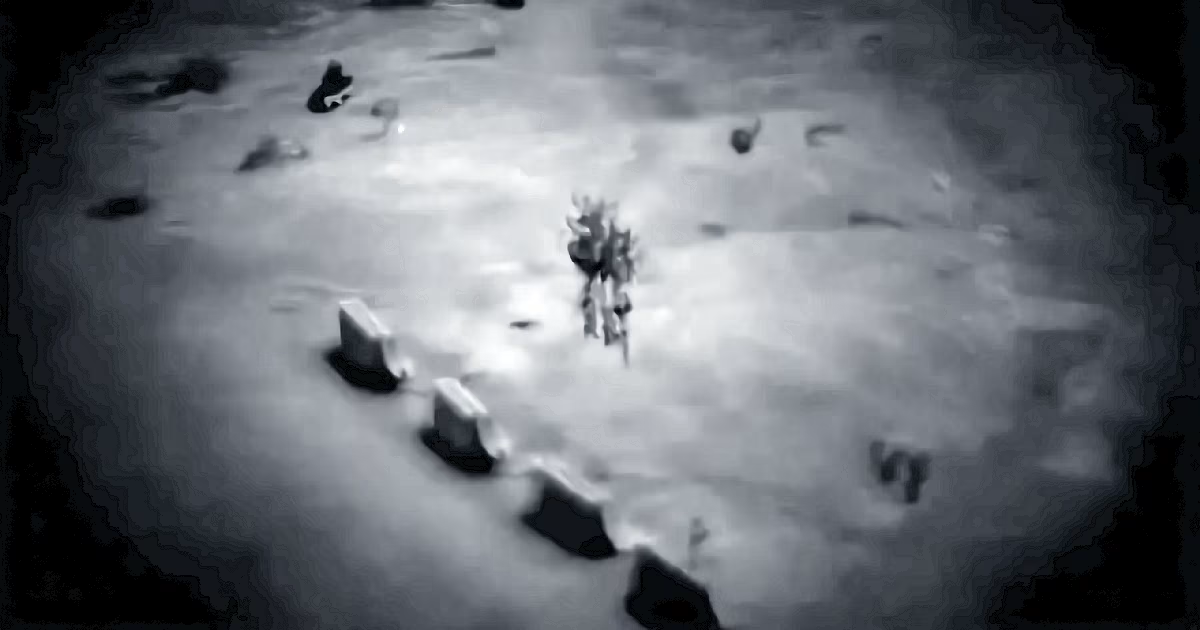
A ghostly tentacled shape drifts across grainy thermal footage.
Illustration, not a photograph.
Opening
In January 2024, filmmaker Jeremy Corbell released a short black-and-white thermal video taken over a US military base in Iraq in 2018. In it, a strange object drifts slowly across the screen: a rounded top, with what look like three or four tentacles hanging beneath it. It changes from dark to light as it moves, and it does not look like a plane, a drone or a bird. People immediately named it the "Jellyfish UAP". Corbell said it had been officially catalogued as a UAP by the Pentagon. A Marine who had served at the base said it was the camp's ghost story.
Timeline
January 2018. At a US base in Iraq, an aerostat, a tethered surveillance blimp fitted with cameras to watch for threats, films an unusual object passing over the base. According to people who later spoke about it, personnel nicknamed it the "Spaghetti Monster".
11 January 2024. Jeremy Corbell releases the footage on his Weaponized podcast with journalist George Knapp. He says the object is officially designated a UAP, that it was not visible to night-vision equipment, that it seemed to interfere with the camera's targeting, and that it showed no signs of normal lift or propulsion.
January 2024. Corbell says the full footage shows the object descending into water, staying submerged for about 17 minutes, then re-emerging and leaving at high speed. That part of the video has not been released.
January 2024. Former Marine Michael Cincoski, who served at the base in January 2018, tells NewsNation that he saw the object and that it became like the ghost story of the base. In his memory, it carried on into the distance and grew smaller and smaller, rather than diving into the water.
2024. The Pentagon declines to comment on the video. Sceptics suggest it could be a cluster of balloons, or a bag or other debris carried on the wind.
Key figures
Jeremy Corbell is a filmmaker and investigative journalist who, with George Knapp, has released several pieces of military UAP footage, including the "pyramids" filmed from the USS Russell in 2019, which the Pentagon later confirmed were real Navy footage. Knapp is the Las Vegas reporter who broke the Bob Lazar story in 1989. Michael Cincoski is the only witness who has spoken publicly by name.
Physical and documentary trail
What exists in public is a short section of thermal video, Corbell's description of the longer footage, and Cincoski's account. The Pentagon has neither confirmed nor denied the video. The section said to show the object entering and leaving the water has not been made public, and the time, location and camera data have not been published in full.
Things you might not know
- The troops called it the Spaghetti Monster. Before the internet called it a jellyfish, personnel at the base reportedly had their own nickname for it.
- It was filmed from a blimp. According to Cincoski, the camera was on an aerostat, a tethered balloon with surveillance equipment that floats above bases to watch for attacks.
- It changes colour on screen. On thermal video, the object shifts from black to grey to white, which can mean its temperature was changing relative to the background.
- The water dive is not in the public clip. The most dramatic claim, that it went into the water and came back out 17 minutes later, comes from Corbell's description of the longer footage.
- The witness remembers it differently. Cincoski recalls it simply drifting away into the distance, not plunging into water.
- The same team released the Navy pyramids. Corbell and Knapp's earlier release of "pyramid" UAP filmed by the USS Russell was later confirmed by the Pentagon as genuine Navy footage.
Competing explanations
A genuine UAP. Corbell's sources describe an object that was invisible to night vision, interfered with targeting, moved with no visible propulsion and went underwater. If that is right, it is one of the strangest objects ever filmed by the US military.
Balloons or debris. Sceptics note that a cluster of balloons, a plastic bag or a bundle of streamers could look exactly like this on thermal video: a rounded top, dangling strands, drifting with the wind and changing apparent temperature as it moves. Without the full footage, they say, the claims about the water cannot be checked.
Something real but ordinary-looking. The object can be real and genuinely unidentified, without being exotic. Many UAP in AARO's files are of this kind: small, drifting objects nobody managed to identify at the time.
Later life of the case
The Jellyfish UAP became one of the most widely shared UFO videos of 2024 and is often brought up when Congress discusses releasing more military footage. Researchers are still asking the Pentagon to release the full video, including the section Corbell says shows it entering the water.
Finding
The video is real, it was taken over a US base, and the object in it has never been officially identified. A balloon cluster fits what can be seen in the public clip. What would make this case extraordinary, the dive into the water and the return, is in the part of the footage nobody outside the military has seen.
What still will not resolve: the full video. Until the Pentagon releases it, the jellyfish keeps its secret.