WASHINGTON 1952
1950s radar room. Capitol dome faint beyond hangar doors.
Illustration, not a period photograph.
Opening
On the weekends of 19-20 and 26-27 July 1952 Washington, D.C. put unknown targets on more than one radar and put lights in front of more than one pair of eyes. Andrews, Washington National, and airborne scopes painted returns that did not match the known traffic. F-94s were scrambled. Some pilots saw lights. Some locked and lost. The White House was in the same city. The Air Force held a press conference afterward that blamed temperature inversions and did not quite end the week.
Edward Ruppelt's later Blue Book account is why the two weekends sit in every textbook. The raw night is controllers, pilots, and a capital that does not like uninvited plots. No wreck came down on the Mall.
The spine of the file is glass in several rooms painting the same kind of guest. Washington 1952 is a radar-visual weekend. It is not a machine on a Virginia hardstand.
Timeline
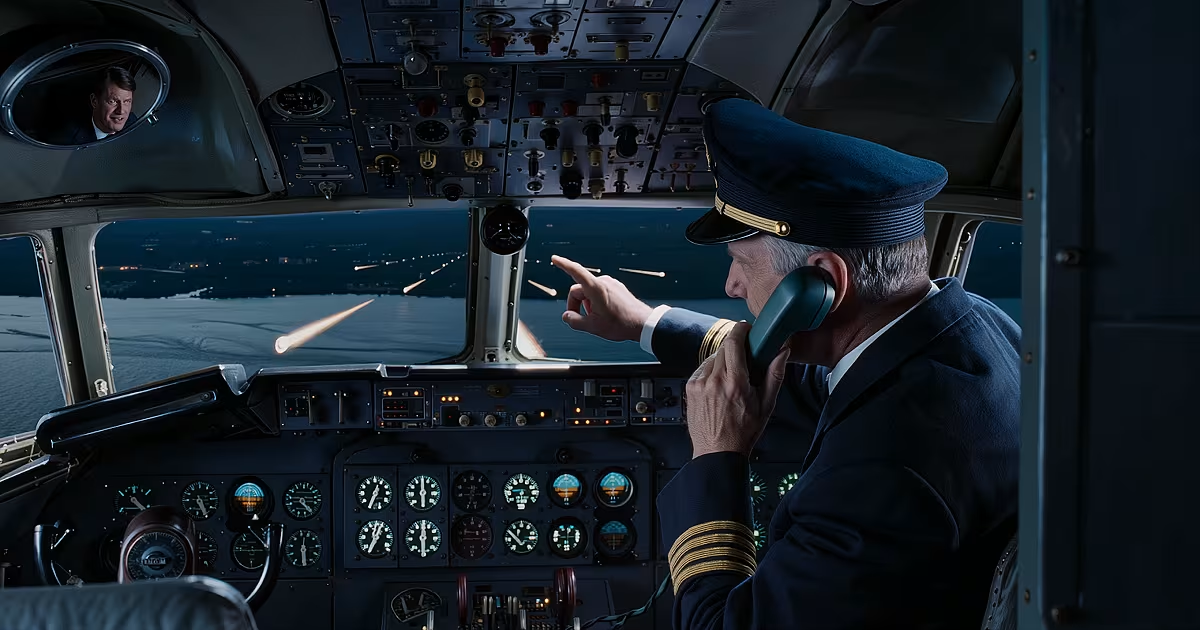
19 July 1952 into the 20th. Controllers at National and Andrews begin calling out uncorrelated targets. Visual lights are reported over the city and the river. Interceptors go. Some returns vanish. Some seem to keep station. Morning does not produce a type.
A quieter stretch. Then 26-27 July, the second weekend, thicker. More scopes. More scrambles. A pilot describes lights that do not fly like the jet he is in. Ground radar and air radar talk to each other. Harry Barnes at National is the controller name the later books keep.
29 July. Major General John Samford's press conference: inversions, weather, a few residuals. The capital goes back to ordinary summer traffic. Blue Book inherits the paper.
Every later radar-visual list starts here. That list is later life. The two weekends are first.
The first weekend, 19-20 July, put National and Andrews on the same kind of uncorrelated paint. Lights over the river and the city sat in the same hours. F-94s went. Some crews saw. Some locked and lost. Morning did not invent a type.
The second weekend, 26-27 July, was thicker. Harry Barnes at National is the controller name later books keep because he had to talk to interceptors and to a capital that does not like a dirty board. Samford's 29 July conference offered inversions and left residuals on the table.
Key figures
The controllers at National and Andrews are the first file. They had a job that already included real airliners and real weather.
The F-94 crews own the airborne look and the locks that did not become kills or identifications.
Samford owns the public close. Ruppelt owns the later narrative that kept the weekends honest.
The city owns the fact that the plots sat over the capital and not over an empty desert.
Physical and documentary trail
On the paper, July 1952 gives you four hard objects and no wreck.
One: multiple ground-radar plots of uncorrelated targets on two weekends.
Two: visual lights from ground and from some interceptors in the same hours.
Three: scramble logs and lock-and-lose reports.
Four: the Samford conference and the Blue Book file. USAF and CAA records of the Washington National and Andrews targets, July 1952, are the official tray.
There is no gun-camera still that closes a type. There is no airframe. There is no inversion measurement from those exact hours that everyone accepts as the whole board.
Two weekends, several rooms of glass, airborne visual in at least some cockpits. That is already more than a single tired scope. The inversion file, if it is to eat the case, has to be timed to those plots and to those pilots together.
We have targets that do not match known traffic.
Competing explanations
Unknown machines over the capital. This is the textbook UFO reading. It has several radars. It has no wreck.
Temperature inversion and ground returns. Samford's door. It has to work on two weekends and on some airborne visual.
Mixed traffic, stars, and nerves in a city that had just invented a flying-saucer beat. Some of that is surely in the pile. Not obviously all of it.
Hybrid caution. Scopes painted guests. Jets went. Morning had nothing on the grass.
Later life of the case
Every radar-visual chapter. I keep the later reconstructions on the later-life shelf. The two weekends stay first.
Finding
Washington radars painted uncorrelated targets on two July weekends in 1952, interceptors went up, and some of those crews saw lights that did not match the traffic they knew. Believe the controllers. A capital approach control does not invent a board for a press conference.
What still will not resolve: a frame from those F-94s, or an inversion file timed to those exact plots that eats the airborne visual. Either one would finish the weekends. The proving object is still the guest on those scopes, held by a camera that was not running.