DELPHOS
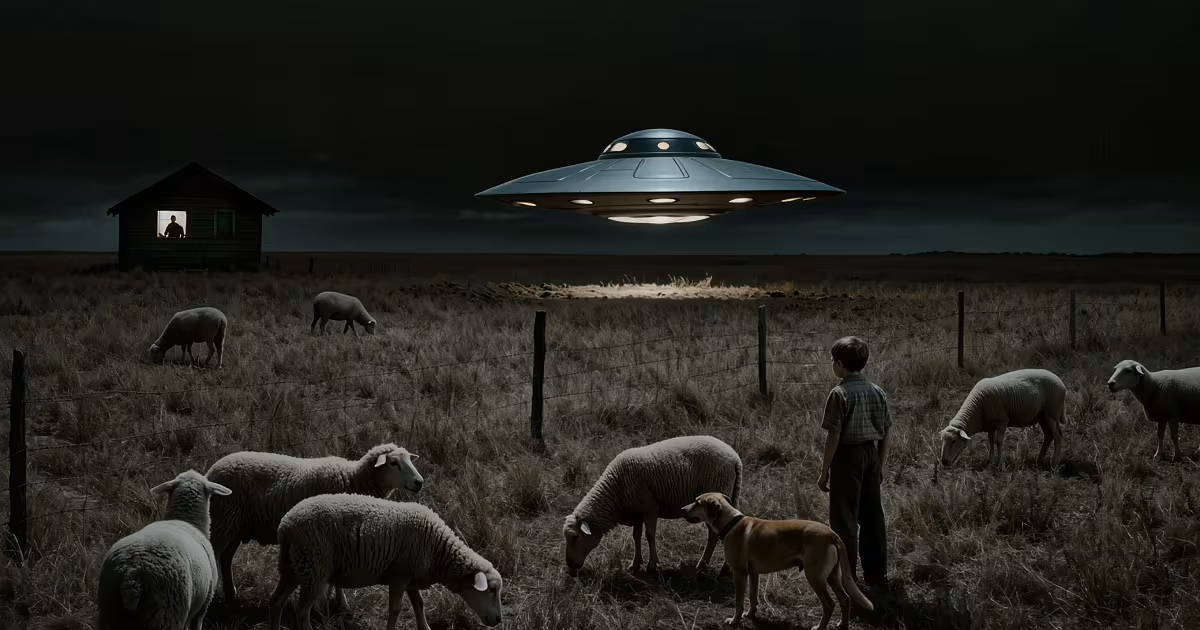
Kansas pasture night. Pale ring in soil and sheep fence.
Illustration, not a period photograph.
Opening
On the night of 2 November 1971 sixteen-year-old Ronald Johnson was tending sheep on the family farm near Delphos, Kansas, when a glowing object dropped into a stand of trees about seventy-five feet off. It sat. It made a sound he put between a jet and a welding rod. It rose, briefly lit the sky, and went. On the ground it left a glowing ring in the soil, eight feet or so across, dry in a way that water would not wet.
His parents, Durel and Erma, came out and saw the glow. They photographed the ring in daylight. Soil from the ring stayed hydrophobic for years in some tests. A newspaper award and a later lab fight made Delphos a physical-trace card. The object itself was gone in seconds.
The spine of the file is a boy, a glow, and a ring that would not take water. Delphos is Kansas dirt that remembered something. It is not a kept disc in a Topeka hangar.
Timeline
2 November 1971, evening. Ronald with the sheep, dog reacting. A mushroom or disc of light in the trees, low, coloured, noisy. Short sit. Rise. Sky flash. He calls the house. Durel and Erma see the residual glow on the ground and in the trees.
That night and the next day the ring is obvious: a pale circle, crusted, water beading when they try to wet it. Pictures. Neighbours. Sheriff. Samples taken by investigators who already knew how to mail dirt.
1972-73. Newspaper prize. Lab notes on the soil: coating, fungi, chemicals argued both ways. Sceptics later offer urine and fungus. Proponents keep the hydrophobia and the glow. The fight is the later file. The ring is 2 November.
The farm stayed a farm. The ring faded. The dirt in jars lasted longer than the glow.
The sheep were close enough that Ronald could hear the object as well as see it. The sound he put between a jet and a welding rod is why this is not only a light in trees. His parents came out on the same night and saw residual glow on ground and bark, which is why the ring is not a dawn discovery after a dream.
Soil from the ring shed water for months and years in some tests. Chemists later fought about coatings and fungus. The fight is later. The crusted circle in November photographs is first. The farm kept being a farm.
Key figures
Ronald Johnson is the only person who watched the sit. A teenager with sheep. His noise and his rise are the exhibit.
Durel and Erma own the glow they saw after, and the decision to treat the ring as a scene rather than a stain.
County officers and the first samplers own the official dirt.
Later chemists own the argument. They do not own the night in the trees.
Physical and documentary trail
On the paper, 2 November 1971 gives you four hard objects and no disc.
One: Ronald's account of a glowing object in the trees, a noise, a short sit, a rise.
Two: the glowing ring seen by the parents the same night.
Three: photographs and the hydrophobic soil that would not wet like the field around it.
Four: lab notes and the prize file. Delphos farm photographs and soil samples, November 1971, are the originating tray.
There is no photograph of the object in the trees. There is no fragment with a serial. There is no second farm that logged the same sit that hour.
Hydrophobic dirt in a photographed ring is a physical stay-behind. A prize and a lab war do not create that crust. They only argue about what cooked it.
It was glowing and it made a sound like a welding machine, then it went up.
Competing explanations
A landed device that cooked a ring in Kansas dirt. This is the family's night. It has soil that misbehaved. It has no machine.
Fungus, urine, or a farm chemical that glowed and shed water. The later lab door. It has to carry a boy who watched a sit and a rise.
A hoax for a prize. Poor fit for the first hours before anyone was offering money.
Hybrid caution. Something lit those trees. The ground kept a ring. Morning had no guest in the stand.
Later life of the case
Trace-case textbooks and chemistry wars. I keep those on the later-life shelf. The sheep, the glow, and the ring stay first.
Finding
Ronald Johnson watched a glowing object sit in the trees on the Delphos farm on 2 November 1971, his parents saw the ground still lit, and the ring they photographed would not take water like the rest of the field. Believe the family. A boy with sheep does not invent a circle for a chemist.
What still will not resolve: a frame of the object in those trees, or a jar of that soil with a chain every later lab will still sign. Either one would pin the ring to a machine. The proving object is still the thing that sat, held by someone who was not in the pasture.