OPERATION WHITECOAT
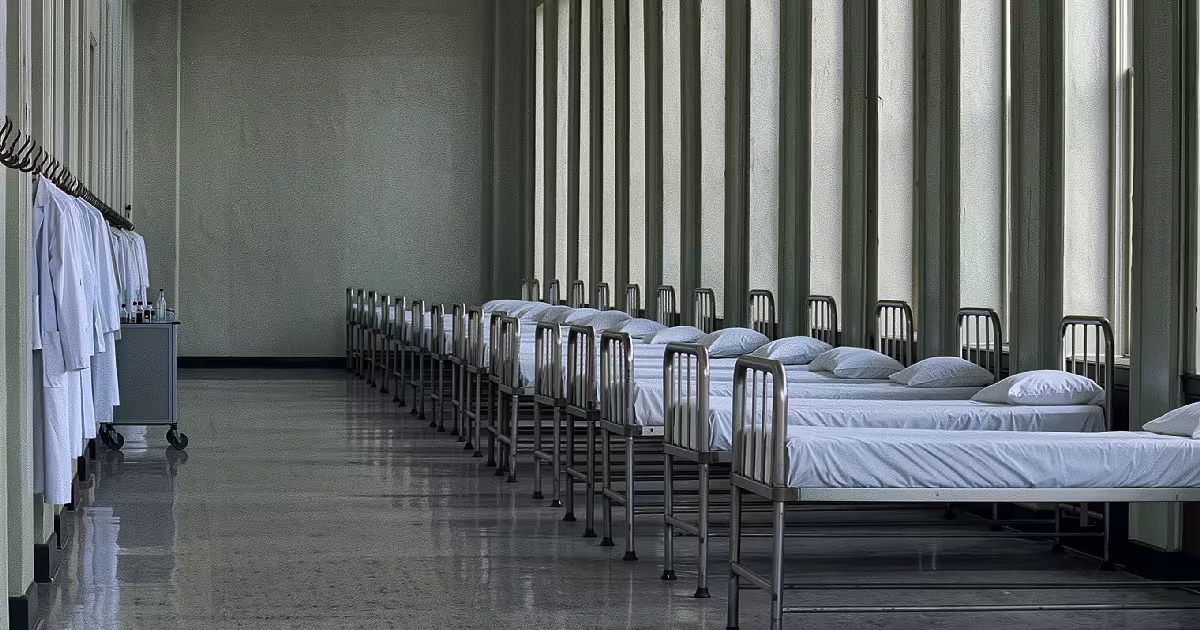
A row of narrow hospital beds and white coats on hooks in a ward.
Illustration, not a photograph.

Archive / Conspiracy / BOT313-0493
CON-1954ConspiracyDOCUMENTED
THE ARMY'S VOLUNTEER DISEASE TESTS AT FORT DETRICK
Fig. 01 A row of narrow hospital beds and white coats on hooks in a ward. Illustration, not a photograph.
Opening
From 1954 to 1973, at Fort Detrick in Maryland, the US Army ran a medical research programme in which about 2,300 volunteers were deliberately infected with disease-causing organisms. The volunteers were enlisted soldiers, most of them medics, and the great majority were conscientious objectors, many of them Seventh-day Adventists. The programme was called Operation Whitecoat, and its volunteers were called Whitecoats.
Its stated purpose was to find out how much of a germ it takes to make a man ill, and whether vaccines and drugs work, so that the Army could defend soldiers and civilians against biological weapons. It is documented, it was run openly, and it used human beings. That combination is why it keeps appearing in conspiracy lists. The facts, most of them from the Army and later government reviews, are less dramatic than the legend and still worth knowing.
Timeline
1936The Seventh-day Adventist Church sets up a Medical Cadet Corps training programme, which lets Adventists serve in the military without bearing arms.
1954Operation Whitecoat begins at Fort Detrick.
1954 to 1973About 2,300 men take part. They are infected with agents thought likely to be used in biological attacks, then treated with antibiotics. Some are given experimental vaccines.
1967The Adventist Church withdraws from the National Interreligious Service Board for Conscientious Objectors, which opposed conscription.
1973The programme ends when the US military draft ends, so no more conscientious objectors are conscripted.
2005A study by Pittman and colleagues compares 358 exposed volunteers with 164 controls.
Key figures
The Whitecoats were enlisted personnel, many of them trained medics. Some volunteered right after basic training. Others were conscientious objectors who had been sent to Fort Sam Houston, Texas, before medical training. Some chose the programme because a combat medic posting in Vietnam seemed nearly certain.
The Army's Medical Research Institute of Infectious Diseases, successor to the Fort Detrick laboratories, credits the programme with contributing to vaccines and equipment.
The Seventh-day Adventist Church supplied many volunteers. Two writers, Bull and Lockhart, argue that Whitecoat and the Medical Cadet Corps let Adventists serve without breaking Sabbath principles.
Physical and documentary trail
The record: Army and government reports, including a Government Accountability Office account; the consent forms; the 2005 health study; and the programme's own statements. Volunteers could talk to family and clergy and signed consent forms after discussing the risks with a medical officer. About 20 percent of those approached declined. Some received two weeks of leave in exchange for taking part.
The infections used included Q fever and tularaemia. Experimental vaccines included those for Q fever, tularaemia, yellow fever, Rift Valley fever, hepatitis A, plague and Venezuelan equine encephalitis. The programme records say no Whitecoat died during the tests.
What is thin is long-term follow-up. The Army has addresses for only about 1,000 of the 2,300 volunteers, and about 500, or 23 percent, were surveyed. The military chose not to fund blood tests. A handful of respondents report lingering effects, and at least one claims serious health problems.
Things you might not know
- The volunteers could say no. About one in five of those approached declined.
- The programme ended with the draft. Once conscientious objectors were no longer being conscripted, the supply of volunteers stopped.
- It helped produce real products. The Army credits it with contributing to approved vaccines for yellow fever and hepatitis, among other things. Those are the Army's own claims.
- There was a sit-down strike. According to a government account, enlisted men used first in the programme refused to take part until they were given more information about the dangers.
- Human challenge studies continue. The Army's institute and others still run them for biodefence.
Competing explanations
A voluntary medical programme. The Army's account. Volunteers were informed, consent was documented, no deaths occurred, and the work contributed to vaccines. This is mostly supported by the record.
A programme with weak consent and little follow-up. Critics note the pressure on conscientious objectors who might otherwise have faced combat, the limits of what the early volunteers were told, and the Army's lack of long-term health checks. The 2005 study found no conclusive link to adverse outcomes, but the sample was small.
A biological weapons programme in disguise. This is the claim of the conspiracy versions. Operation Whitecoat was a defensive research programme, and the records do not show offensive use on the volunteers.
Later life of the case
The programme is cited in discussions of research ethics. It sits alongside Tuskegee and Project MKUltra in lists of Cold War human experiments, though it differs from them in one important respect: the subjects were volunteers who knew they were part of an experiment.
Finding
Operation Whitecoat was real, run openly and documented. It exposed volunteers to serious diseases under controls, with consent and without deaths, and it came out of a draft system that left conscientious objectors few good choices. The ethical question is about the quality of the consent and the thinness of the follow-up, not about secrecy.
What still will not resolve: the long-term health of the Whitecoats, since the Army reached fewer than half of them and chose not to fund blood tests.
Evidence signature
8/9 Strong
- Witnesses
- trained, independent witnesses
- Instruments
- radar or measured data
- Paper
- formal investigation, court or declassified file
How well documented the case is, not whether it's true. A strong record can still have an ordinary answer, and a thin one can still be real.
You decide · OPERATION WHITECOAT
What do you think happened?
One vote per case, anonymous. You'll see how other readers voted once you've voted.