TUSKEGEE
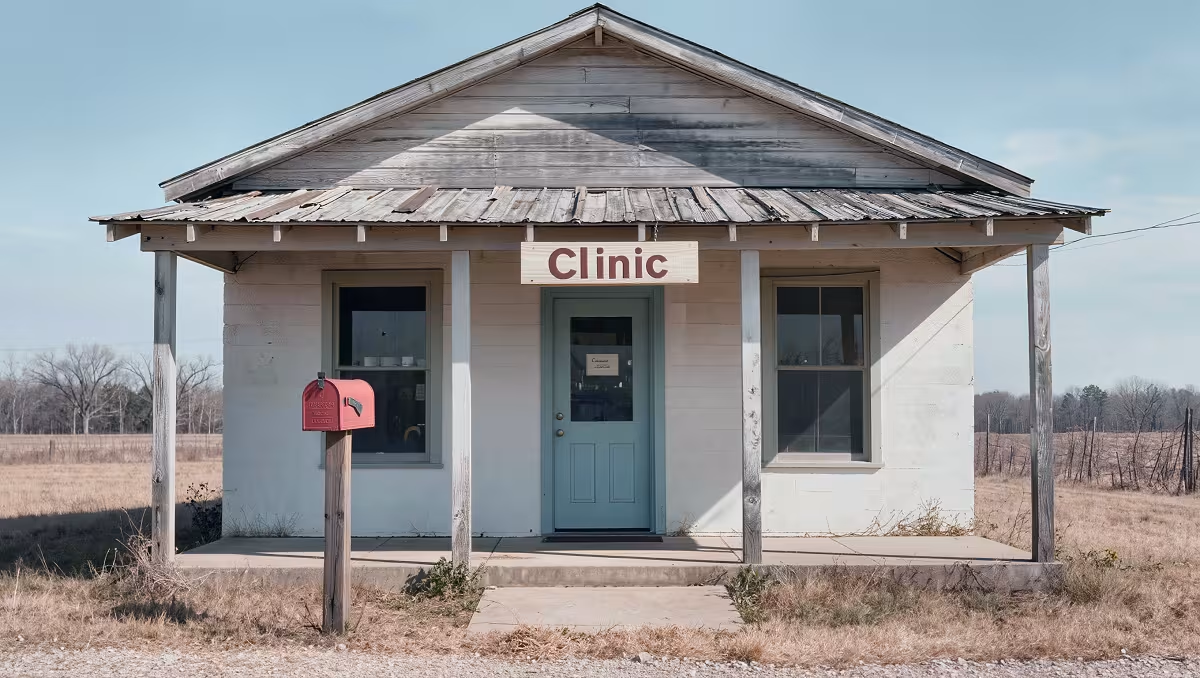
Mid-century clinic exterior. Alabama, no patients posed.
Illustration, not a period photograph.
Opening
In 1932 the United States Public Health Service began a study of untreated syphilis in Macon County, Alabama, working with the Tuskegee Institute. Six hundred Black men were enrolled: 399 with the disease, 201 controls. They were told they were being treated for bad blood. They were not told the study's real design. Spinal taps were sold as treatment. When penicillin became the standard after the war, it was withheld from the infected group so the study could watch the course of the disease to autopsy. The work ran until 1972.
Peter Buxtun, a PHS interviewer, took the design to the press after the service would not stop it. The Associated Press ran Jean Heller's story on 25 July 1972. Hearings followed. The study ended. A class action paid survivors and families. In 1997 Bill Clinton apologised at the White House. The men had names. The files had numbers. The apology did not put the years back.
The spine of the file is a forty-year study that withheld a cure. Tuskegee is USPHS paper. It is not a rumour about a Southern clinic.
Timeline
1932 enrollment in Macon County. Promises of treatment. No informed consent as later law would name it.
1940s penicillin becomes standard elsewhere. The study keeps its infected group off the drug. Men die. Families are not told why the clinic would not treat.
Buxtun inside PHS in the 1960s. His protest sits in memos before it sits in a newspaper. 25 July 1972 Heller's AP story. The study stops.
Settlement, hearings, 1997 apology. Those are later life that still point at 1932-72. The forty years are first.
The design was never a secret inside the service. Nurses and doctors in the county worked a protocol. Men who asked for shots were managed back onto the watch. After 1947 the Nuremberg language existed and the study still ran. That is why 1972 is an ending, not a beginning of knowledge inside PHS.
Key figures
The six hundred men are the file. They came for care and were kept for watching.
USPHS officers own the design and the decision to withhold penicillin.
Tuskegee Institute's medical staff sit in the cooperation that made the county work.
Peter Buxtun and Jean Heller own the break that ended it. Bill Clinton owns a later sentence that could not treat the dead.
Physical and documentary trail
On the paper, 1932-72 give you four hard objects and no consent that would hold.
One: the 1932 enrollment lists and the bad-blood cover.
Two: the decision, after penicillin, to continue untreated observation.
Three: Buxtun's internal protest and the 25 July 1972 AP story.
Four: the settlement and the 1997 apology. USPHS Tuskegee Study records, 1932-1972, and AP, 25 July 1972, are the official tray.
There is no page that makes the men volunteers in the later sense. There is no claim penicillin was unknown to the service. There is no small local rogue shop. It was federal paper.
Enrollment lists and the withheld drug are the stay-behinds. Heller's story only opened the drawer. The drawer was already forty years deep.
They were told they were being treated. They were being watched.
Competing explanations
A racist experiment dressed as care. This is the reading the 1972 story forced. It has forty years. It has penicillin withheld.
A study that began in a different ethical weather and failed to stop. Also true, and not a defence. The weather changed. The clinic did not.
Exaggeration of what the men were told. Weak against the cover language and the withheld drug.
Hybrid caution. A federal service ran a watch on untreated disease. A reporter ended it. The years in between are the file.
Later life of the case
Bioethics chapters and the Clinton apology. I keep those on the later-life shelf. The 1932 lists stay first.
Finding
The Public Health Service enrolled hundreds of Black men in Macon County in 1932, kept the infected off penicillin once it existed, and ran that watch until a 1972 newspaper story stopped it. Believe the men. A clinic that promises treatment does not invent forty years of files for a later speech.
What still will not resolve: a consent form that would hold under later law, or a page that shows penicillin was offered and refused. Either one would rewrite the design. The proving object is still those offers, written to the men, which the archive did not produce.