PROJECT MINARET
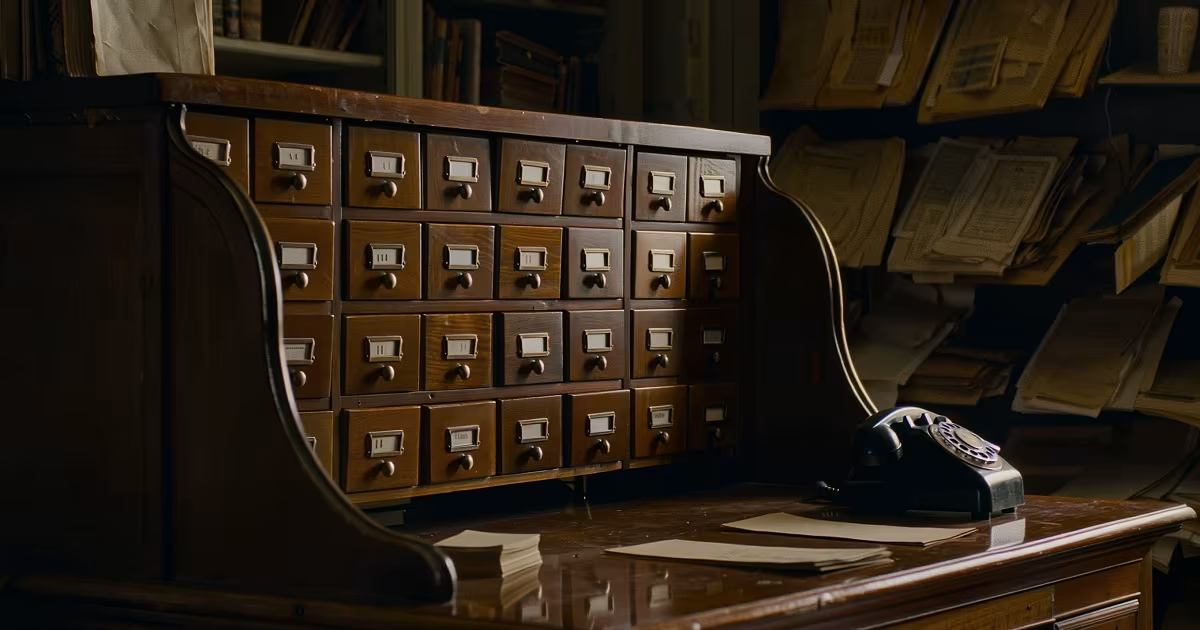
1960s records desk. Card file, no readable names.
Illustration, not a period photograph.
Opening
Project Minaret was the watch list. Names, including Americans, were given to NSA so that Shamrock and other takes could be read for those people. Church and the later NSA histories put civil-rights figures, journalists, and antiwar names on the kind of list the charter was not written to serve. Minaret ran from the late 1960s into the 1973-75 weather that closed it. It is not the same caption as Shamrock. Shamrock is the pipe. Minaret is who the pipe was aimed at.
The list grew by request from other agencies. That is why this card is a sister to CHAOS and to Bureau watch lists without being either shop. Ford's 1975 restrictions and then FISA are the legal aftertaste. The names are the file.
The spine of the file is a list laid on a take. Minaret is targeting. It is not a claim that only foreigners were read.
Timeline
Late 1960s the watch-list practice is captioned Minaret. Names come in from other desks.
Early 1970s the list includes Americans the later hearings would not treat as foreign intelligence.
1973-75 the shop is exposed and restricted. Shamrock's close sits beside it.
FISA is later life. The list is first.
Minaret is the reason Shamrock was not only bulk paper. A list turns a pipe into a person. Requests from other agencies are why this card sits beside CHAOS without being Helms's shop. The later statute is a court standing where a list used to stand.
Key figures
NSA owns the list and the reading.
Requesting agencies own the names they sent.
People on the list own an absence of a warrant the later law would want.
Church staff own the public sentence that the list was wrong.
Physical and documentary trail
On the paper, 1967-75 give you four hard objects and no empty list.
One: the Minaret caption as a watch-list program.
Two: American names among the targets as later described.
Three: the link to Shamrock take.
Four: the 1970s close and committee publication. Church Committee account of Project Minaret, is the public tray.
There is no full public roster. There is no page that makes the list only foreign. There is no warrant file the later statute would recognise for those names.
American names on the list are the stay-behind. A roster would finish the human scale. The caption already finishes the aim.
The watch list included the names of American citizens.
Competing explanations
A charter breach aimed at dissent. This is Church. It has names. It has a pipe.
A counterintelligence list that picked up Americans by accident. Weak against how names were requested.
A small leftover. Weak against years of caption.
Hybrid caution. A list was laid on a take. Americans were on it. A later statute tried to make that list ask a court.
Later life of the case
FISA footnotes and later watch-list fights. I keep those on the later-life shelf. The 1970s list stays first.
Finding
NSA ran Minaret as a watch list against telegram and other take, American names sat on it, and Church put that fact on the record. Believe the list. A committee does not invent a caption for a later privacy slogan.
What still will not resolve: the roster in public, or a warrant file that would satisfy later law. Either one would finish the names. The proving object is still those names, printed, not described as a kind of person.