PROJECT SHAMROCK
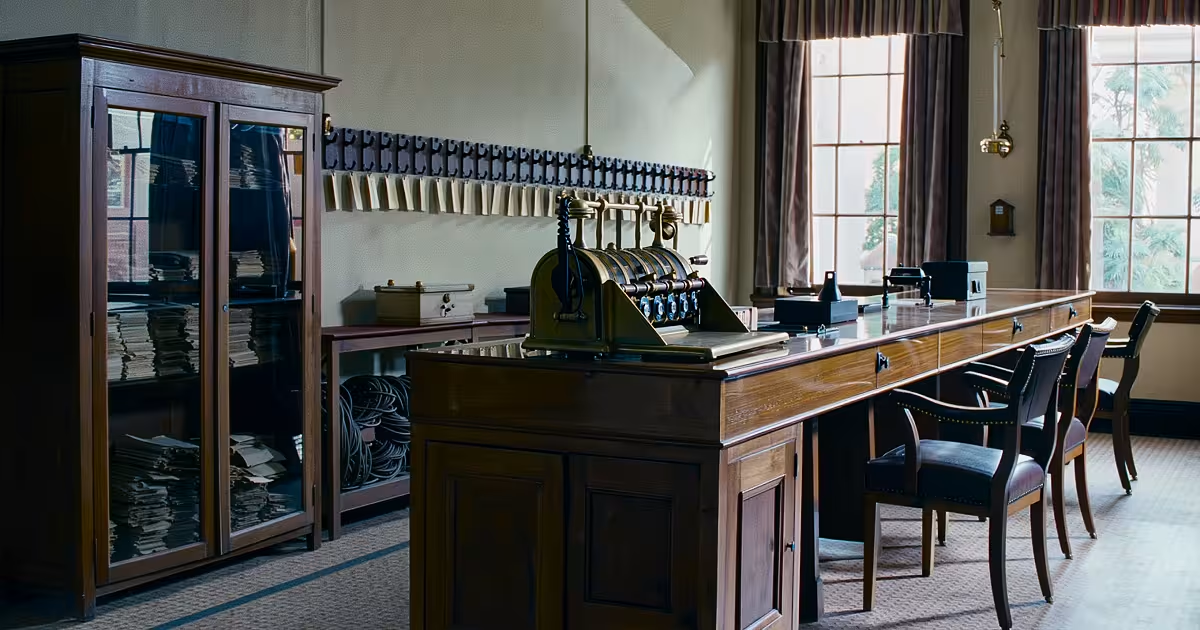
A wartime telegraph office with a teleprinter and a long desk.
Illustration, not a period photograph.

Archive / Conspiracy / BOT313-0157
CON-1945ConspiracyADMITTED
THIRTY YEARS OF COPIED TELEGRAMS
Fig. 01 A wartime telegraph office with a teleprinter and a long desk. Illustration, not a period photograph.
Opening
Project SHAMROCK was the arrangement under which the National Security Agency and its Army predecessors received copies of most international telegrams leaving the United States, from August 1945 to May 1975. RCA Global and ITT World Communications handed over virtually all their international traffic. Western Union International gave copies of certain foreign traffic until 1972. No warrant or statute covered it. The companies relied on spoken assurances from Defense Secretaries.
The Church Committee called SHAMROCK "probably the largest governmental interception program affecting Americans ever undertaken." The NSA estimated that in its last two or three years analysts reviewed about 150,000 telegrams a month. Defense Secretary James Schlesinger ended it in May 1975, as the Senate investigators closed in.
Timeline
18 August 1945Officers of the Army's Signal Security Agency go to New York to ask the cable companies to keep supplying the foreign government traffic they had handed to wartime censors.
21 August 1945ITT, which had refused, agrees after the Army suggests it would not want to be "the only non-cooperative company on this project." RCA's president agrees in principle the same day. All three firms want the Attorney General to rule the intercepts legal first.
September to October 1945Collection starts at ITT and Western Union by 1 September and at RCA on 9 October.
16 December 1947Defense Secretary James Forrestal, saying he speaks for the President, tells ITT and RCA executives their participation is essential and they will not face prosecution in the federal courts. He warns that he cannot bind his successors.
June 1948Forrestal's office seeks an amendment to Section 605 of the Communications Act to cover the practice. It clears the Senate Judiciary Committee but never reaches a vote.
1949Forrestal's successor, Louis Johnson, repeats the assurances.
1952The new NSA takes over the program.
1963 to 1966RCA and ITT move to magnetic tape. From 1964 the NSA can sort RCA's traffic electronically against its watch lists.
November 1966The CIA rents cover offices in lower Manhattan where the NSA copies the tapes.
May 1975Schlesinger orders the program ended, effective 15 May.
6 November 1975Senator Frank Church makes SHAMROCK public in an open session of his committee.
Key figures
Louis Tordella, NSA Deputy Director from 1958 to 1974, who ran the program day to day. He testified that, as far as he knew, no President since Truman had been told of it.
James Forrestal and Louis Johnson, the Defense Secretaries who gave the companies their assurances.
The executives of RCA Global, ITT World Communications and Western Union, whom the committee did not name.
James Schlesinger, who terminated it.
Frank Church, who read it into the public record.
Physical and documentary trail
The main source is the Church Committee staff report on SHAMROCK in Book III of its final report (April 1976), built on testimony from Tordella and company officials and on NSA and Army files. Inside the NSA only the Director, the Deputy Director and one lower-level manager were responsible for it. Before magnetic tape, the NSA screened paper tape and microfilm by hand, and one former official testified that it had received "literally miles and miles and miles of punched tape." The Senate investigation as a whole is covered in the Church Committee report.
SHAMROCK was probably the largest governmental interception program affecting Americans ever undertaken.
Corrections to the earlier version of this report. President Ford did not end SHAMROCK: Defense Secretary Schlesinger did, effective 15 May 1975. The 150,000 figure is the NSA's own estimate for the program's last two or three years, not a peak or a round committee number. Western Union International provided only selected foreign traffic and stopped in 1972.
Things you might not know
- The CIA posed as a TV company. Its cover office for copying the tapes, codenamed LPMEDLEY, posed as a television tape processing firm from November 1966 to August 1973. The CIA's General Counsel then told it to "get out of it."
- The courier came at 4 a.m. At Western Union an NSA courier arrived at about 4:00 each morning to collect the microfilm cartridges from a Recordak camera on the transmission room floor.
- A vice president found the camera. On 2 February 1968 a Western Union International vice president discovered the machine. When company officials asked, the courier said he was from the Department of Defense and did not know what the arrangement was.
- The companies never asked. Company officials told the committee they had never asked what the NSA did with the traffic and had received nothing in return.
- A file turned up late. On 25 March 1976, as the committee was finishing its report, the NSA "discovered" a file of SHAMROCK documents that a lower-level employee had held until about 1 March.
Competing explanations
A wartime arrangement that nobody switched off. SHAMROCK began as a continuation of censorship access to foreign government cables. Forrestal and Johnson treated it as necessary, and Congress was once asked to legalise it.
The largest warrantless intercept of Americans' messages in US history. Once tapes could be sorted by computer from 1964, Americans' international telegrams could be pulled against watch-list names. The committee concluded that the program appeared to violate the privacy of citizens, whatever its original purpose.
Corporate cooperation without questions. The companies worried about legality in 1945, were reassured twice and then stopped asking for 25 years. On this reading the program lasted because it cost nobody anything to continue.
Later life of the case
The NSA's use of SHAMROCK traffic against a watch list of American names is the subject of the MINARET report. The two programs together were the main case for the Foreign Intelligence Surveillance Act of 1978, which required court approval for foreign intelligence surveillance involving Americans.
Finding
SHAMROCK is documented and admitted. For thirty years three telegraph companies handed the government copies of international messages under verbal assurances, and in its last years NSA analysts were reviewing about 150,000 a month. No law ever authorised it, and nobody was prosecuted for it.
What still will not resolve: how many Americans' telegrams were read over the thirty years. The NSA told the committee no total was available.
Evidence signature
4/9 Solid
- Witnesses
- one person, or a tradition
- Instruments
- nothing on record
- Paper
- formal investigation, court or declassified file
How well documented the case is, not whether it's true. A strong record can still have an ordinary answer, and a thin one can still be real.
You decide · PROJECT SHAMROCK
What do you think happened?
One vote per case, anonymous. You'll see how other readers voted once you've voted.