HIGHGATE VAMPIRE
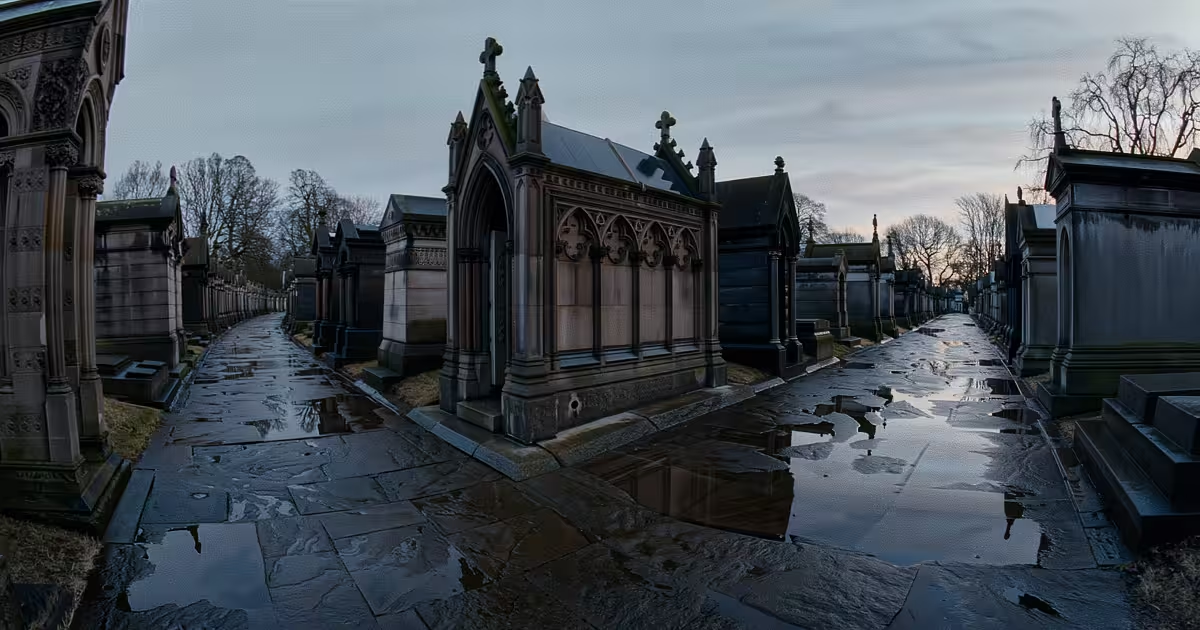
Highgate western ground at dusk. Paths, no figure.
Illustration, not a period photograph.
Opening
In 1969 and 1970 Highgate Cemetery in north London became a public panic. Reports of a tall dark figure among the tombs, animal mutilations in the neighbourhood, opened vaults, and two rival hunters, David Farrant and Seán Manchester, who could not agree on what should be done with a body they had not got. Newspapers ran it. Crowds climbed the walls on Friday nights. Police took names. A television crew stood among the stones and made the place worse.
What can be held is damage: broken coffins, vandalism, a cemetery already in decline, a fox or a dog that looks like a cloak if you want it to. What cannot be held is a corpse that both men staked. Manchester later wrote books. Farrant went through the courts on weapons and tomb charges. The dead of Highgate stayed dead.
The spine of the file is a cemetery that was broken open in public. Highgate is vaults, crowds, and two men with competing rites. It is not a named vampire under a documented stone.
Timeline
1969. Letters to local papers about a figure in Highgate. Swain's Lane after dark. Farrant watches. Manchester watches. They are not friends.
Early 1970. Animal stories, vaults found open, coffins disturbed. 13 March 1970 a mass of people go over the walls after television talk. Police and cemetery staff spend the night pulling the living out of the dead's ground.
Later 1970. Attempted hunts, a supposed exorcism, arrests. Farrant in court on indecency and later on a wider set of charges tied to tombs and weapons. Manchester builds a narrative of a Romanian noble that the cemetery ledger does not print.
The cemetery is repaired in decades of money and friends' work. The story does not get a body. It gets paperbacks.
Key figures
David Farrant is the watcher who ended in court. His nights in the cemetery are real even when the figure is not proved.
Seán Manchester is the rival priest-shaped narrative. His books are later life. His 1970 presence is not nothing.
Cemetery staff and the police own the broken vaults and the crowd-control night.
The dead in those vaults are the only people who did not file a statement.
Physical and documentary trail
On the paper, 1969-70 give you four hard objects and no staked corpse.
One: published reports of a tall figure and of animals found dead near the grounds.
Two: opened vaults and disturbed coffins logged by staff and police.
Three: the March 1970 invasion of the cemetery by a crowd after broadcast talk.
Four: court paper on Farrant and the press file. Police and cemetery records of disturbances at Highgate, 1969-1970, are the official tray.
There is no photographed figure that a lab will call a body. There is no exhumation both hunters signed. There is no Romanian name in the burial register that matches Manchester's later noble.
A tall dark figure among the tombs.
Competing explanations
A real unknown presence using a ruined cemetery. This is what the hunters sold. It has crowds. It has no corpse.
Foxes, decay, vandalism, and two men amplifying each other through newspapers. Fits the broken vaults and the Friday nights.
A hoax that escaped its authors. Possible once television stood in the lane.
Hybrid caution. Vaults were opened. Crowds came. No vampire was produced that a coroner would hold.
Later life of the case
Manchester's books, Farrant's interviews, tourist ghost walks. I keep those on the later-life shelf. The broken vaults and the March crowd stay first.
Finding
Highgate Cemetery was broken into in public in 1969 and 1970, vaults were opened, a crowd went over the walls, and two rival hunters never produced a body they both agreed they had. Believe the damage. A cemetery does not invent smashed coffins.
What still will not resolve: a photographed figure that is more than a cloak on a fox, or a ledger name that matches the noble in the later books. Either one would pin the panic to a person. The proving object is still that figure among the stones, held by a camera that was pointed at a crowd instead.