BROWN LADY
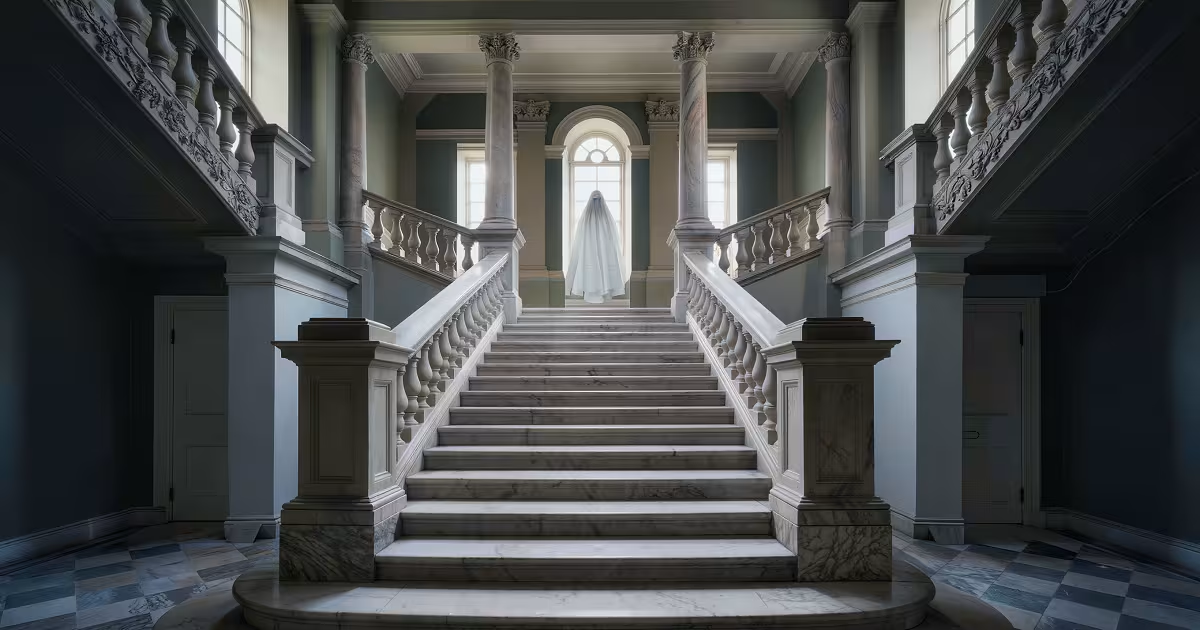
English country-house staircase. Pale form not detailed.
Illustration, not a period photograph.
Opening
On 19 September 1936, about 16:00, Captain Hubert C. Provand and Indre Shira were at Raynham Hall in Norfolk for Country Life. They had already exposed one plate of the main staircase. Provand's head was under the cloth for a second exposure. Shira, holding the flash pistol, saw a vapour taking a woman's shape coming down. He shouted. Provand took the cap off. Shira fired the flash. On the negative: a pale figure on the stairs, veil, no clear face. Country Life printed it on Boxing Day, 26 December 1936. Life ran it in America on 4 January 1937.
The house already had a Brown Lady in older talk: Dorothy Walpole locked in by a jealous husband, Colonel Loftus at Christmas 1835, Captain Frederick Marryat later putting three shots into a grin with empty sockets. Country Life's own caption was careful. It did not insist the plate was Dorothy. Shira called it the Raynham Ghost. Harry Price interviewed both men and said he could not shake the story unless they had colluded. Joe Nickell and others have since read a double exposure.
The spine of the file is a Country Life plate and a shout on the stairs. The Brown Lady is a staircase negative. It is not a named woman in a Norfolk vault.
Timeline
Older house stories sit first as colour, not as 1936 paper. 19 September 1936 is the working day: two men, two plates, a shout, a flash.
26 December 1936 Country Life prints the figure. 4 January 1937 Life takes it across the Atlantic. Price talks to Provand and Shira and leaves the collusion door open only as a pair.
Later photographic critiques offer double exposure and a smear on the stairs. The staircase is still the staircase. No second 1936 camera sat beside them.
Every British ghost-photo list starts here. That list is later life. The afternoon under the cloth is first.
Key figures
Indre Shira owns the shout and the flash pistol.
Hubert Provand owns the camera under the cloth and the cap coming off.
Country Life owns the Boxing Day page.
Harry Price owns the interview that would not break them unless they had agreed a lie together.
Physical and documentary trail
On the paper, 19 September 1936 gives you four hard objects and no body.
One: Shira's same-afternoon account of a vapour taking shape on the stairs.
Two: the negative with a veiled pale figure.
Three: Country Life, 26 December 1936.
Four: Price's interviews. Country Life staircase plate, Raynham Hall, 26 December 1936, is the originating tray.
There is no second plate from another camera. There is no identified extra on the stairs that day. There is no 1835 bullet the house still holds as Marryat's.
Quick, quick, there's something.
Competing explanations
A figure on the stairs that afternoon. This is Shira's shout. It has a negative. It has no second witness with a second camera.
A double exposure or process smear. Nickell's door. Has to live with two professionals who told Price the same minute.
A planned Country Life stunt. Possible. Price thought it would take both of them.
Hybrid caution. A plate was exposed. A figure is on it. The house did not produce Dorothy's bones.
Later life of the case
Ghost annuals and double-exposure essays. I keep those on the later-life shelf. The Boxing Day page stays first.
Finding
Indre Shira shouted on the Raynham stairs on 19 September 1936, Provand took the cap off, and Country Life printed a veiled figure that Christmas. Believe the working minute. Two men on a job do not invent a flash for Boxing Day unless the glass already held something.
What still will not resolve: a second camera from that afternoon, or a process test that everyone accepts as the smear. Either one would pin the veil. The proving object is still that figure on the stairs, held as a woman or as light by more than a later essay.