RAYNHAM HALL
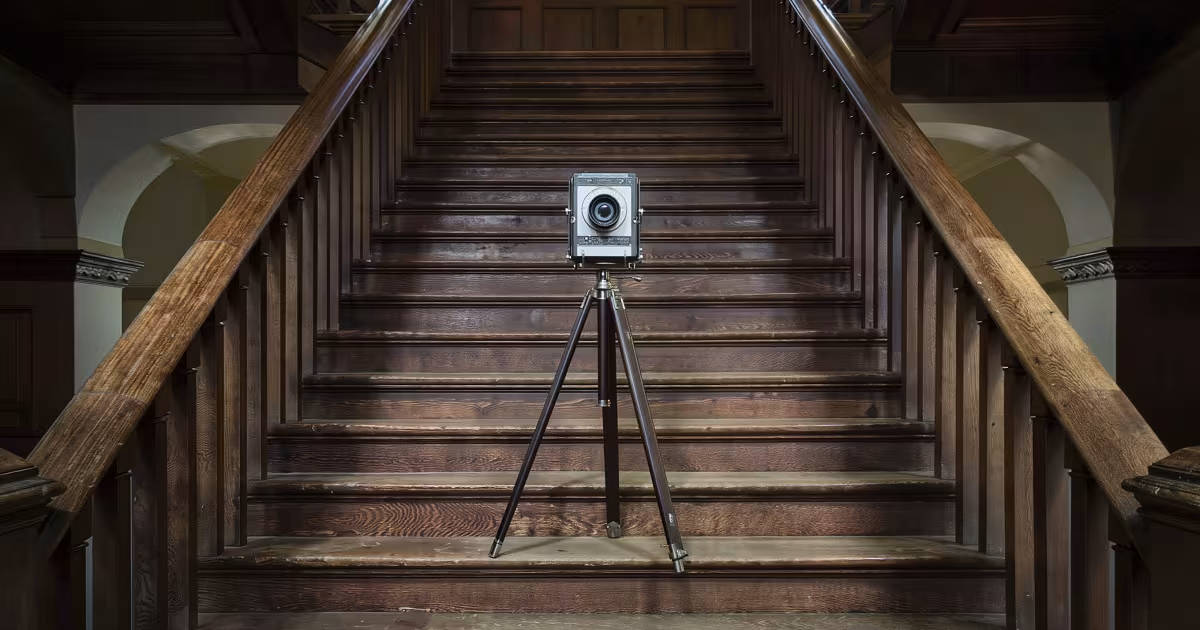
Oak staircase 1936. Empty treads and magazine camera.
Illustration, not a period photograph.
Opening
On 19 September 1936 Captain Hubert Provand and Indre Shira of Lady magazine photographed the staircase at Raynham Hall in Norfolk and produced a still of a veiled figure on the stairs, the Brown Lady in the later name. The plate went into Country Life. Sceptics later offered a double exposure and a smear. The Townshend house is real. Dorothy Walpole as the named dead woman is later ivy unless a dated household letter walks her on those stairs as a guest after death.
Raynham is a stair plate. That plate is why this card is not only a Norfolk rumour.
The spine of the file is a 1936 negative and a staircase. Raynham Hall is a Country Life still. It is not a grave on the landing.
Timeline
Long Brown Lady talk in the house. 19 September 1936 the stair plate.
Country Life print. Later double-exposure readings.
The house remains a Townshend pile.
Later ghost-photo lists keep the plate. That list is later life. The 1936 still is first.
Country Life is not a club pamphlet. That is why the 1936 plate still sits in arguments. A smear can be a smear and still be a plate that a working magazine printed from a working house.
Key figures
Provand and Shira own the camera and the plate.
Country Life owns the public print.
The Townshend house owns the stairs.
Later sceptics own the double-exposure door.
Physical and documentary trail
On the paper, 19 September 1936 gives you four hard objects and no landing grave.
One: the Raynham staircase as a real fabric.
Two: the 1936 plate of a veiled figure.
Three: Country Life publication.
Four: later smear and double-exposure arguments. Provand and Shira photograph, Raynham Hall, 19 September 1936, is the originating tray.
There is no second camera from that minute. There is no inquest that puts Dorothy on those stairs as a corpse. There is no doubt of the plate as a plate.
A stair plate and a magazine print are the stay-behinds. A second camera would finish the figure. A process test both camps sign would finish the smear door.
The figure was on the stairs when the plate was exposed.
Competing explanations
A woman on the Townshend stairs. This is the print. It has a plate. It has no grave on the landing.
A double exposure or a smear. The sceptical door. Has to carry two working photographers and a magazine that printed it.
A living person in a veil. Possible. The house still has to explain the later fame of one frame.
Hybrid caution. A plate exists. Morning had no body on the stairs.
Later life of the case
Later ghost-photo lists. I keep those on the later-life shelf. The 1936 plate stays first.
Finding
Provand and Shira exposed a plate on the Raynham stairs on 19 September 1936 that Country Life printed as a veiled figure. Believe the camera as a camera. A magazine does not invent a Norfolk staircase for a later list.
What still will not resolve: a second camera from that minute, or a process test that ends the smear charge for both camps. Either one would pin the figure. The proving object is still that person on the stairs, held as smear or as guest by more than one Country Life still.