THE HAT MAN
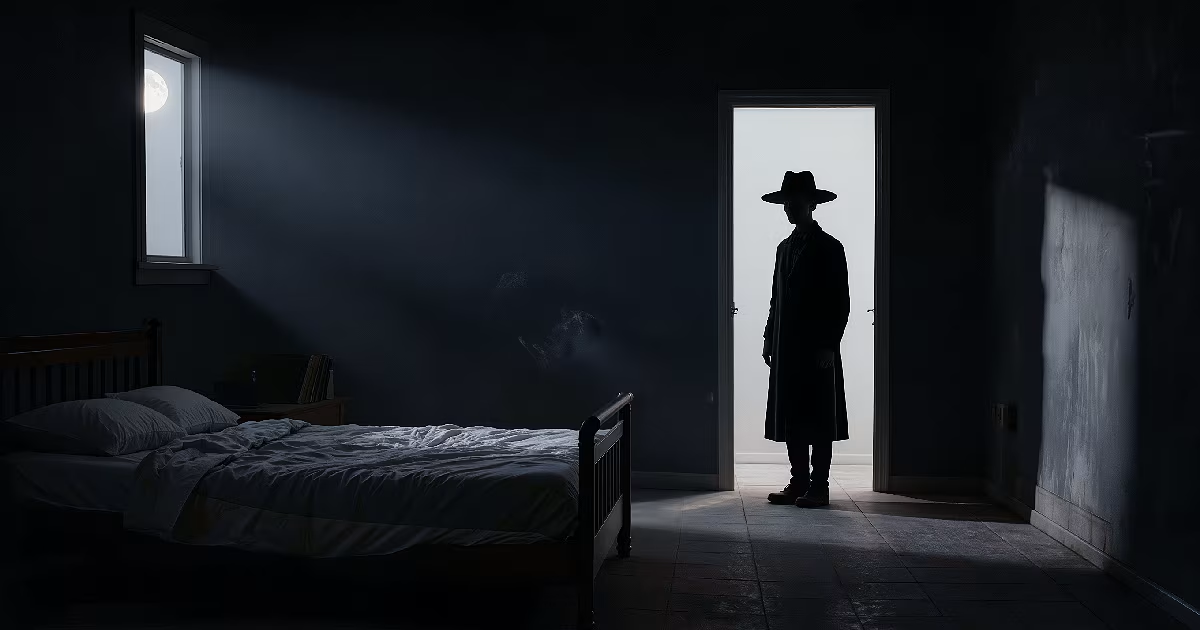
A figure in a brimmed hat waits in a moonlit bedroom doorway.
Illustration, not a photograph.
Opening
You wake in the night and cannot move. Your eyes are open, but your body will not answer. And in the corner of the room, or in the doorway, or standing at the foot of the bed, there is a tall, dark figure wearing a long coat and a brimmed hat. It has no face. It is watching you. Thousands of people, in many countries, who have never met and never heard of each other, describe this same visitor in almost the same words. They call him the Hat Man, and he is the best known of the "shadow people".
Timeline
Ancient times onward. Cultures around the world describe a night visitor that sits on or presses down on a sleeping person: the mara of Scandinavian folklore, which gave English the word "nightmare", the Old Hag of Newfoundland, kanashibari, "bound in metal", in Japan, and the incubus and succubus of medieval Europe.
1781. Henry Fuseli paints The Nightmare: a woman sprawled asleep, a demon crouched on her chest, and a ghostly horse looking in through the curtains. It becomes one of the most famous images of the night terror.
1940s. In Cleveland, Ohio, a young Wes Craven looks out of his window at night and sees a man in a fedora on the street below, staring up at him. When he looks again, the man is still there. Decades later, the hat goes on Freddy Krueger.
1982. Folklorist David Hufford publishes The Terror That Comes in the Night, a study of the Old Hag in Newfoundland, showing that people with no knowledge of the tradition describe the same experience.
12 April 2001. Art Bell's late-night radio show Coast to Coast AM devotes a programme to shadow people. Listeners send in drawings of what they have seen, which are posted on the show's website, and the phenomenon becomes famous.
October 2001. Heidi Hollis publishes the first of her books on shadow people and becomes a regular guest on Coast to Coast.
2011. Psychologists Brian Sharpless and Jacques Barber publish a review of studies covering more than 36,000 people. About 7.6 percent of the general population have had sleep paralysis at least once, rising to 28 percent of students and 32 percent of psychiatric patients.
2010s to today. The Hat Man becomes a fixture of online forums and then TikTok, where people also describe seeing him after taking large overdoses of the antihistamine diphenhydramine, better known as Benadryl.
Key figures
The witnesses are the heart of this report: ordinary people who woke paralysed and saw something in the room. David Hufford was the scholar who first took their accounts seriously as a pattern. Art Bell and Heidi Hollis gave shadow people a name and an audience. Brian Sharpless, at Penn State and elsewhere, is one of the leading researchers on sleep paralysis. James Allan Cheyne mapped what people see, and Baland Jalal has shown how much culture shapes it.
Physical and documentary trail
There is a large scientific literature on sleep paralysis. It happens when the brain wakes before the body leaves the dreaming stage of sleep, REM, during which the muscles are switched off so that we do not act out our dreams. The sleeper is conscious but cannot move, and dream imagery can spill into the waking room. A sense of a presence, pressure on the chest and a figure in the room are among the most common features.
James Allan Cheyne, a psychologist at the University of Waterloo in Canada, surveyed thousands of people with sleep paralysis and found their visions fall into three groups. "Intruder" experiences are the sense of someone in the room, often seen or heard. "Incubus" experiences are pressure on the chest, choking and pain. "Vestibular-motor" experiences are floating, spinning or leaving the body. The Hat Man is a classic intruder, and the intruder and incubus often come together: a figure in the room, and then a weight on the chest.
Culture changes how frightening it is. In a 2014 study, psychologist Baland Jalal compared people in Egypt and Denmark. In Egypt, most people who had sleep paralysis saw it as supernatural, and nearly half blamed the jinn. More than half feared it could kill them. In Denmark, where it is seen as an odd quirk of the body, far fewer were afraid, and their episodes were reported as shorter and less frequent. What people believe about the visitor seems to shape how long he stays.
The folklore record is just as large, from Fuseli's painting and Hufford's Newfoundland interviews to Japanese kanashibari stories. What it does not contain is any physical trace of the Hat Man himself.
Things you might not know
- Freddy Krueger's hat came from a real man. Wes Craven said a stranger in a fedora staring up at his window when he was a boy inspired Freddy's look. Craven took the name from a school bully.
- "Nightmare" originally meant him. The mare in nightmare is the mara, a spirit believed to sit on sleepers' chests and smother them. The word described the visitor long before it meant a bad dream.
- Newfoundlanders say "hagged". In Newfoundland, being visited by the Old Hag in the night is called being hagged, and the tradition has its own remedies and warnings.
- Japan calls it being bound in metal. Kanashibari literally means "metal binding", from a Buddhist idea of a spell that freezes a person in place.
- Belief makes it worse. In Baland Jalal's study, Egyptians who blamed the jinn feared sleep paralysis far more than Danes did, and reported more frequent and longer episodes.
- Almost one in three students have had it. The 2011 review found sleep paralysis in about 28 percent of students, far more than in the general population.
- The Benadryl Hat Man is a meme and a warning. People who took huge overdoses of the allergy drug diphenhydramine describe seeing the same hatted figure, and doctors have used the meme to warn how dangerous the overdoses are.
Competing explanations
Sleep paralysis and the brain. This is the scientific view. During sleep paralysis the brain is half in a dream, the body is frozen, and the threat-detection parts of the brain are on high alert. The mind fills the dark room with a presence.
Drugs, illness and exhaustion. Deliriant drugs such as diphenhydramine and datura, long sleep deprivation and some mental illnesses can all produce visions of shadowy figures.
A real entity. Many people who have seen the Hat Man reject the scientific explanation. They point out that he appears to people who have never heard of him, that the descriptions match across cultures and centuries, and that some sightings happen while people say they are fully awake. To them he is a real visitor of some kind: a spirit, a demon, an inter-dimensional being, or something nobody has a name for.
Later life of the case
The Hat Man has become one of the internet's great modern legends, with countless personal stories, artwork, films and TikTok videos. Scientists studying sleep paralysis now often use the shared imagery, the hat, the coat, the watching figure, as a way into understanding how the brain builds a monster.
Finding
The experience is real. Millions of people have woken paralysed and seen a dark figure in the room, and the science of sleep paralysis explains much of how that happens. What it does not fully explain is why so many people, across so many cultures, see the same figure in the same hat.
What still will not resolve: why him. The brain can make a monster out of the dark. Why it so often chooses a tall man in a brimmed hat is a question nobody has answered.