GEF THE MONGOOSE
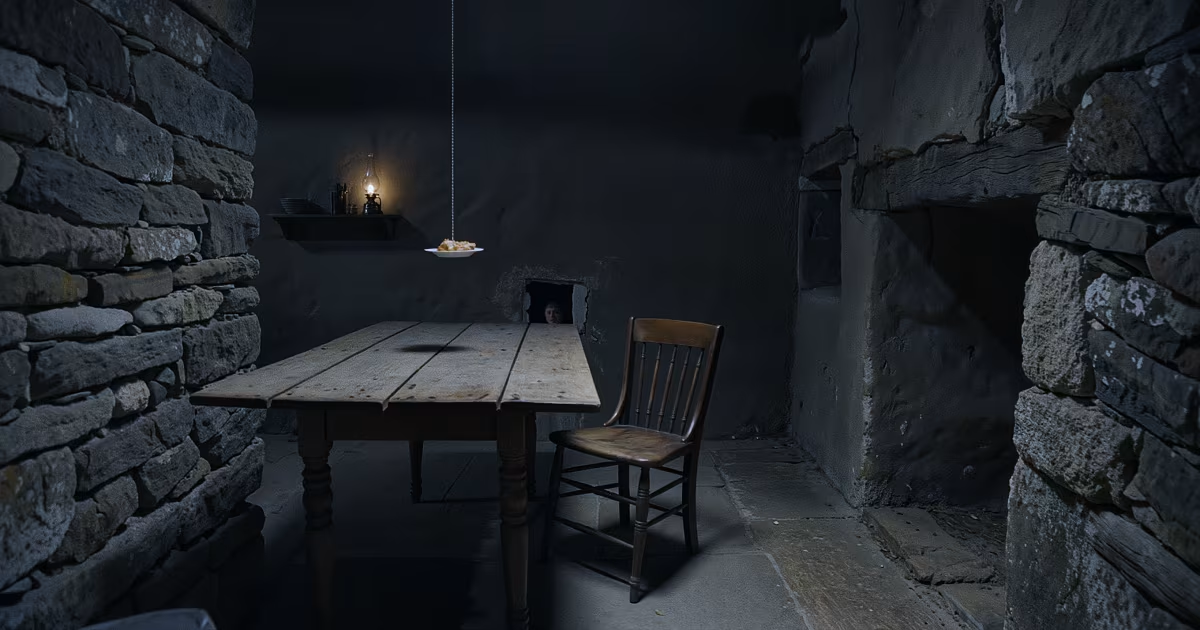
Isolated Manx farmhouse. Panelled room with no animal in frame.
Illustration, not a period photograph.
Opening
In September 1931 the Irving family at Doarlish Cashen, a hill farm above Dalby on the Isle of Man, said the scratches in the walls learned to talk. James, Margaret, and their daughter Voirrey named the speaker Gef. He said he was a mongoose, born in Delhi in 1852, extra clever, a ghost in weasel shape, the eighth wonder when he felt like advertising.
Neighbours heard a voice they would not always grant to a father throwing it. Reporters found the family sane and the joke, if it was a joke, long and unprofitable. Harry Price and Nandor Fodor came later, took hair and testimony, and left without a mongoose in a cage. Voirrey said she saw him: small, yellow, a tail. Most of the file is sound in a partition.
The spine of the file is a talking farm that never produced the animal for a bench. Gef is a voice in Manx lath. He is not a skin in a case.
Timeline
September 1931. Taps, rustles, growls in the panels at Cashen's Gap. Sounds become gurgles, then words James says he taught as one teaches a parrot. Gef names himself and his birth.
1932-1935. The Dalby Spook leaves the hill. Island talk, then mainland papers. Gef hunts rabbits in the family's telling, warns of dogs, takes food from a ceiling saucer when no one is supposed to watch. Voirrey is the child he prefers.
Mid-1930s. Investigators stay in the house. Price is unconvinced in the way Price was unconvinced. Fodor is more haunted by the category problem than by a paw print. Photographs of a creature are offered and argued. None closes the farm.
The family leaves. The house comes down in later years. Voirrey, grown, does not recant in the simple way debunkers wanted. She also does not produce Gef.
Key figures
James Irving is the teacher of words and the chief stenographer. His letters and interviews are most of the spoken Gef we have. A ventriloquist father is the first sceptical thought. Neighbours who heard the voice when they thought James was elsewhere complicate that thought without killing it.
Margaret Irving is in the house for the whole run. Less quoted. Still a second adult ear.
Voirrey Irving is thirteen when it starts. She is the claimed seer of the body and the person Gef is said to follow. A lonely hill girl with a gift for voices is the second sceptical thought. It has never been demonstrated in a room with notes.
Price and Fodor are the incoming specialists. They own tests and doubt. They do not own a trap that worked.
Physical and documentary trail
On the paper, 1931-1937 give you four hard objects and no cage.
One: the Irving family's contemporaneous claims of a speaking animal in the walls, beginning September 1931, with named lines copied down by James.
Two: neighbour and press visits that heard a voice and declined, some of them, to call the family obvious frauds.
Three: hair, footprints, and photographs offered as Gef and never accepted as a closed identification.
Four: investigator write-ups. Nandor Fodor's notes from Doarlish Cashen and the Price file are the specialist tray. They record a problem that would not sit in ghost or zoology.
There is no body. There is no independent recording from 1931 that a lab now plays. There is no Delhi register for an 1852 mongoose.
I am a freak. I have hands and I have feet, and if you saw me you'd faint, you'd be petrified, mummified, turned into stone or a pillar of salt.
Competing explanations
An unknown talking animal. This is the family's reading. It asks for a mongoose that speaks English and several other tongues and prefers biscuits to a trap.
Ventriloquism and a long game. James, or Voirrey, or both. Motive is thin: a poor farm does not get rich on Gef. Duration is the hard part. Years is a long time to throw a voice for no gate.
Poltergeist framed as a pet. Fodor's category trouble. Noise and speech without a zoological body. This reading names the strangeness and still does not show a paw.
Hybrid caution. A family heard and answered a voice in the walls. The hill never gave up the speaker.
Later life of the case
Books, a National Geographic return, and Voirrey's old-age interviews keep Gef in print. I keep the eighth-wonder posters on the later-life shelf. The 1931 panels stay first.
Finding
The walls at Doarlish Cashen talked. James, Margaret, and Voirrey Irving lived with a voice that named itself Gef, took food, hunted rabbits in their telling, and made a poor hill farm famous for no money worth the trouble. Neighbours heard it and did not all smile. Believe the house. Something answered them from the lath for years.
What still will not resolve: the body. A photograph that is not argued into a cat, a recording from 1931 a lab will still play, or the small yellow animal in a trap, would end the ventriloquism fight. The Irvings left the hill with quotes. They did not leave with Gef.