BARBADOS COFFINS
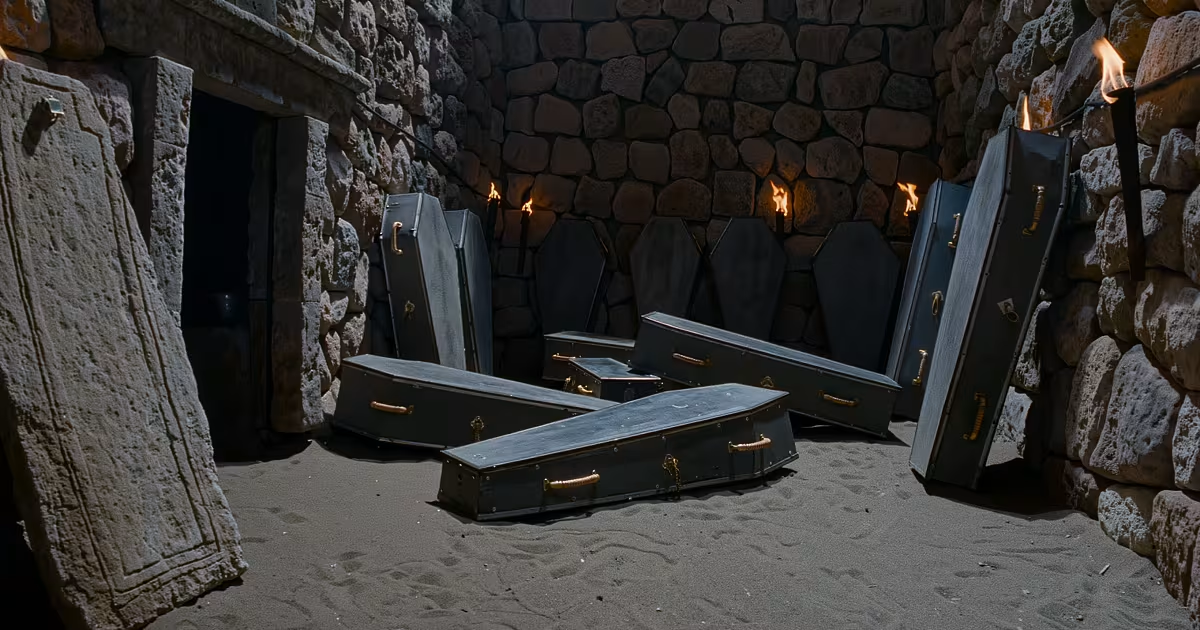
Coral stone vault in a Barbados churchyard.
Illustration, not a period photograph.
Opening
At Christ Church Parish Church in Oistins, Barbados, a vault cut in limestone is said to have been opened across the 1810s for Chase family burials and found, each time, with lead coffins off their places. The slab took several men. The floor was sand. The story says no footprints and no forced door. In April 1820 the Governor, Lord Combermere, is supposed to have stood there while the coffins were again in a heap, one large lead box against the wall.
The burial register and the island papers of those years do not carry the tale the way later books do. What exists as a named first-hand sheet is Nathan Lucas, writing that he walked from Eldridge's with Combermere and others on 18 April 1820, found the outside untouched, and saw havoc inside. Later searchers have not produced Lucas's own manuscript as a clean public original. They have produced a story that learned how to travel.
The spine of the file is a vault that later centuries keep opening in prose, and a thin contemporary paper trail. Barbados coffins are a limestone room and a moving story. They are not a filmed shift.
Timeline
Early 1800s. The vault takes Goddard and Chase dead, including children in lead. Later tellings put the first disorder at an opening in 1808 or 1812, then again in 1816 and 1819, coffins reset and the mouth cemented each time.
1819. Combermere is written into a burial opening. Seals and sand enter the story here as precautions.
18 April 1820. Lucas's account: talk at Eldridge's, a sudden walk to the churchyard, slab sound, coffins thrown, the wooden Goddard box already gone to bits. After that the dead are said to have been taken out and buried elsewhere. The vault is left empty.
Later nineteenth-century reprints fix the tale for visitors. Twentieth-century folklorists look for the register and the newspapers and find less than the legend needs. The empty vault is still in the churchyard.
Key figures
The Chase dead are the supposed cargo. Thomas Chase and the children in lead are names the story needs. They cannot testify to a slide.
Lord Combermere is the official who makes the 1820 opening worth a governor's presence in the telling. His being there is asserted. A signed governor's minute from the slab has not become the public core.
Nathan Lucas is the named witness of 18 April 1820. His description of an untouched exterior and a wrecked interior is the closest thing to a primary page. How that page reached print is part of the problem.
Later Barbados guides and London compilers own the tourist version. Joe Nickell and others who went looking for 1812 type own the gap in the register.
Physical and documentary trail
On the paper, 1812-1820 give you four hard objects and a thin register.
One: the vault itself, rock-cut and walled, still in the Christ Church yard, empty of the Chase lead.
Two: the burial tradition of lead coffins reset after each opening, with a slab that needed a team.
Three: Lucas's 1820 narrative of the unannounced visit with Combermere, Clarke, and Orderson, outside perfect, inside in disorder.
Four: the silence or thinness of the Christ Church register and contemporary Barbados newspapers when later readers go looking for matching notices. Nathan Lucas account of the 18 April 1820 opening of the Chase Vault, as transmitted, is the exhibit the story leans on.
There is no photograph of coffins mid-move. There is no mason's daybook that logs a broken seal. There is no inquest that names a living hand.
On our arrival at the vault, every outward appearance was perfect; not a blade of grass or stone was touched.
Competing explanations
Flood or gas in a sealed room. Lead boxes float. Sand floors hide a seep. This reading likes physics and dislikes the "no water" line in the later tellings.
Human interference. Relatives, enemies, enslaved labour, a joke that went on too long. The slab is heavy. A team can still be a team. The missing contemporary noise in the papers is a problem for a public scandal and a help for a quiet one.
The story grew after the fact. Openings happened. Disorder was remembered larger. Lucas is late-written or second-hand. This reading fits the register gap. It does not prove the vault never surprised anyone.
Hybrid caution. A room existed. Lead was heavy. The best-known inspection page is one man's walk. The island did not keep a courtroom file that settles the shove.
Later life of the case
Guidebooks, ghost tours, and anthology chapters keep the coffins walking. I keep those on the later-life shelf. Lucas and the empty vault stay first.
Finding
Lead coffins in the Chase vault at Christ Church did not stay where they were laid. Lucas walked in with the Governor in April 1820 and wrote that the outside was untouched and the inside was not. Believe the room as the people who opened it described it. A slab that takes a team is a poor place for a casual prank, and a worse place to ignore.
What still will not resolve: Lucas's own manuscript as a public original, or a mason's daybook that logs an intact seal over a wrecked interior. Flood physics can be argued. A dated first-hand page that does not arrive through later compilers is what would pin the shove to 1820 instead of to the guidebook.