TOMBSTONE THUNDERBIRD
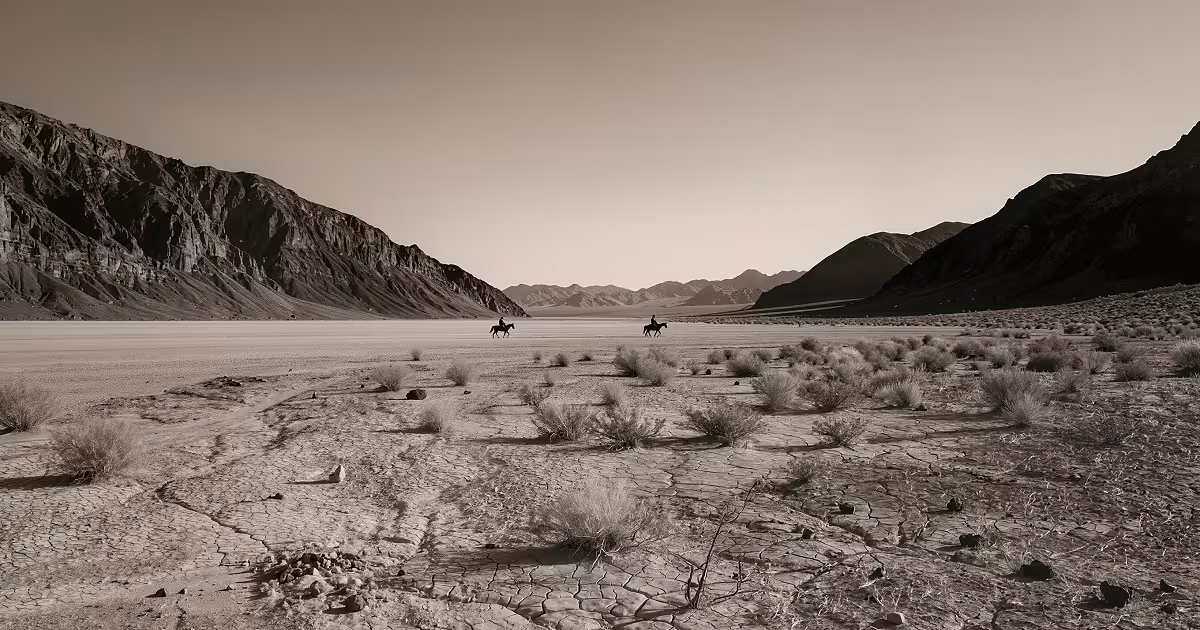
Arizona desert between ranges. Empty sky.
Illustration, not a period photograph.
Opening
On 26 April 1890 the Tombstone Epitaph printed a story of two cowboys who had killed a winged animal in the Huachuca country and brought it into town on a wagon. The wingspan in the piece sat around a hundred feet. A photograph of men standing under those wings is the object later readers want. No 1890 print has been produced in a chain a library will sign. The Epitaph page is real. The plate is the missing thing.
Harry McClure and others later remembered seeing a picture in a Tombstone window. Those memories sit decades after. Thunderbird lists treat the photo as stolen by the Smithsonian or lost in a fire. Neither office has logged the bird. Arizona already had big-bird talk. This card is one newspaper morning and a picture nobody can put on the desk.
The spine of the file is an Epitaph story and an absent plate. Tombstone is a winged kill in print. It is not a mounted bird in a Washington hall.
Timeline
26 April 1890 the Epitaph runs the wagon story. Local talk of a carcass in town follows in later memory, not in a second dated paper everyone accepts.
Twentieth-century researchers hunt the photograph. Window memories appear. Smithsonian letters go out and come back empty.
Every later thunderbird chapter starts with Tombstone. That chapter is later life. The April page is first.
No year produces the plate.
Key figures
The Epitaph editor owns the 26 April page.
The unnamed cowboys own the kill in the story.
Later rememberers own a window picture that does not sit in an archive.
The Smithsonian owns a hole in the later telling, not a logged specimen.
Physical and documentary trail
On the paper, April 1890 gives you four objects and no plate.
One: the Epitaph story of a winged kill brought to town.
Two: the absence of a second contemporary paper with a photograph credit.
Three: later window memories.
Four: empty institutional hunts. Tombstone Epitaph, 26 April 1890, is the originating tray.
There is no 1890 print in a library chain. There is no skeleton. There is no Smithsonian accession for a hundred-foot bird.
The bird was killed and brought to town on a wagon.
Competing explanations
A real giant bird and a lost plate. This is the popular reading. It has a newspaper. It has no photograph.
A tall desert story in a mining paper. Fits the Epitaph's other weather. Has to carry why later men swore to a window.
A real smaller bird grown in type. Possible. Still no plate.
Hybrid caution. A paper printed a kill. The picture never sat on a desk we can name.
Later life of the case
Smithsonian letters and thunderbird lists. I keep those on the later-life shelf. The April page stays first.
Finding
The Tombstone Epitaph printed a winged kill on 26 April 1890 and no photograph from that week has been produced in a chain a library will sign. Believe the page as a page. A mining paper does not invent a date for a later magazine.
What still will not resolve: that plate, or a second 1890 paper that printed the same bird with a credit. Either one would pin the wings. The proving object is still the photograph, held in an archive, not in a memory of a window.