YOWIE
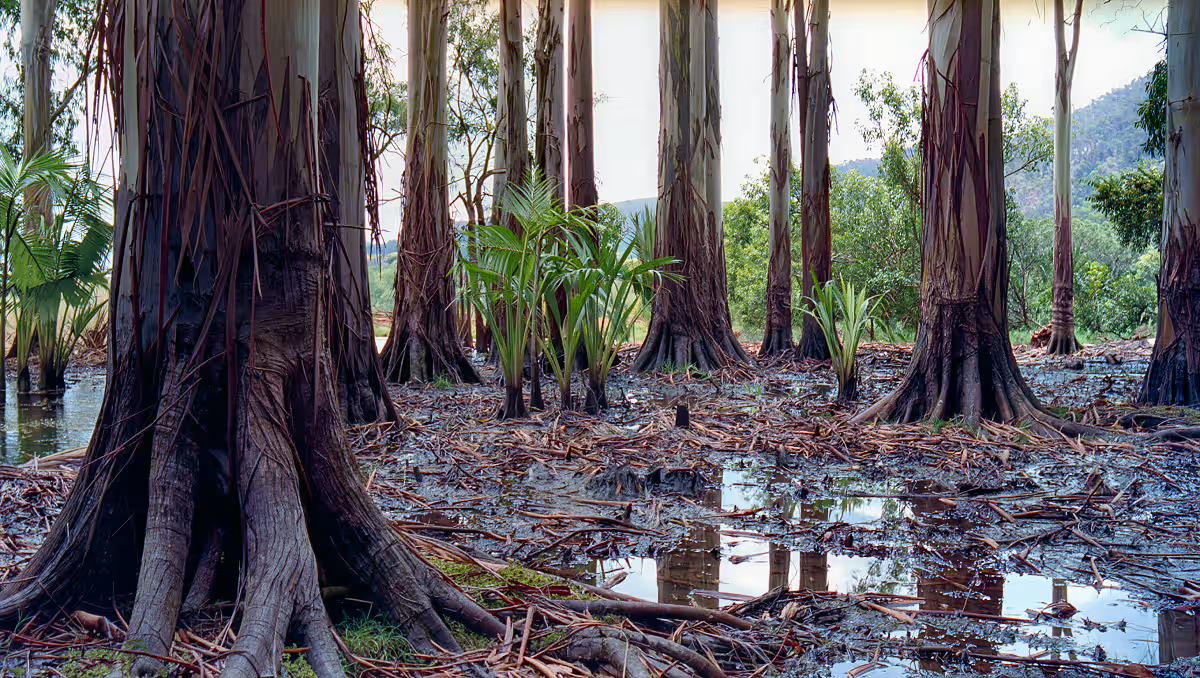
Lamington forest edge. Queensland, no figure.
Illustration, not a period photograph.
Opening
Springbrook and the Gold Coast hinterland in Queensland spent parts of the 1970s and after reporting a hairy upright the papers called a yowie. Rex Gilroy already had the word on the road from older Aboriginal talk and from Blue Mountains claims. The Springbrook cluster is bush sightings, footprints, and a name that Australian television likes. No hide has come off those hills into a museum the file can close.
Older yowie talk sits in colonial notes and in later collectors. Keep those as older water. This card is the hinterland wave that put a local name on a national list. Casts and hair have gone to labs and come back as known animals or as nothing that founds a species.
The spine of the file is a bush cluster and no specimen. Yowie is Springbrook talk. It is not a skin in a Brisbane drawer.
Timeline
Older collectors first. 1970s Springbrook and nearby ranges thicken. Press takes the name national.
Gilroy and later field people walk tracks. Casts circulate. No year produces a type.
Television nights and later New South Wales claims borrow the word. Those are other hills unless they sit in this cluster.
The bush keeps the cover. The lab keeps saying known.
Springbrook and later Australian clusters put a hairy hominid on timber nights. Casts and hair claims travelled. None founded a type the desks that would have to sign a species would take. The name yowie is older in the telling than any one weekend.
A forest can keep a shape without giving a hide. That is the whole long file, and it still has to be sat with as nights and names, not as a shrug.
Key figures
Springbrook witnesses own the first local wave.
Rex Gilroy owns the travelling name.
Later field walkers own casts that have not closed a species.
Labs own the known-animal returns.
Physical and documentary trail
On the paper, the 1970s give you four hard objects and no hide.
One: clustered hinterland sightings.
Two: footprints and casts.
Three: contemporary Australian press.
Four: lab work that has not named a new primate. Queensland press and field reports on the Springbrook yowie cluster, 1970s, are the originating tray.
There is no photograph a zoologist will sign. There is no skin. There is no camera-trap still in a paper as the animal.
Clustered Australian reports and no accepted type are the stay-behinds. A hide with a chain would finish the name. A photograph a lab will sign would finish the other door.
It stood like a man and it was covered in hair.
Competing explanations
An unknown hairy hominid. This is the cluster. It has talk. It has no type.
Feral men, bears that Australia does not own, dogs, shadows. The mundane door. Has to carry the stubborn upright description.
A collector's animal. Possible at the edges. Park people still talked.
Hybrid caution. A hinterland reported a walker. Morning had no skin.
Later life of the case
Television and later state-wide lists. I keep those on the later-life shelf. The Springbrook cluster stays first.
Finding
People in the Springbrook hills spent the 1970s describing a hairy upright, and the papers gave it the yowie name. Believe the bush talk as talk. A hinterland does not invent a walker only for a collector's pamphlet.
What still will not resolve: a photograph a lab will sign, or a specimen with a Queensland chain. Either one would pin the name. The proving object is still that walker, held in a frame or a skin, not in another track cast.