OGOPOGO
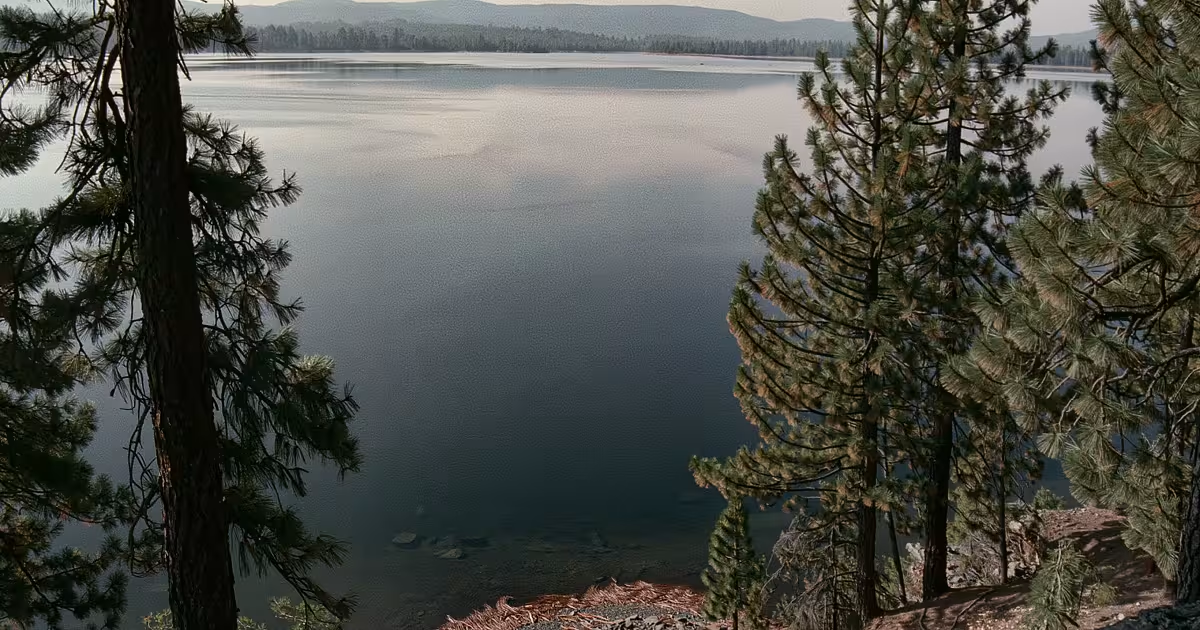
Okanagan Lake. Empty surface and pines on shore.
Illustration, not a period photograph.
Opening
Okanagan Lake in British Columbia already had a naitaka in Syilx talk when settlers gave the water a circus name. Ogopogo stuck after a 1920s music-hall song. On 12 August 1968 Art Folden shot Super-8 from a hillside near Kelowna of something moving off the far shore, a dark line that left a wake. The film is the modern object. Enlargements have been read as a log, a wave, an animal with humps. No type specimen has come out of that lake.
Other stills and later video sit in the tourist file. Folden's reel is the one investigators keep returning to because it is dated and not a phone clip. The lake is long and used. A wake is cheap. A species is not.
The spine of the file is a 1968 reel and a name from a song. Ogopogo is Folden's hillside. It is not a hide in a Penticton freezer.
Timeline
Syilx naitaka as older water. 1920s the song and the English name.
12 August 1968 Folden shoots. Copies circulate through the 1970s monster circuit.
Later analyses split on log and animal. Later clips do not close a type.
Every Canadian lake list keeps Okanagan. That list is later life. The Super-8 is first for the modern picture.
Key figures
Art Folden owns the reel and the hillside.
Syilx tradition owns the older water-being. That is not this frame.
Later analysts own the log-versus-hump fight.
The lake owns boat traffic that makes a wake ordinary until it is not.
Physical and documentary trail
On the paper, 12 August 1968 gives you four hard objects and no specimen.
One: Folden's Super-8 from the hillside.
Two: the dated copies that entered the circuit.
Three: later stills and video under the same name.
Four: the absence of a type. Art Folden film, Okanagan Lake, 12 August 1968, is the originating modern tray.
There is no body. There is no second camera on that hillside. There is no lab that named a species from the reel.
It was moving against the far shore and I kept the camera on it.
Competing explanations
A living animal in the lake. This is the tourist reading. It has a reel. It has no type.
A log or a wave or a known swimmer. The mundane door. Has to carry why Folden spent the film.
A hoaxed reel. Weak once the hillside and the date sit early in the circuit.
Hybrid caution. A man shot a wake. The lake kept the rest. Morning had no hide.
Later life of the case
Later clips and gift-shop names. I keep those on the later-life shelf. The 1968 reel stays first.
Finding
Art Folden shot Super-8 of something moving on Okanagan Lake on 12 August 1968 and that reel is still the picture the file argues. Believe the hillside. A man with a camera does not invent a date for a later gift shop.
What still will not resolve: a second camera from that hour, or a specimen with a lake chain. Either one would pin the wake. The proving object is still the thing on the far shore, held as log or as animal by more than one copy of a reel.