KELLY-HOPKINSVILLE
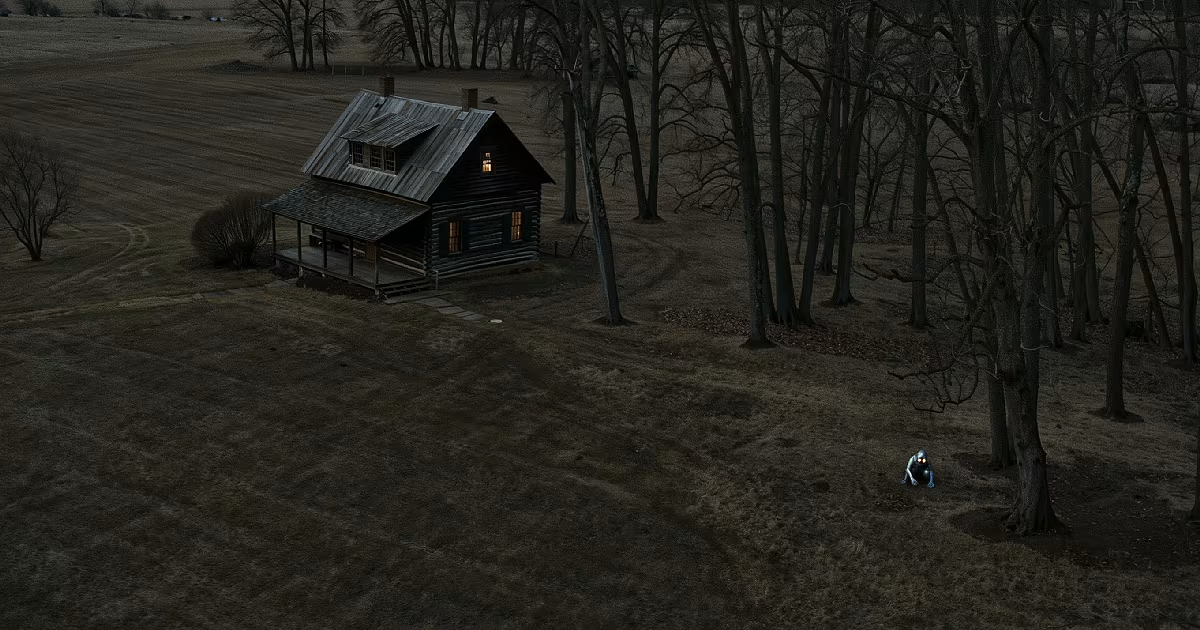
Kelly-Hopkinsville entity descriptions and scene.
Illustration, not a period photograph.
Opening
On the night of 21 August 1955 a farmhouse off Old Madisonville Road at Kelly, Kentucky, a few miles north of Hopkinsville in Christian County, filled with eleven people. Glennie Lankford, a fifty-year-old widow, held the house. Two grown sons, Elmer “Lucky” Sutton and J.C. Sutton, were in with their wives. A family friend, O.P. Baker, was there. Billy Ray Taylor and his wife June were visiting from the carnival circuit. Three of Glennie’s younger children were in the rooms. There was no telephone, no running water, no television.
About 7 p.m. Billy Ray came in from the well and said a bright object with a colored exhaust had dropped into a gully on the property. The table laughed. An hour later the dog made a noise that sent Lucky and Billy Ray to the door with a shotgun and a .22. What they later described at the police desk was not a light in a field. It was a small glowing figure, about three and a half feet, oversized head, thin mouth, long arms, hands like talons, coming in from the dark.
The spine of the file is the station visit. Around 11 p.m. the whole household drove into Hopkinsville in two cars and told Chief Russell Greenwell they had been shooting at little men for hours. Greenwell did not file it as a joke. He rolled city officers, state police, deputies, and military police from Fort Campbell back to the house. That response is why Kelly is a case and not a kitchen story.
Timeline
About 19:00, 21 August. Billy Ray Taylor draws water and reports a landing in the gully. No one else sees that object. A. Ledwith takes a drawing from him the next afternoon. That sketch is the only contemporary picture of the first light.
About 20:00. The dog raises. Lucky and Billy Ray step out. A glowing figure approaches with hands up. Both men fire at close range. They say the figure flips backward and is not lying in the yard. They go back inside. For the next hours figures appear at windows and on the roof. Glennie later describes a glow at the window and a hand on the screen. Shotguns punch holes in screens. No one in the house claims a creature fell and stayed down.
23:00. The children are done. The adults load two cars and drive to Hopkinsville. An investigator later puts one man’s pulse at 140. Greenwell’s line, given to later researchers, is that these were not people who ran to town for fun. They reached for guns first. That night they reached for him.
After midnight into 22 August. Police and Fort Campbell MPs walk the yard with flashlights. They find spent shells and screen damage. They do not find a craft, a body, or a print that satisfies a report. Some officers stay. After the official group thins out, the family says the figures come back near dawn. There is no second police sketch from that hour.
22 August. The Kentucky New Era prints the story. National desks pick up “little green men.” The figures in the house statements are silvery or glowing, not green. The color error is already in the wire before Isabel Davis can sit with the family.
Late August into autumn. Reporters and sightseers crowd the yard. The Suttons get tired of the road. Isabel Davis of Civilian Saucer Intelligence, later filed with CUFOS, does the long interviews that become the serious paper on the night.
Key figures
Glennie Lankford is the adult who stays with the children. She is not the shooter. Her window description is one of the quieter pieces in the file. She also forbids liquor in the house. Sobriety is part of why Greenwell took them seriously.
Lucky Sutton is the shotgun. He is home from carnival work. He is the man Greenwell’s remark is about. J.C. Sutton and O.P. Baker are in the same rooms. They are not the public names. They are extra adults who did not walk the story back the next week.
Billy Ray Taylor is the first light and the first shot. He is a visitor. Skeptics lean on that. The rest of the household still went to town with him.
Russell Greenwell is the civilian hinge. Without a chief who puts Fort Campbell on the radio, Kelly is a family argument. He does not endorse a landing. He endorses fear that looked real at a desk at 11 p.m.
Isabel Davis is the later clerk of the night. Her interviews and the Ledwith drawing are why the case survives as something other than a headline about green men.
Physical and documentary trail
On the paper, August 1955 gives you four hard objects.
One: eleven people at a police station at 11 p.m., children included, asking for help after hours of shooting. That visit is not in dispute.
Two: the official walk-through. Shells. Screens. No craft. No body. Multiple agencies on the same yard the same night.
Three: the 22 August local paper and the national pickup. The green-men error starts here. The family’s color words do not.
Four: the Davis interviews and the Ledwith sketch of Taylor’s gully object. Those are the closest thing the file has to a contemporary debrief.
There is no photograph of a figure. There is no landing-gear print cast that a lab kept. There is no Blue Book case file that settles the night. There is no medical report on a wounded creature. The guns were real. The empty yard after the search was also real.
These aren’t the kind of people who normally run to the police for help. What they do is reach for their guns.
Competing explanations
Great horned owls or similar night birds. This is the reading that tries to keep the guns and lose the figures. Eyes shine. Wings make a roof noise. A man with a shotgun in the dark can turn a bird into a goblin. It accounts for no body in the morning. It has to work for several adults at several windows over several hours, including a police-level panic at 11 p.m.
Hoax for attention. Carnival visitors, a slow Sunday, a story that makes the paper. This reading dies on Greenwell and the children in the cars. A hoax that needs Fort Campbell MPs at midnight is a loud way to get a headline.
Shared night fear. One light, one misread, then a house that loads every shadow onto the first mistake. This reading is fair to how fear moves in a three-room house. It does not explain why the next day’s interviews stayed aligned on height, glow, and long arms.
Landing and close approach. This is the reading Davis took seriously enough to write down. It accounts for the duration and the multi-witness window work. It requires a craft in the gully that left nothing the flashlight line could hold.
Later life of the case
“Little green men” is a wire gift the family did not give. It becomes the pop name anyway. The Kelly Little Green Men Days festival is later life. It is not 1955 paper.
Davis’s monograph and the CUFOS file are the documents that keep the night usable. Later television leans on the green and the guns. I take descriptions from the household and from Greenwell, not from a festival poster.
Project Blue Book is sometimes waved at the case. The useful contemporary record is still local law and the Davis interviews. If a clean Blue Book folder with a conclusion shows up, it can move the finding. The public Kelly file does not hang on that folder.
Finding
Eleven people in Glennie Lankford's farmhouse at Kelly spent a night shooting at small glowing-eyed figures that kept coming to the windows and the trees. They drove into Hopkinsville still armed and still frightened and told the sheriff the same thing. Believe the house. A widow, her sons, visiting carnival folk: that is not a club. Something walked that yard on 21 August 1955, and the people inside thought they had to keep it off the porch with guns.
What still will not resolve: a body, a clear photograph from that night, or a plaster of the clawed feet in the dirt taken before morning traffic. Without one of those, Kelly has a farmhouse full of consistent terror and no hide. The proving object is still one of those figures, held long enough to be more than a window story.