CHESSIE
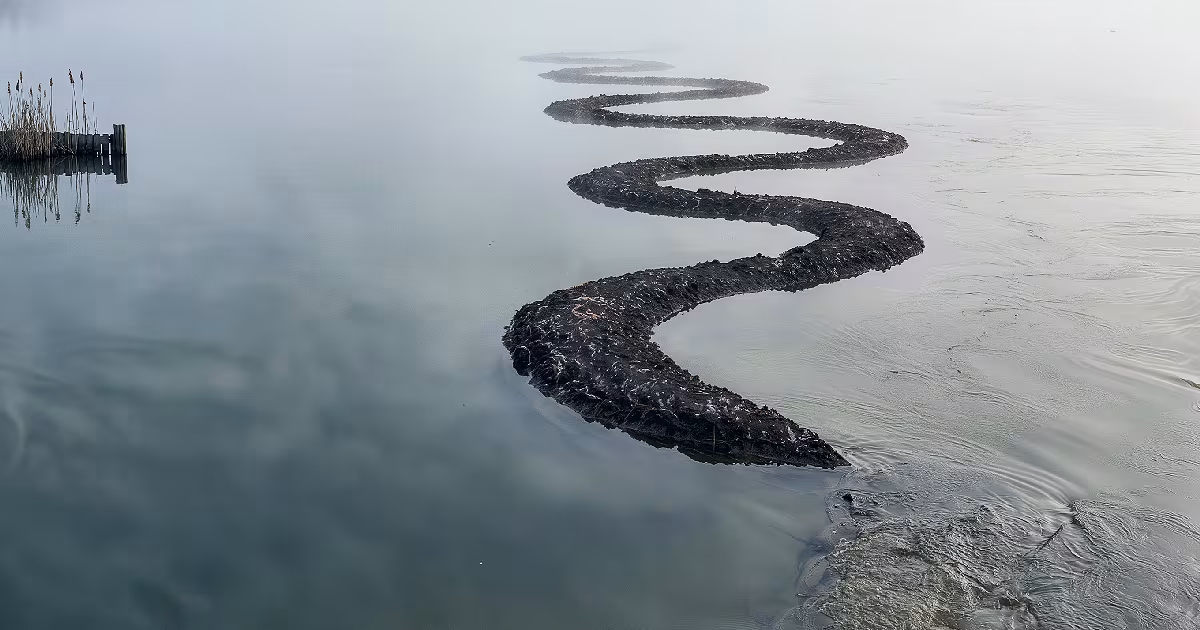
A long dark shape rippling through shallow bay water at dawn.
Illustration, not a photograph.

Opening
Chessie is the sea serpent of the Chesapeake Bay. Newspapers in Maryland and Virginia reported a long, dark, snake-like animal in the bay's waters for years, and a first sighting is claimed as early as the 1930s. In 1982 a couple on Kent Island, Robert and Karen Frew, videotaped a brownish, undulating shape swimming about a hundred feet off their bulkhead. It is the best-known recording of the creature.
The Frew tape was shown to scientists at the Smithsonian in August 1982. They called it an animate but unidentifiable object. That wording has kept Chessie alive ever since: the film is of something living, nobody can say what, and it is too poor to settle the question. Over the years the legend has turned into something gentler, a mascot for protecting the bay.
Timeline
1936A military helicopter crew is said to have seen something reptilian and unknown in the Bush River. The date is doubtful, since the first Sikorsky helicopter flight was in 1939.
1943Two perch fishermen, Francis Klarrman and Edward J. Ward, report a black, horse-headed creature about twelve feet long that turned its head almost all the way round.
1978Virginia newspapers begin printing current sightings, and the creature's notoriety grows. Witnesses report a creature near Calvert Cliffs State Park and in the Potomac River. Retired watermen interviewed later by the Enigma Project recall "giant snakes" in southern Maryland's swamps many years before.
1980A boater's sketch published in the Evening Sun is later identified as a Florida manatee.
31 May 1982At about half past seven in the evening, Robert Frew videotapes the creature near his home on Kent Island. The recording runs for under two minutes.
20 August 1982The Enigma Project arranges a viewing of the tape at the Smithsonian. The scientists, intrigued, cannot reach a conclusion. The official finding, attributed to George Zug, chairman of the museum's vertebrate zoology department, is "animate but unidentifiable object".
September 1982The Johns Hopkins Applied Physics Laboratory offers computer enhancement. According to the Enigma Project, the first work isolates a serpentine shape from the water. Funding then runs out, and the work is suspended.
1986The US Fish and Wildlife Service publishes a coloring book, Chessie: A Chesapeake Bay Story, about protecting the bay.
1991A sequel, Chessie Returns, treats the monster as female.
1994 to 1995A manatee rescued in October 1994 is nicknamed Chessie. It returns to the bay in 1995 and revisits several times.
July 2011A creature photographed near Calvert County is confirmed by US Geological Survey biologists as a manatee.
5 April 2014A witness near the Magothy River describes a black, snake-like creature 25 to 30 feet long, with a football-shaped head and no fins, and reports it to the Maryland Department of Natural Resources.
Key figures
Robert and Karen Frew made the 1982 tape. The tape shows a brownish object moving side to side like a snake, and children can be heard on the recording. The accounts of size vary. Karen Frew first put it at about seven feet, and later said it was about twenty feet when it resurfaced. The Enigma Project's researchers described it as about thirty feet and black or dark brown, and the Frews' own claim to the Smithsonian was twenty to forty. One magazine report cited a slender, thirty-five-foot object. The distance is given as 100 feet in some reports and about 200 yards in others.
George Zug of the Smithsonian led the viewing in August 1982. A separate review at the Applied Physics Laboratory, by a Dr Goldfinger, was also inconclusive. He said the object could be a long undulating creature, but could also be a shorter animal leaving a wake that took on the appearance of humps.
The Enigma Project, a Maryland research group, collected the reports. Its own page says no one knows what Chessie is, and cites compelling reports from credible witnesses as grounds for an unknown animal. It is an advocacy-leaning source and the conclusions should be read with that in mind.
Emory Kristof, a National Geographic photographer, was blunt about the tape. He said it looked like four kids swimming inside a plastic bag.
Francis Klarrman and Edward Ward, the two perch fishermen, gave the best-known early description.
Physical and documentary trail
The record: the 1982 videotape, the Smithsonian and Applied Physics Laboratory reviews, local newspaper reports, and the government coloring books. The reported description across many witnesses is a serpentine animal 25 to 40 feet long and 8 to 10 inches thick, with an elliptical or football-shaped head, uniformly dark, with no fins or appendages. There is no carcass, no photograph that is accepted as showing a new animal, and no specimen. No known Maryland snake approaches 25 feet in length.
The tape is the centre of the case, and both its supporters and its critics can point to the same weakness: the quality is not good enough to decide. The Smithsonian's wording does not say the object was a new species. It says that the tape appears to show an animal and that the animal cannot be identified. The enhancement was suspended when funding ran out, and the tape has been described as in limbo since 1983. The 25 to 40 foot figures are general reports, not measurements from the tape.
Things you might not know
- It became a government mascot. Fish and Wildlife used Chessie in two coloring books to promote cleaning up the bay.
- A manatee took the name. A rescued manatee called Chessie swam back to the bay after being returned to Florida.
- A manatee explains some sightings. A 1980 sketch was identified as a manatee, and a creature photographed in 2011 was confirmed as one by US Geological Survey biologists.
- The Smithsonian looked at it. The tape was viewed at the Natural History Museum and described as an animate but unidentifiable object.
- Children can be heard. Some accounts say children's voices are audible on the recording.
- The enhancement stalled. Funding ran out in 1982 and the tape has been described as in limbo since 1983.
- There is a baseball mascot. The Chesapeake Baysox's mascot, Louie, is based on the Chesapeake Bay Monster.
- A statue stood at a museum. One marked the entrance of a Ripley's Believe It or Not! museum in Baltimore.
Competing explanations
Known animals. The strongest reading for many reports. Manatees, which move differently from the serpentine reports but are known in the bay, explain some. Swimming otters, snakes or eels, floating debris and boat wakes explain others. Critics point to Kristof's remark and to the Applied Physics Laboratory's view that wake patterns can look like humps. The great spread in the Frews' own size estimates, from seven to forty feet, points the same way.
An unknown animal. The Frews and the Smithsonian's wording leave this open. The argument for it rests on the tape and on a long line of independent sightings. The weakness is that nothing has been caught or recovered.
Folklore and fashion. Many of the reports came after 1978 and were probably shaped by what people had heard. The friendly image in later years shows how the monster became part of the bay's identity.
Later life of the case
Chessie is now a regional icon, a figure used in environmental campaigns. One scholar argued that the friendly depictions presented the bay as a harmless victim of pollution. Sightings are still reported.
Finding
The Frew tape is genuine and shows something alive. The Smithsonian's view stands: it cannot be identified from that footage. The strongest reading is a known animal, but the tape does not prove it and nothing has been recovered to test it.
What still will not resolve: what the animal in the 1982 footage was, since the enhancement was never finished and the original tape has never been matched to a specimen.
Evidence signature
4/9 Solid
- Witnesses
- several people
- Instruments
- radar or measured data
- Paper
- nothing on record
How well documented the case is, not whether it's true. A strong record can still have an ordinary answer, and a thin one can still be real.
You decide · CHESSIE
What do you think happened?
One vote per case, anonymous. You'll see how other readers voted once you've voted.