YEREN
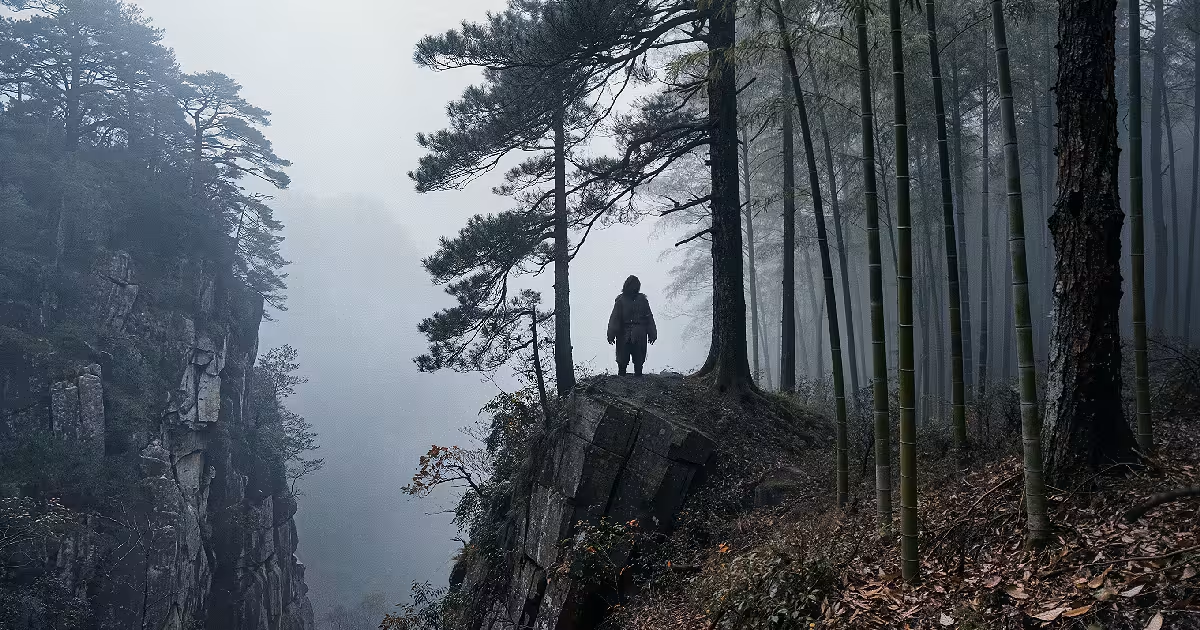
A hooded dark figure on a rock ledge among pines and bamboo in mist.
Illustration, not a photograph.

Opening
In the forests and ridges of Shennongjia, in the west of Hubei province in central China, people have for centuries told of a tall, hairy, upright creature with an ape-human face. They call it the yeren, which means wild man. It is said to raid chickens and dogs, to walk on two legs, and to stand more than two metres tall. The Chinese state, scientists and thousands of volunteers have looked for it. Every piece of evidence put forward so far that has been tested has come from a known animal.
The yeren is the Chinese counterpart of the Himalayan yeti and the North American Bigfoot, and its story is closely tied to modern Chinese history: ignored under Mao, then the subject of a national craze in the late 1970s and 1980s, with a cash reward, scientific expeditions and a nature reserve. About two hundred sightings have been reported over the last forty years. It is also a story about what happens when people who want to find something are allowed to do the looking.
Timeline
Warring States period onwardWild-man stories appear in Chinese folklore and texts. The "mountain spirit" in Qu Yuan's Nine Songs is sometimes cited as an early reference, though how to read it is uncertain. Written reports become more frequent in the Tang dynasty.
1555A Ming-era gazetteer for Fang County, the earliest written yeren report, describes wild men raiding dogs and chickens.
1950s and 1960sScientific interest focuses mainly on the yeti. Mao Guangnian links the yeti to the yeren, and favours descent from Gigantopithecus. In 1962 Wu Rukang dismisses reports from Yunnan as misidentified gibbons. The government discourages superstition, and interest wanes.
May 1974A farmer reports an encounter, and Wang Shancai leads a thirty-person investigation. It is halted after about two months, and he returns to a low-level civil service post. Li Jian records local testimonies in Shennongjia the same year.
May 1976A group of officials returning from Yunyang to Songbai report a creature of about human height, walking on its hind legs and covered in red fur. Chen Liansheng, deputy director of the Shennongjia party office, is among them. The animal flees into shrubbery. Chen reports it to the Chinese Academy of Sciences, and a Yunyang official finds red hair at the scene. A rumour spreads that a pregnant yeren is searching Shennongjia for her husband.
1977The Academy urges Hubei to act, and an investigation unit is set up. More than a hundred people, including Academy experts, staff of Wuhan University and soldiers, work on it for four months. One account says it was led by the military official Wang Gaosheng, another that Zhou Guoxing led an expedition backed by the Academy. They report a nest, fur and large footprints. The investigation ends without conclusive evidence.
1981The China Wildman Research Society offers rewards: 5,000 yuan for a dead specimen, 10,000 for a live one.
1983A nature reserve is established at Shennongjia. The yeren is linked to environmental campaigns.
Late 1980sScientific interest declines.
1994The research body is reorganised under the China Association for Science and Technology.
2008 and 2009Luo Yongbin of the Shennongjia reserve says he saw a female creature with a child in 2008. In 2009 Wang Shancai founds the Hubei Wild-men Investigation Institute, a private group with no government backing.
2012Zhou publishes a study of the so-called monkey boy skulls, which he identifies as belonging to human children with a hereditary condition.
Key figures
Zhou Guoxing, a palaeoanthropologist, is described as leading the 1977 expedition, and later argued that some of the best-known physical finds were human. Wang Gaosheng, a military official, is named by another account as its leader. Li Jian recorded the local testimonies in 1974. Mao Guangnian linked the yeren to the yeti and to Gigantopithecus, the giant fossil ape of south China.
Wang Shancai led the 1974 search and founded the private institute in 2009. He says the Beijing-based animal experts at the Academy reached conclusions without visiting the site, and that modern cameras and infrared detectors could settle the question quickly, if the money could be found. He has said he knew nothing about scientific research when he was put in charge.
Zhao Lingxia, a palaeoanthropologist at the Academy, says that bones would be needed as evidence, because soft tissue decays, and argues that public money should go to more pressing issues. Wu Rukang, an anthropologist, was one of the sceptics who identified reports as gibbons. Jeffrey Meldrum, an American anthropologist, is one of the few scientists still pursuing it.
Physical and documentary trail
The record: the Ming gazetteer, local testimony from the 1970s, the expedition reports, and the physical material gathered over decades. Alleged bodies, hair and footprints were traced to humans, bears, macaques, goral and serow. The bears included the Himalayan brown, Tibetan blue and Asian black. The so-called monkey boy skulls belonged to human children with spinocerebellar ataxia, according to Zhou's 2012 study. The red hair found in 1976 was presumed to belong to the creature. I have found no published analysis of it, and one account notes that the red-coloured fur samples have not been DNA-tested.
The typical description is of a creature over two metres tall, upright and hairy, with an ape-human face, and the 1976 witnesses saw one about human height. The lack of any specimen is the same as for the yeti and Bigfoot. No body, no skeleton and no reliable photograph exists, and no bigfoot-type fossil has been found. The research relied heavily on citizen science, which meant a great deal of enthusiasm and little control over how samples were collected and identified.
Things you might not know
- It has been in print for nearly five centuries. A 1555 gazetteer from Fang County describes it.
- There was a cash reward. It was 5,000 yuan dead and 10,000 alive in 1981.
- The 1977 search was big. More than a hundred people worked for four months.
- The leader said he knew nothing. Wang Shancai later said he knew nothing about scientific research when he led it.
- Rumour supplied a pregnant yeren. A 1976 story said she was looking for her husband.
- The skulls were children's. The monkey boy skulls were human children with a genetic condition.
- A reserve was created. The 1983 Shennongjia reserve was linked to the yeren campaign, and critics say believers hope to boost tourism, which the reserve's officials deny.
- It reached Hollywood. It inspired a henchman in Big Trouble in Little China.
Competing explanations
Known animals. The strongest reading. Bears, which can stand and walk upright, macaques, gibbons, goral and serow explain the bodies, hair and tracks that have been tested.
A surviving ape. Mao Guangnian and others suggested descent from Gigantopithecus, and some writers a Chinese form of Paranthropus. Both are speculative.
Folklore and politics. The yeren served different purposes in different eras, from a superstition to be discouraged under Mao to an image of humanity in a natural state after. One less popular hypothesis, supported by racist comparisons with minority peoples, claimed an unevolved human race. Accounts of the idea note that it was racially motivated.
Later life of the case
The yeren has become a regional symbol and a source of tourism, and it appears in fiction as a figure of wildness. Mainstream science does not treat it as real, and the private search is short of money. The case is a useful comparison with the Himalayan story in Shipton's yeti tracks, where bears also turned out to be the best explanation.
Finding
The yeren is a long-standing folk tradition with no physical evidence that has survived testing. The bodies, hair and footprints that have been analysed have all turned out to be of known animals or human children. The best explanation is that reports come from bears, monkeys and gibbons seen in poor conditions, shaped by folklore and by the political moods of the time.
What still will not resolve: what the red hair found in 1976 was, since no analysis has been published, and what the oldest accounts, such as the 1555 gazetteer's raids on chickens and dogs, were actually describing.
Evidence signature
1/9 Thin
- Witnesses
- one person, or a tradition
- Instruments
- nothing on record
- Paper
- nothing on record
How well documented the case is, not whether it's true. A strong record can still have an ordinary answer, and a thin one can still be real.
You decide · YEREN
What do you think happened?
One vote per case, anonymous. You'll see how other readers voted once you've voted.