ORANG PENDEK
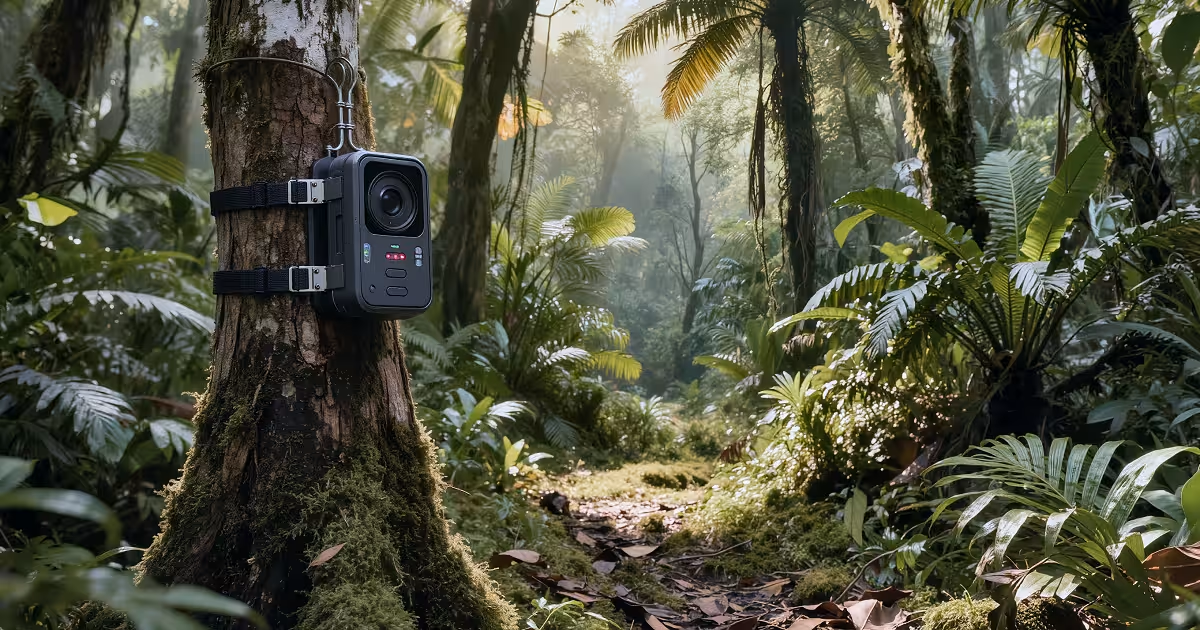
A camera trap strapped to a mossy tree in the Sumatran rainforest.
Illustration, not a period photograph.

Opening
Orang pendek, "short person" in Indonesian, is a small, upright, hairy primate said to live in the forests around Mount Kerinci in western Sumatra. Local people have described it for generations, Dutch colonial settlers reported it in the early 20th century, and it's the rare cryptid that some field scientists have taken seriously. Researcher Debbie Martyr spent years searching for it and said she saw it several times. Camera traps and casts have been collected. No specimen or clear photograph has ever been produced.
Timeline
Early 20th centuryDutch settlers and officials in Sumatra report short, upright ape-like animals. One widely cited account, from a Dutch settler named Van Herwaarden in 1923, describes a close encounter with a hairy, human-like creature in a tree.
1989 onwardBritish writer Debbie Martyr goes to Kerinci, hears consistent local descriptions, and later reports several sightings of her own. She leads a long-running research project, supported for a time by Fauna & Flora International.
1990sPhotographer Jeremy Holden, working with Martyr, sets camera traps in Kerinci Seblat National Park and reports his own brief sighting. The cameras record many animals but no orang pendek.
2001 onwardFootprint casts and hair samples are collected on several expeditions, including by the Centre for Fortean Zoology in the 2000s. Hair analysis gives inconclusive results.
2004The discovery of Homo floresiensis, a small extinct human species on the Indonesian island of Flores, raises interest in the idea that small hominins could have survived in the region.
Key figures
Debbie Martyr is the most committed researcher on the case. She later ran tiger conservation work in the same park.
Jeremy Holden ran the camera traps and reported a sighting.
The people of Kerinci are the source of the descriptions: about a metre tall, upright, with long hair and strong shoulders.
Physical and documentary trail
The record: colonial reports, Martyr's and Holden's accounts, casts, and hair analyses. No body, bones, or clear photograph.
The casts show a short, broad footprint. Without a known animal to compare, they're suggestive but not proof.
Things you might not know
- The name means "short person". Witnesses describe an upright, short-furred primate between about 80 and 150 centimetres tall.
- Its range includes a volcano. Most sightings come from Kerinci Seblat National Park, which runs up to Mount Kerinci, Indonesia's second-highest peak.
- Some local people call it a ghost. The Orang Rimba know it as Hantu Pendek, the "short ghost", and treat it as more spirit than animal.
- Their stories give it tools. In Orang Rimba accounts the creatures travel in groups of five or six, eat wild yams and carry small axes.
- The park sits almost on the equator. It lies about two degrees south, in the Bukit Barisan mountains, from lowland rainforest to alpine slopes.
Competing explanations
An undescribed ape. Sumatra still has large unexplored forest. A rare, shy ape walking upright some of the time is biologically possible, and orangutans and gibbons already live there.
A misidentified known animal. Sun bears stand upright and leave broad prints. Orangutans occasionally walk upright on the ground. Both are candidates for many sightings.
A surviving small hominin. This is the most dramatic idea, and has the least support. Homo floresiensis lived on a different island and is known only from fossils.
Later life of the case
Orang pendek is often called the cryptid most likely to be real, because researchers with conservation backgrounds have taken it seriously. Expeditions and TV crews still visit Kerinci.
Finding
A consistent local tradition, credible observers, and some physical traces, but no specimen and no clear image after decades of searching with camera traps that catch tigers. Sun bears and orangutans account for much of the record. An unknown ape can't be ruled out, and it hasn't been shown.
What still will not resolve: a clear photograph or a sample with an unambiguous DNA result.
Evidence signature
3/9 Thin
- Witnesses
- one person, or a tradition
- Instruments
- photo, film or physical traces
- Paper
- press and later accounts
How well documented the case is, not whether it's true. A strong record can still have an ordinary answer, and a thin one can still be real.
You decide · ORANG PENDEK
What do you think happened?
One vote per case, anonymous. You'll see how other readers voted once you've voted.