BEAST OF BRAY ROAD
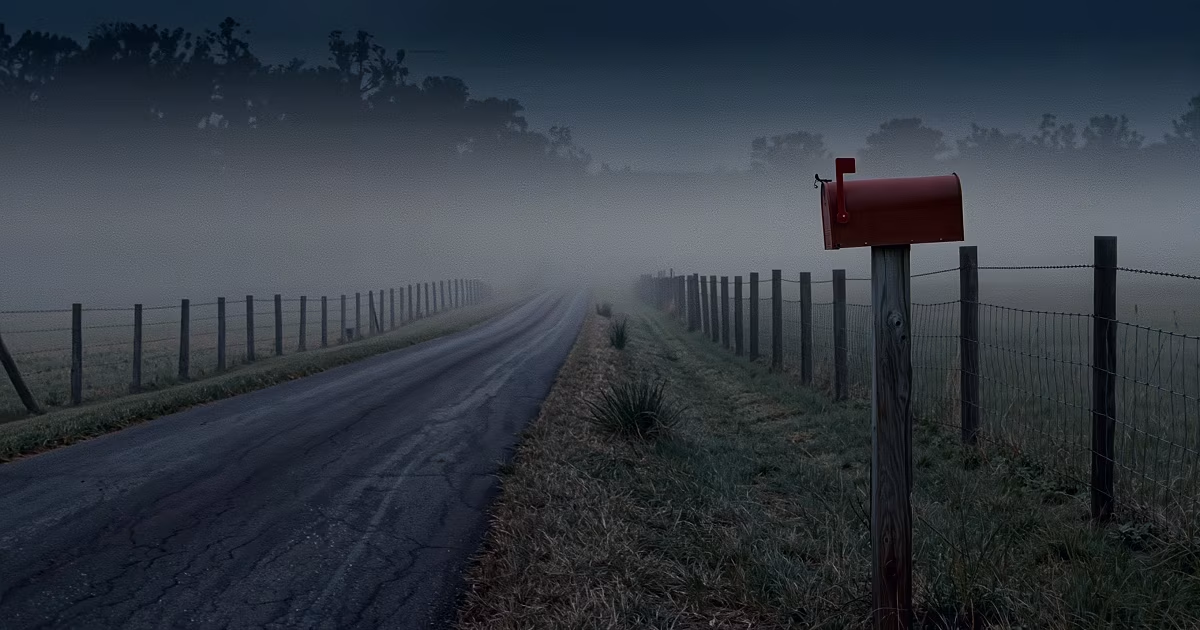
A foggy country road at dawn lined by fence posts and a red mailbox.
Illustration, not a period photograph.

Opening
On 29 December 1991, The Week, a free Sunday paper in Walworth County, Wisconsin, ran Linda Godfrey's story about a "wolfish-looking creature" seen on Bray Road outside Elkhorn. Two women described it in their own words. Walworth County's humane officer, Jon Fredrickson, already kept a manila folder marked "Werewolf", holding note cards on six or seven sightings.
Within days a Janesville Gazette recap went out on the Associated Press wire, all four Milwaukee TV stations sent crews, and the Beast of Bray Road became America's best-known werewolf report. Nothing has been caught, shot, photographed to a lab's satisfaction, or found dead on the road.
Timeline
1936According to an account his son published in 1992, Mark Schackelman, a night watchman at St. Coletta School near Jefferson, about 35 miles from Bray Road, saw a dog-faced creature digging on a burial mound on two consecutive nights. He told only his wife at the time. This sits in the background: it was not part of Godfrey's original story.
Autumn 1989Lorianne (Lori) Endrizzi, a 26-year-old working mother, driving home at night, sees a creature kneeling at the roadside "right before the Bray farm, on the curve", eating roadkill held palms up. She describes pointed ears, long claws, fangs, and eyes that glowed, which she said were "probably" a reflection of her headlights. She later finds a werewolf drawing in a library book and says it matches.
Around 1989Heather Bowey, then 11, playing near Bowers Road, sees what she takes for a big dog until it stands up. Her mother, Karen Bowey, tells Godfrey the family didn't go and look.
31 October 1991, about 9 p.mDoris Gipson, a high school student, feels her front tyre lift as she hits something on Bray Road near Sitler Road. She gets out, finds nothing on the road, and sees a large, hairy animal running at her. She gets back in the car as it reaches her. She says it hit the top of the trunk, slid off on the wet surface, and scratched the car as it went. Later that night an 11-year-old girl in her car sees something kneeling by the road.
29 December 1991Godfrey's article runs, calling the two women "Barbara" and "Pat". Fredrickson is quoted favouring a coyote or wolf. Both women later give their real names on television.
12 January 1992A reader's letter in The Week complains that naming exact locations will send "every unethical gun owner in the vicinity" to the woods.
19 February 1992Joe Schackelman, a labour newspaper editor in Kenosha, publishes his father's 1936 account after seeing Godfrey's drawing on television.
2 March 1992Police find a man, Jose Contreras, parked in a driveway on Bray Road at 11:37 p.m. with a loaded 9mm handgun in the glove compartment. He says he is carrying it for protection against the werewolf.
2003 and 2006Godfrey publishes The Beast of Bray Road: Tailing Wisconsin's Werewolf and Hunting the American Werewolf, widening the map to sightings across the Midwest.
27 November 2022Godfrey dies in Janesville, aged 71.
Key figures
Linda Godfrey was a reporter and cartoonist at The Week when she wrote the story and drew the kneeling creature that ran with it. She stayed with the subject for three decades. In her 2006 book she wrote that it was "safest to treat the Manwolf as an idea, for the time being", and she did not claim every later Midwest sighting was the same animal.
Jon Fredrickson, the county humane officer, held the folder. He did not believe in a werewolf. He told Godfrey a coyote or wolf springing up to pounce could look as if it were standing on two legs.
Lori Endrizzi and Doris Gipson are the two named witnesses at the core of the case. Both were reluctant to be identified at first. Gipson was teased at school after the story ran and, by Godfrey's account, regretted speaking.
Physical and documentary trail
The record is mostly paper, and it is datable: Fredrickson's folder of note cards, which predates the article; Godfrey's 29 December 1991 piece with the two witness accounts printed at length; the AP pickup; the March 1992 police report on Contreras; Joe Schackelman's February 1992 article; and Godfrey's books.
The one physical claim from the 1989-91 wave is Gipson's scratched car. No photograph of the marks or examination of the car has been published.
The county is getting stranger.
There is no carcass, hair sample, cast, or clear photograph from Bray Road.
Things you might not know
- The silver bullet was tested. At Jose Contreras's 1992 concealed-weapon trial, the district attorney had his bullets examined to see whether they were silver. They were not.
- The jury was screened for werewolf belief. Jurors at the Contreras trial were checked to make sure they didn't believe in the creatures.
- It sold T-shirts. The Week sold "Werewolf of the Week" shirts at $10, printed with Godfrey's drawing, under the line "support your local beast".
- A Burger King worker is in the folder. One of Fredrickson's cards described a Burger King employee who saw a man-like creature running in mid-November and couldn't believe how fast it was.
- The first article opens with Wolfman Jack. Godfrey's lede was the 1970s song "Clap for the Wolfman".
- There was a chicken stakeout. At the National Examiner's request, Godfrey spent a cold night on Bray Road with a supermarket chicken as bait.
Competing explanations
An unknown animal. The witnesses describe something larger than a Rottweiler, with long straight hair, able to kneel, hold food, and run upright. Endrizzi and Gipson were unconnected and saw it on different parts of the road, and Godfrey described both as "entirely serious". Against it: no body, no clear tracks, no photograph, in farm country with roads and hunters.
A known animal seen badly at night. Fredrickson's coyote or wolf, caught mid-lunge, is the original official reading. Later suggestions include a large dog, a gray wolf (occasionally found in the county), or a black bear with mange. Each fits some reports and not others: Endrizzi's kneeling, food-holding figure is the hardest for a canine.
A newspaper legend. The story certainly grew after December 1991, and Godfrey became its collector. But the folder and the 1989 sightings predate the article, so the paper did not invent the core reports, whatever it did to the later ones.
A hoax. Nobody has confessed and no costume or prank has been documented for the 1989-91 sightings.
Later life of the case
The Asylum released a horror film, The Beast of Bray Road, in 2005, and Small Town Monsters made the documentary The Bray Road Beast in 2018. The creature has appeared on MonsterQuest and other TV series. Reports of upright, hairy creatures in Walworth County continued, including at Spring Prairie in 2018 and Lyons in 2020.
Finding
Settled: in 1989-91, at least two unconnected people reported a large, hairy, sometimes upright animal on Bray Road, a county officer had already collected similar reports in a folder marked "Werewolf", and Linda Godfrey published them on 29 December 1991. The witnesses' accounts are on record in their own words. What is not established is what they saw. A canine or bear seen at night explains some reports well and others poorly, and an unknown animal has left nothing behind to examine.
What still will not resolve: a hair, a carcass, or a photograph from that 1989-91 wave. Without one, the Beast stays a set of honest-sounding accounts with no specimen behind them.
Evidence signature
4/9 Solid
- Witnesses
- several people
- Instruments
- photo, film or physical traces
- Paper
- press and later accounts
How well documented the case is, not whether it's true. A strong record can still have an ordinary answer, and a thin one can still be real.
You decide · BEAST OF BRAY ROAD
What do you think happened?
One vote per case, anonymous. You'll see how other readers voted once you've voted.