NANDI BEAR
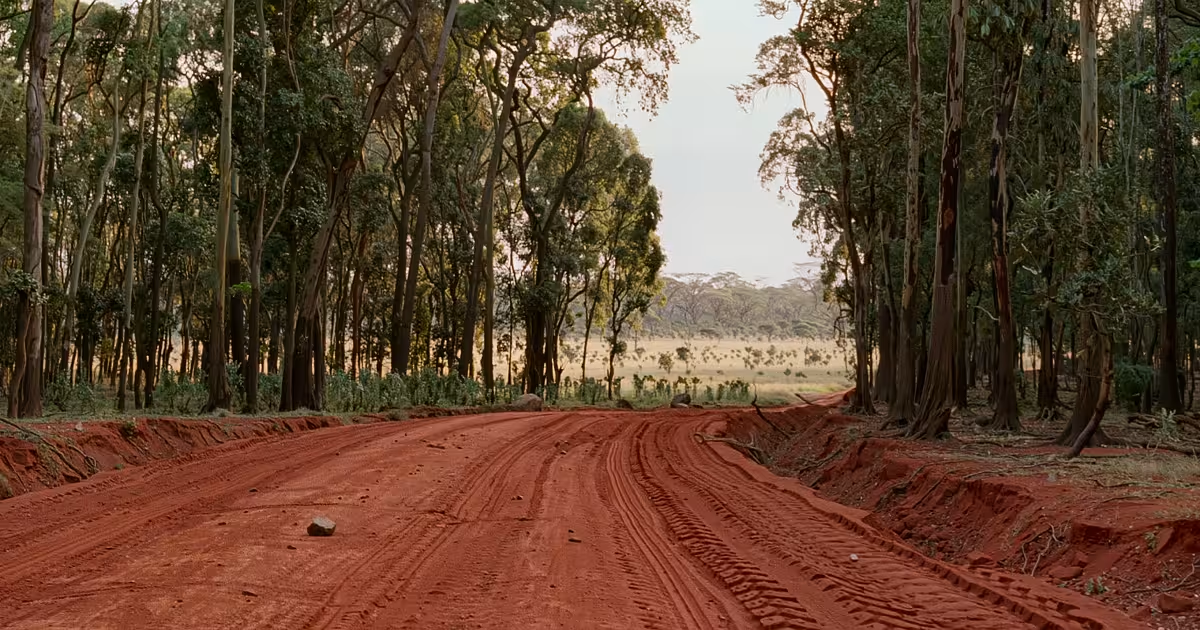
Kenyan forest edge. Dirt track, no figure.
Illustration, not a period photograph.
Opening
Western Kenya's Nandi and Uasin Gishu country kept a predator the British called the Nandi bear: a hyena-like sloth of a thing in the settler telling, a night raider of stock and, in the harder stories, of people. Geoffrey Williams and later District Officers wrote descriptions into the colonial paper. Charles Pitman and others treated it as a hyena or a ratel seen wrong. No skin with a clean chain has sat in Nairobi as a new species.
The name is a settler convenience laid over older talk. This card is the colonial file and the missing hide, not every later African monster list that borrowed the words.
The spine of the file is a predator that was never tabled. The Nandi bear is Kenya paper. It is not a type in the natural history rooms.
Timeline
Early twentieth-century settler and officer notes. Stock raids and night sightings.
Interwar summaries try hyena, ratel, aardvark. None close the harder descriptions.
Independence-era talk thins in official paper. No year produces a hide the museum kept as unknown.
Later crypto lists keep the name. That list is later life. The officer notes are first.
Nandi Bear in western Kenya hunter talk never produced a caught type. Known predators sit in the competing drawer. The name travelled in colonial notes.
Key figures
Nandi and neighbouring people own the older night talk.
Colonial officers own the English name and the descriptions.
Pitman and the museum men own the known-animal readings.
The plateau owns cover that kept whatever it was off a slab.
Physical and documentary trail
On the paper, the colonial years give you four hard objects and no type.
One: officer and settler descriptions of a stock raider.
Two: the Nandi bear name in English paper.
Three: known-animal identifications that did not satisfy every description.
Four: the absence of a museum hide. Colonial Kenya notes on the Nandi bear, are the originating tray.
There is no photograph a zoologist will sign. There is no skull series. There is no later type.
Hunter notes and no catch are the stay-behinds. A hide with a chain would finish the name.
It was not a hyena as we knew hyenas.
Competing explanations
An unknown predator. This is the harder colonial notes. It has talk. It has no hide.
Hyena, ratel, mis-seen knowns. The museum door. Has to carry the descriptions that would not sit still.
A story for lost cattle. Incomplete. Officers wrote more than a ledger excuse.
Hybrid caution. A plateau reported a raider. Morning had no new skin.
Later life of the case
Later monster lists. I keep those on the later-life shelf. The officer notes stay first.
Finding
Colonial officers in western Kenya wrote down a predator they would not give to the hyena they already knew, and no hide closed the name. Believe the notes as notes. A district officer does not invent stock dead for a later magazine.
What still will not resolve: a specimen with a Kenya chain, or a photograph a lab will sign. Either one would pin the name. The proving object is still that animal on the plateau, held as known or as new by more than a paragraph in an officer's book.