BUNYIP
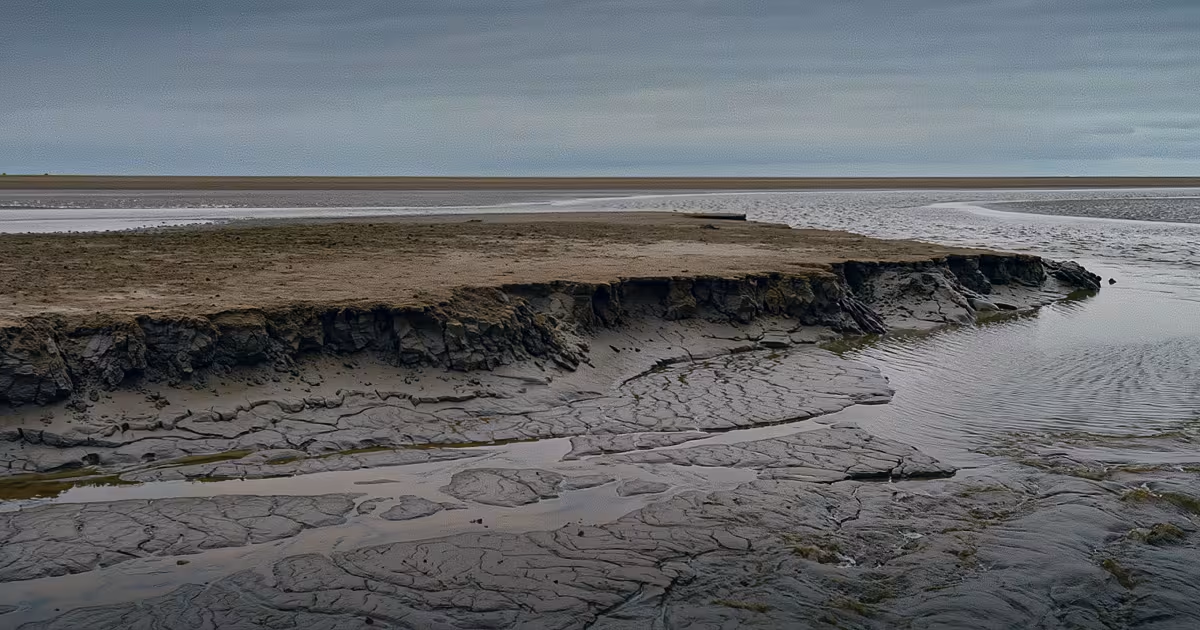
Australian river lagoon. Empty bank, no animal.
Illustration, not a period photograph.
Opening
The Murray and the lakes of the south-east already had a bunyip in Aboriginal talk before settlers started pinning the word to skulls and night bellows. In the 1840s George Harrison and others offered bones from the Murrumbidgee country as the animal. Richard Owen in London read at least one famous skull as a malformed horse. Newspapers kept printing water-monsters anyway. No type specimen under the name bunyip sits in an Australian museum as an unknown species.
The word is older than the bones. This card is the settler habit of hanging a skull on a name that was already a water-being. Night cries on the Murray still happen. They have not produced a hide the file can close.
The spine of the file is a patched skull and a name that would not stick to it. Bunyip is Murray talk plus Owen's horse. It is not a new animal in a case in Sydney.
Timeline
Older water-being talk first. 1840s settler bones and press.
Owen's reading of a skull as horse. Papers do not all accept the close.
Later lake stories borrow the word. No year founds a species.
Every later Australian monster list keeps bunyip. That list is later life. The 1840s skulls are first for the settler file.
Key figures
Aboriginal tradition owns the older name and the water.
Settler collectors own the skulls they sent.
Richard Owen owns the horse reading.
Colonial newspapers own the refusal to let the word die with the skull.
Physical and documentary trail
On the paper, the 1840s give you four hard objects and no type.
One: colonial reports of bones offered as bunyip.
Two: at least one skull read by Owen as horse.
Three: press that kept the name alive.
Four: the absence of a museum type. 1840s colonial reports and Owen's reading of bunyip bones, are the settler tray.
There is no accepted unknown skeleton. There is no photograph of a live animal a zoologist will sign. There is no later type series.
The skull is that of a horse, malformed.
Competing explanations
An unknown water animal. This is the press habit. It has a name. It has no type.
Known animals plus a word that predates the bones. Fits Owen. Does not empty the older talk.
A settler joke that stuck. Incomplete. People still reported bellows after the joke.
Hybrid caution. A name is older than a skull. The skull that was sent read as horse. The river kept the word.
Later life of the case
Children's books and later lake clips. I keep those on the later-life shelf. The 1840s bones stay first for this tray.
Finding
Settlers sent Murray-country bones to desks as bunyip in the 1840s, and Richard Owen read a famous skull as a horse. Believe the older name as talk that predates those bones. A river people do not invent water for a London anatomist.
What still will not resolve: a specimen that is not a known animal, or a live photograph a lab will sign. Either one would pin the settler word to a body. The proving object is still that body, held in a case, not in another bellow on the Murray.