GLOUCESTER SEA SERPENT
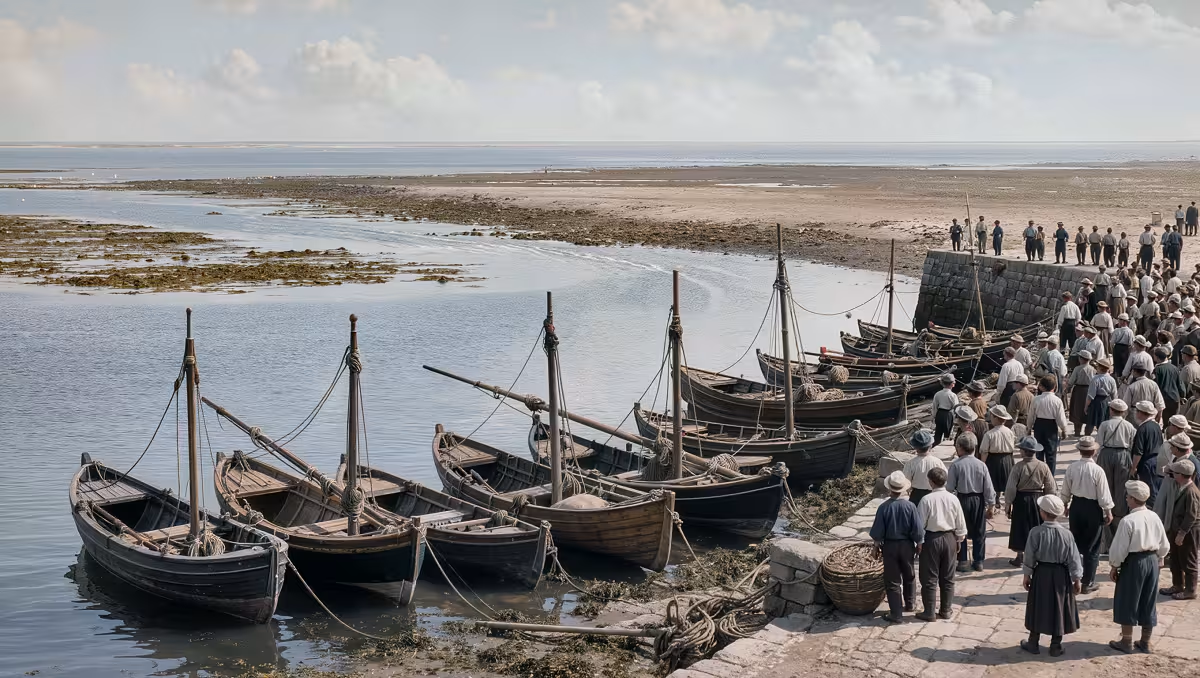
1817 harbour. Small boats, empty water.
Illustration, not a period photograph.
Opening
In August 1817 Gloucester Harbor, Massachusetts, filled with a long many-humped animal that fishermen and shore people watched for weeks. The Linnaean Society of New England took depositions and even named a type, Scoliophis atlanticus, off a snake someone killed on land and tried to hang on the harbor animal. The name did not hold. The harbor sightings remain a cluster with many named witnesses and no carcass from the water.
Gloucester is an early American sea-serpent file with a failed scientific name. Keep the depositions first and the land snake as the wound the Society gave itself.
The spine of the file is a harbor full of eyes and a name that died. Gloucester 1817 is paper. It is not a type in a Boston case.
Timeline
August 1817 first harbor reports. Weeks of sightings. Depositions.
Society names Scoliophis off a land snake. The identification fails in later reading.
The harbor cluster remains. No water carcass.
Later American serpent lists keep Gloucester. That list is later life. The depositions are first.
A learned society taking depositions is why Gloucester is not only a tavern tale. Naming a land snake as the harbor animal is why the same society wounded its own close. Both belong on the page.
Key figures
Gloucester fishermen and shore people own the weeks.
The Linnaean Society of New England owns the depositions and the failed name.
The land-snake collector owns the wound.
The harbor owns the lack of a body from the water.
Physical and documentary trail
On the paper, August 1817 gives you four hard objects and no water carcass.
One: weeks of harbor sightings by named people.
Two: Society depositions.
Three: the Scoliophis name hung on a land snake.
Four: the failure of that name. Linnaean Society of New England depositions on the Gloucester Harbor animal, 1817, are the originating tray.
There is no specimen from the harbor. There is no later type that held. There is no proof the weeks were empty of a long animal in the telling.
Weeks of named witnesses and a failed Latin name are the stay-behinds. A harbor carcass would finish the animal. A later identification the fishermen would sign would finish the mundane door.
It was long and humped and it stayed in the harbor days.
Competing explanations
An unknown marine animal. This is the harbor. It has weeks. It has no carcass.
A known school of fish or a whale seen long. The mundane door. Has to carry many named shore people.
A land snake dressed as science. That was the Society's mistake, not the whole harbor.
Hybrid caution. A harbor watched for weeks. A name died. Morning had no body on the tide.
Later life of the case
Later serpent lists. I keep those on the later-life shelf. The 1817 depositions stay first.
Finding
Gloucester Harbor spent August 1817 watching a long humped animal, and a learned society took depositions then hung a failed name on a land snake. Believe the shore. Fishermen do not invent weeks for a later list.
What still will not resolve: a carcass from that harbor, or a later identification the depositions would sign. Either one would pin the animal. The proving object is still that body in the water, held as known or as other by more than a dead Latin name.