MAPINGUARI
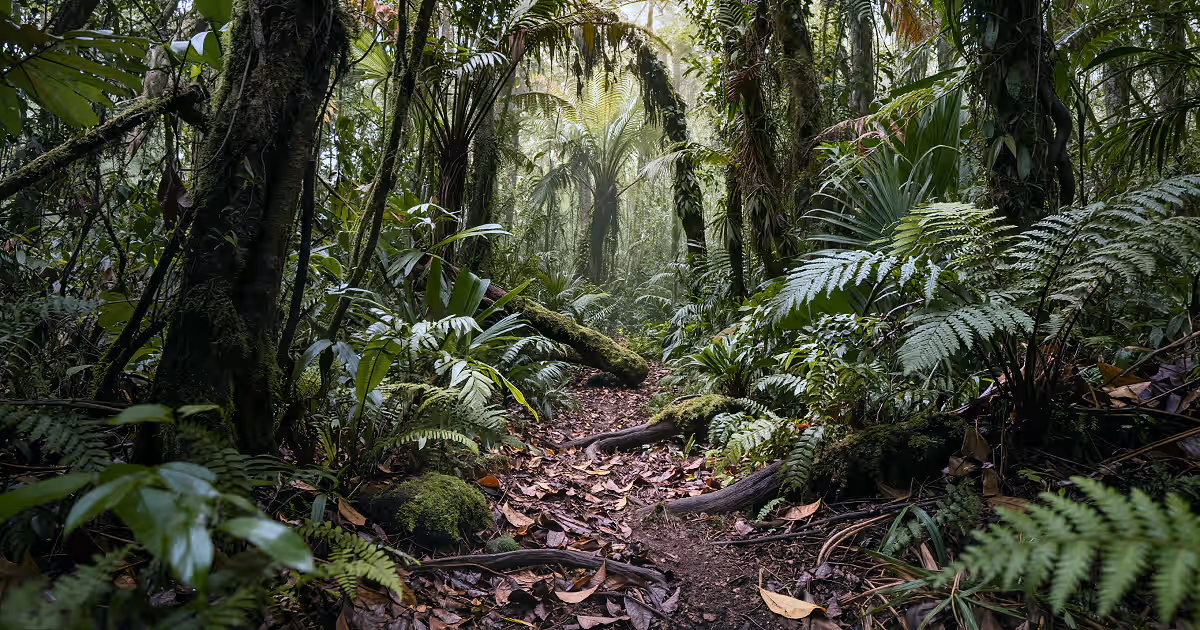
Amazon trail. Dense canopy, no figure.
Illustration, not a period photograph.
Opening
Amazon rubber and river talk keeps a mapinguari: a sloth of a giant in some mouths, a stinking biped with a mouth in the belly in others. David Oren at Goeldi in Belem took the name seriously enough in the 1990s to look for a living giant sloth in the forest. Hair and stories came in. A body did not. Hunters still describe the stench and the fear. No museum in Brazil holds a mapinguari as a type.
Giant sloths are real in the fossil record. Living ones in Acre are the leap. This card is the stench accounts and Oren's hunt, not a Pleistocene lecture.
The spine of the file is a smell and no carcass. Mapinguari is river talk. It is not a skin in Belem.
Timeline
Older indigenous and riverine talk first. Twentieth-century collectors write the name into lists.
1990s Oren looks. Samples disappoint or stay known.
Later camera-trap hopes sit in expedition talk and do not close a species.
Every later Amazon monster list keeps the stench. That list is later life. The missing body is first.
Amazon talk keeps a stenching walker, mapinguari, in later compiled lists. Hunters described a smell and a shape. No body sat in a Brazilian case as that animal. Known sloths and stories sit in the competing drawer.
A river forest will hold a name for a long time. A museum drawer that stays empty is still a drawer that has to be written.
Key figures
Hunters and river people own the stench and the fear.
David Oren owns the scientific look that still wanted a sloth.
Goeldi and other labs own the samples that did not found a type.
The forest owns the cover.
Physical and documentary trail
On the paper, the modern hunt gives you four hard objects and no body.
One: consistent stench and biped accounts from the forest.
Two: Oren's 1990s search.
Three: hair and other samples that did not name a new sloth.
Four: the fossil giant sloth as older water, not as this hide. David Oren field interest in mapinguari, 1990s, is the modern scientific tray.
There is no carcass. There is no photograph a lab will sign. There is no type series.
Stench accounts and no body are the stay-behinds. A specimen with a forest chain would finish the name. A lab still would finish the other door.
The smell comes first. Then you do not stay.
Competing explanations
A living giant sloth. This is Oren's hope. It has fossils. It has no living hide.
A known animal plus fear and a name. The mundane door. Has to carry the stubborn stench motif.
A story for lost hunters. Incomplete. People still come out talking.
Hybrid caution. The forest has a name. Belem has no body.
Later life of the case
Later expedition films. I keep those on the later-life shelf. The missing carcass stays first.
Finding
River people describe a stinking walker in the Amazon, and David Oren went looking for a living sloth without bringing one home. Believe the talk as talk. A hunter does not invent a smell only for a visiting scientist.
What still will not resolve: a body with a forest chain, or a photograph a lab will sign. Either one would pin the name. The proving object is still that carcass, held in Belem, not in another interview on a river.