SKUNK APE
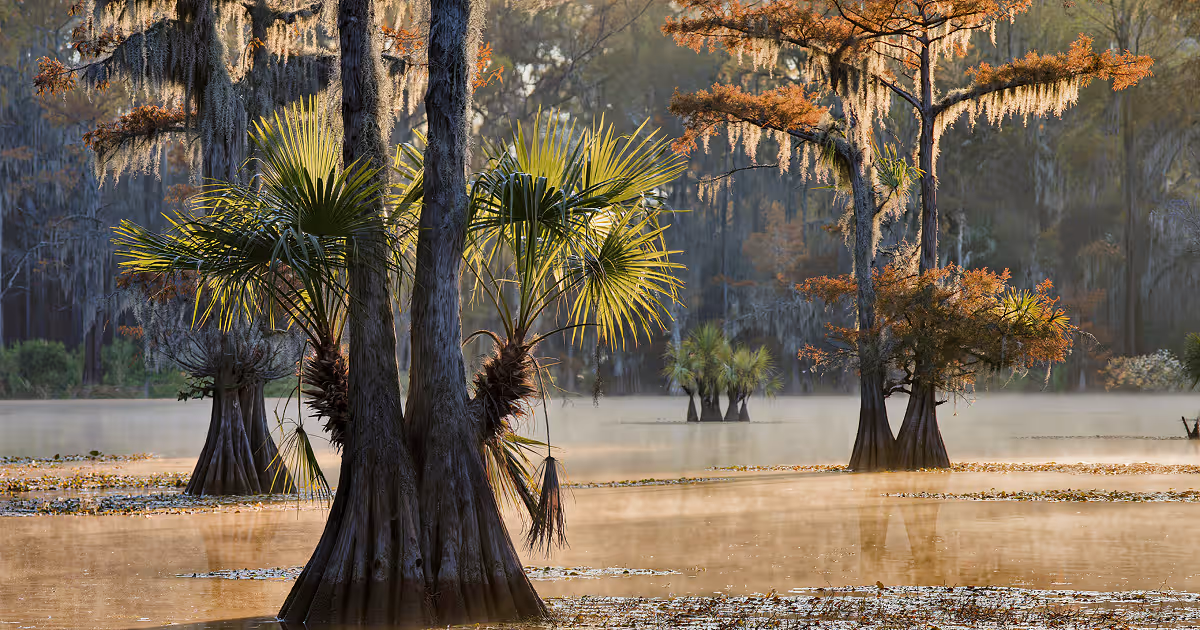
Florida swamp edge. Palmetto, no figure.
Illustration, not a period photograph.
Opening
The Florida swamps south and east of the Gulf already had a bad-smelling upright in hunter talk when the papers settled on skunk ape. In 2000 photographs and plaster casts from Myakka, unsigned in the sense that no lab put a new species on them, went around as the modern object. David Shealy's tourist shop in the Big Cypress edge kept the name on a postcard. No hide has come out of those sloughs into a museum the file can close.
Older Seminole and settler talk sits as older water. This card is Myakka and the unsigned prints, not every late Florida clip.
The spine of the file is a smell and plaster that did not found a type. Skunk ape is swamp talk. It is not a skin in a Tallahassee drawer.
Timeline
Older swamp talk first. Late-century press names skunk ape.
2000 Myakka photographs and casts circulate. No lab close as unknown primate.
Tourist shops keep the postcard. Sightings continue and do not need Myakka.
Later lists borrow the smell. That list is later life. The unsigned prints are first for the modern picture.
Florida swamp country kept a skunk ape in later lists, Myakka unsigned prints among the cheap objects. A smell and a shape travelled. No type sat in a state case as that ape.
Swamp nights are easy to mock and hard to close. Unsigned prints are why the file is not only a joke about Florida.
Key figures
Swamp hunters own the smell and the first descriptions.
The Myakka photographer owns the 2000 stills, whoever that hand was.
David Shealy owns the roadside name.
Labs own the known-animal or inconclusive returns.
Physical and documentary trail
On the paper, 2000 gives you four hard objects and no type.
One: clustered Florida swamp accounts of a foul upright.
Two: Myakka photographs.
Three: plaster casts from that wave.
Four: the absence of a museum hide. Myakka skunk ape photographs and casts, 2000, are the modern tray.
There is no signed species paper. There is no body. There is no camera-trap still a zoologist put in a journal as the animal.
Unsigned prints and swamp accounts are the stay-behinds. A signed cast series would finish the name. A hide with a chain would finish the other door.
You smell it before you see it.
Competing explanations
An unknown ape in the slough. This is the postcard. It has stills. It has no hide.
A bear, a man, a costume, swamp gas for the smell. The mundane door. Has to carry why hunters keep the name.
A tourist animal. Possible at the shop. Not every hunter was selling tickets.
Hybrid caution. A swamp has a smell and a story. Tallahassee has no skin.
Later life of the case
Postcard racks and later clips. I keep those on the later-life shelf. Myakka stays first for the picture.
Finding
Florida swamp talk kept a foul upright, and in 2000 Myakka stills and casts went around without a lab founding a species. Believe the hunters for the smell. A man in a slough does not invent stink only for a gift shop.
What still will not resolve: a hide with a Florida chain, or a photograph a lab will sign as unknown. Either one would pin the name. The proving object is still that animal in the cypress, held as bear or as ape by more than an unsigned print.