APE CANYON
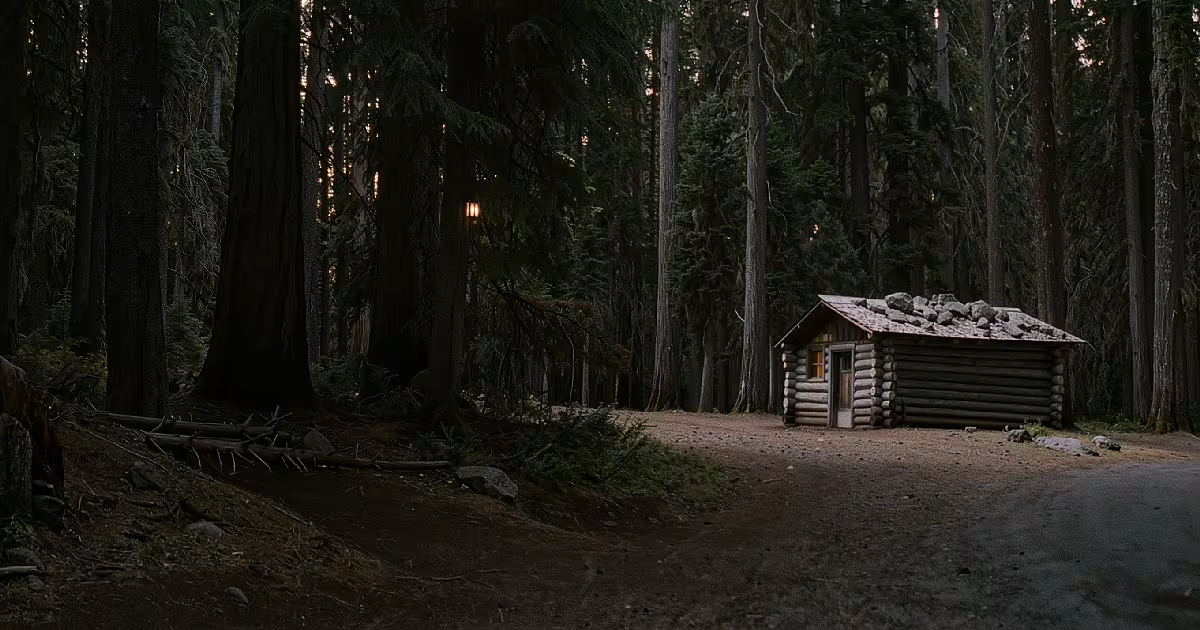
A log cabin in a dark mountain forest, with rocks piled on the roof.
Illustration, not a photograph.

Opening
In July 1924, five gold prospectors working a claim on the south-east shoulder of Mount St. Helens in Washington said they had been attacked in the night by giant ape-like creatures. The creatures, they said, pelted their log cabin with rocks until dawn, and one of the miners, Fred Beck, said he had earlier shot one and seen it fall into a gorge. The story ran in newspapers across the Pacific Northwest, and the gorge has been called Ape Canyon ever since.
It is one of the founding stories of the Bigfoot legend, decades before the word "Bigfoot" existed. Forest rangers who searched the area at the time found no creature and thought the miners had staged it. In 1982 a retired logger said he and his uncle had rolled rocks on the miners as a prank. Beck himself, in his old age, said the creatures were not entirely physical.
Timeline
Early 1920sBeck and his partners work a gold claim near the gorge on the edge of the Plains of Abraham, about eight miles from Spirit Lake. They report hearing whistling and thumping sounds in the forest and finding large footprints.
July 1924, daytimeAccording to Beck, he and another miner see a tall, hairy creature behind a tree near the canyon. Beck fires, and they see it run off. Later the same day Beck fires at another creature on the canyon rim and says it fell into the gorge.
The same nightThe miners are woken by rocks hitting the cabin roof and walls. They describe several creatures outside, a hairy arm reaching through a gap in the chinking for an axe, and rocks falling until daylight. They fire their rifles through the walls and roof.
The next morningThe men leave the claim and walk out. Their story reaches the newspapers within days and is widely reprinted in Washington and Oregon.
Days laterForest Service rangers J. H. Huffman and William Welch search the canyon. They find no creatures, show that the 14-inch footprints could easily be faked, and conclude that the miners most likely threw the rocks themselves. Reporters and armed curiosity-seekers also visit.
1967Beck publishes a booklet, I Fought the Apemen of Mt. St. Helens, published by R. A. Beck. In it he describes the creatures as psychic beings that could be partly present in the physical world.
1 June 1972Beck dies, aged 83.
18 May 1980The eruption of Mount St. Helens transforms the area. The cabin site is no longer known.
1982Rant Mullens, a retired logger from Toledo, Washington, then 86, tells a reporter that in 1924 he and his uncle rolled rocks down on the miners' cabin from the ridge to scare them. He also says he later carved wooden feet to make tracks.
Key figures
Fred Beck is the central witness and the only one of the five who wrote a full account, more than forty years later. The other miners' names appear in later Bigfoot literature, but I have not confirmed them against 1924 newspaper reports. Rangers Huffman and Welch investigated at the time. Rant Mullens made the hoax claim in 1982. None of the original miners publicly retracted the story.
Physical and documentary trail
The July 1924 newspaper reports, the Forest Service rangers' findings and Beck's 1967 booklet are the record. The newspapers recorded the miners' story while it was fresh, which is valuable. No body, bone, hair or photograph was recovered. The footprints were not cast, as far as the sources show. The original cabin site has since been lost.
I tell you, people will believe just about anything.
Things you might not know
- The canyon was named for the story. Ape Canyon took its name from the 1924 reports.
- Beck did not think they were apes. His 1967 booklet describes them as psychic, partly non-physical beings.
- The Mullens confession has a problem. Two men rolling rocks from above does not obviously account for a night-long attack on all sides of the cabin, or for the miners shooting at creatures by day.
- The volcano reshaped the site. The 1980 eruption sent mudflows down the area, and the Ape Canyon trail now runs along the gorge.
- It predates "Bigfoot" by 34 years. The word only entered use in 1958, after the Bluff Creek track finds in California.
Competing explanations
Large unknown primates. On the miners' account, they saw tall hairy creatures by day and were attacked by several at night. This is the reading Bigfoot researchers take, and Ape Canyon is often cited as an early case.
A prank. Rocks rolled or thrown from above in darkness, possibly by local young men, could produce a terrifying night inside a log cabin. Mullens' confession supports this, though it came 58 years later and does not match the full account.
Staged by the miners. The rangers' view in 1924 was that the miners threw the rocks themselves. A motive is not given in the sources, and the miners abandoned a working claim, which is a costly way to start a story.
Something Beck believed was not entirely physical. Beck's own later interpretation sits outside both sides of the usual argument.
Later life of the case
Ape Canyon became a standard chapter in Bigfoot books, and the Mount St. Helens area remains a focus for Sasquatch enthusiasts. The 1982 confession is cited by sceptics, and its gaps are cited by believers.
Finding
Five men abandoned their claim after a frightening night, and the 1924 newspapers recorded their story while it was fresh. No physical evidence of a creature was recovered, rangers at the time thought the miners staged it, and a local man later said he and his uncle rolled the rocks. The strongest reading is a night attack by human hands, magnified by fear and darkness, but the confession does not cover the whole account.
What still will not resolve: what Beck and his partner shot at by daylight, which is the part of the story neither the rangers nor Mullens explain.
Evidence signature
5/9 Solid
- Witnesses
- several people
- Instruments
- photo, film or physical traces
- Paper
- official records at the time
How well documented the case is, not whether it's true. A strong record can still have an ordinary answer, and a thin one can still be real.
You decide · APE CANYON
What do you think happened?
One vote per case, anonymous. You'll see how other readers voted once you've voted.