EMELA-NTOUKA
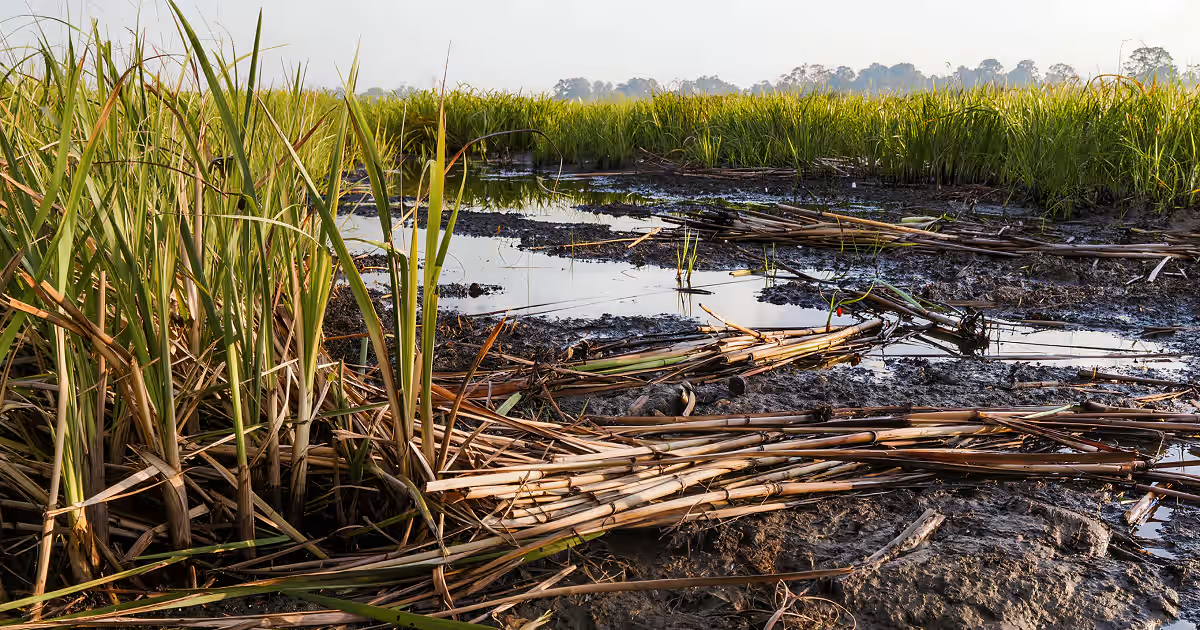
Congo swamp edge. No animal.
Illustration, not a period photograph.
Opening
Congo swamp talk keeps an emela-ntouka: a horned water animal that kills elephants in the telling, a rhinoceros of the marsh. Roy Mackal and later expeditions took the name into English lists. No horn, hide or bone with a clean chain sits in a Brazzaville or Kinshasa case as an unknown. Known rhinos and stories that travel with hunters sit in the competing drawer.
Emela-ntouka is a horn without a jar. Keep it lean.
The spine of the file is a swamp name and no specimen. Emela-ntouka is hunter talk. It is not a type in a national museum.
Timeline
Local names first. Late-century expeditions write the horn into lists.
No year produces a museum hide. Camera hopes sit in later talk.
Those lists are later life. The missing horn is first.
The swamp keeps the cover.
Emela-ntouka sits in later Congo lists as a horned water animal that kills elephants in the telling. No hide sat in a national case. Known rhinos and stories sit in the competing drawer.
A forest name that never founds a type is still a long hunter file. The missing hide has to be written as missing, not skipped.
Emela-ntouka elephant-killing talk in the telling never produced the horn in a case. Known rhino weather sits beside the name.
Key figures
Congo hunters own the horned killer in talk.
Roy Mackal and later walkers own the English name.
Museums own the empty drawer.
Known rhinos own the mundane door.
Physical and documentary trail
On the paper, the modern hunt gives you four hard objects and no type.
One: hunter accounts of a horned swamp animal.
Two: expedition notes that took the name west.
Three: the absence of a specimen.
Four: known rhino as the competing animal. Expedition notes on emela-ntouka, are the modern tray.
There is no horn in a case. There is no photograph a lab will sign. There is no later type series.
Hunter talk and no hide are the stay-behinds. A specimen with a chain would finish the name. A photograph a lab will sign would finish the other door.
Hunter talk and no horn in a case are the extra stay-behinds.
It carries a horn and it lives in the water.
Competing explanations
An unknown horned swamp animal. This is the name. It has talk. It has no horn in a case.
A known rhino plus water. The mundane door.
A story for lost ivory. Incomplete. People still describe the water.
Hybrid caution. A swamp has a name. A museum has no horn.
Later life of the case
Later expedition films. I keep those on the later-life shelf. The missing horn stays first.
Finding
Congo hunters describe a horned water animal under the name emela-ntouka, and no museum took a type. Believe the talk as talk. A hunter does not invent a horn only for a visiting list.
What still will not resolve: a horn with a swamp chain, or a photograph a lab will sign. Either one would pin the name. The proving object is still that animal in the marsh, held as rhino or as other by more than another interview.