MINHOCÃO
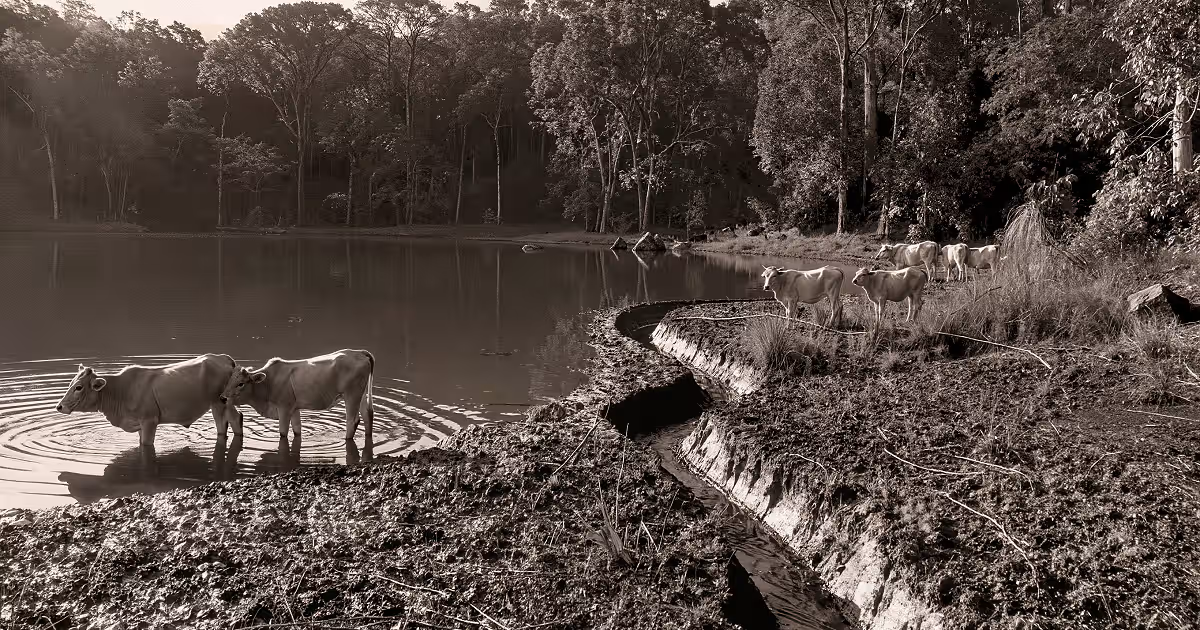
Highland lake edge. Cattle, no trench shown close.
Illustration, not a period photograph.
Opening
Brazilian interior talk keeps a minhocao: a giant worm or scaled snake that trenches land and pulls cattle. Nineteenth-century travellers wrote trenches and missing animals. Fritz Muller and others passed the name to European desks. No specimen sits in a Brazilian museum as an unknown worm of that size. Known snakes and weather that opens ground sit in the competing drawer.
Minhocao is a trench-and-cattle file without a type. Keep it lean. The name is older than any one carcass claim.
The spine of the file is a trench and no worm in a jar. Minhocao is interior talk. It is not a type in Sao Paulo.
Timeline
Nineteenth-century traveller notes. Trenches and missing stock.
European journals pick up Muller's letters. No type follows.
Later lists keep the worm. No year produces a hide the museum kept as unknown.
Those lists are later life. The trenches are first.
Minhocao in later South American lists is a giant earth-worm or hide-ripping thing in older travel talk. No type sat in a national case. Furrows and cattle stories travelled. Known weather and known animals sit in the competing drawer.
A name that crosses borders without a jar is still a name with a history that has to be written.
Minhocao furrows in older travel talk crossed more than one country and still left no jar. Known weather sits with the name.
Key figures
Interior witnesses own the trenches and the missing stock.
Fritz Muller and travelling naturalists own the European paper.
Museums own the empty type drawer.
Known snakes own the mundane door.
Physical and documentary trail
On the paper, the nineteenth century gives you four hard objects and no type.
One: trench and cattle reports from the interior.
Two: traveller letters that named minhocao.
Three: European journal notice.
Four: the absence of a specimen. Nineteenth-century notes on the minhocao, are the originating tray.
There is no jar. There is no photograph a lab will sign. There is no later type series.
Older travel notes and no type are the stay-behinds. A specimen with a chain would finish the name. A photograph a lab will sign would finish the other door.
Travel notes and no type are the extra stay-behinds. A specimen would finish the word.
The ground opened as if a great worm had passed.
Competing explanations
An unknown giant worm. This is the name. It has trenches. It has no jar.
Known snakes, erosion, missing cattle with ordinary thieves. The mundane door.
A traveller's tale. Incomplete. People still reported ground that moved.
Hybrid caution. The interior has a name. The museum has no worm.
Later life of the case
Later monster lists. I keep those on the later-life shelf. The trenches stay first.
Finding
Brazilian interior talk kept a giant worm that trenched land, and no museum took a type. Believe the trenches as talk that reached travelling naturalists. A cattle man does not invent missing stock only for a European letter.
What still will not resolve: a specimen in a jar, or a photograph a lab will sign. Either one would pin the name. The proving object is still that worm, held in a case, not in another trench after rain.