MAX HEADROOM EVENT
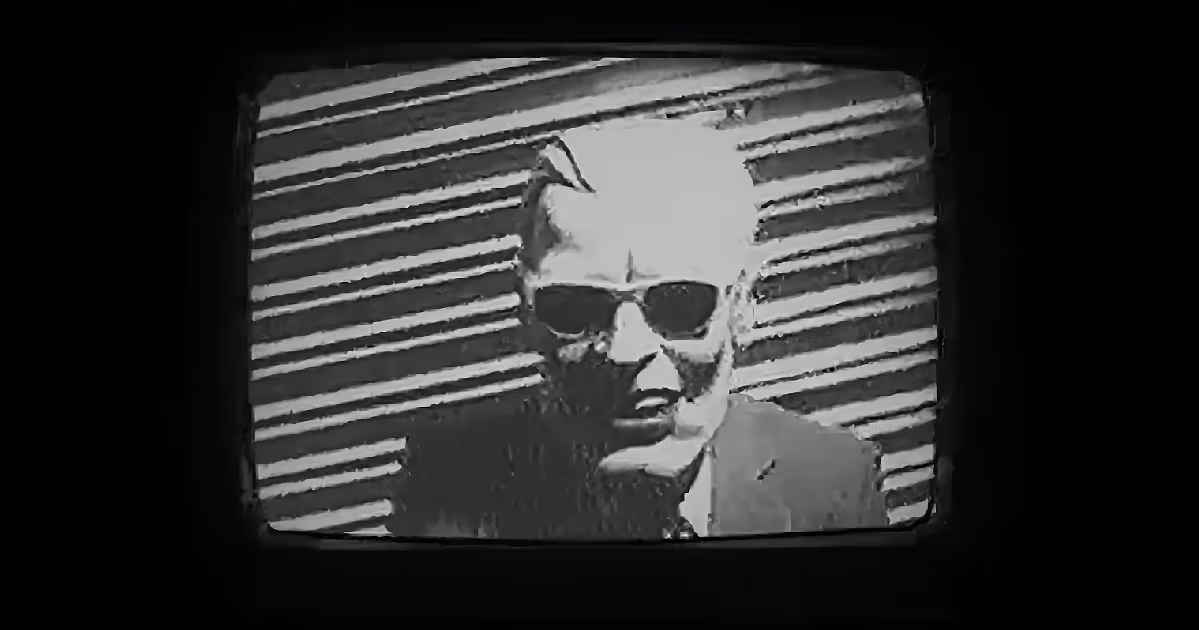
Max Headroom intrusion broadcast, reconstructed.
Illustration, not a period photograph.
Opening
On Sunday 22 November 1987 two Chicago television stations lost their own pictures to a man in a Max Headroom mask. The first hit was WGN-TV, Channel 9, at 9:14 p.m. during the sports block of The Nine O’Clock News. Dan Roan was in the chair. Bears highlights dropped to black, then to a corrugated metal backdrop and a figure in a cheap latex Headroom face and sunglasses, swaying. Audio on that hit was a buzz. Engineers at Bradley Place changed the studio-to-transmitter frequency feeding the John Hancock tower and got the news back in under half a minute.
About two hours later WTTW, Channel 11, was running the Doctor Who serial Horror of Fang Rock. At about 11:15 p.m. the same mask came back, this time with speech. The cut lasted on the order of ninety seconds. Pepsi cans, a swipe at WGN sportscaster Chuck Swirsky, a rubber middle finger, and a flyswatter on a bared backside. WTTW did not have an engineer on the Hancock dish at that hour. The episode resumed when the pirate stopped.
The spine of the file is a successful override of two studio-to-transmitter links on one night, on tape, with no arrest. The method is discussed. The people are not named.
Timeline
22 November 1987, 21:14. WGN sports. Intrusion. No usable voice. Roan comes back on and tells the room he does not know what they just saw.
22 November, minutes after. WGN engineering cuts the pirate off the Hancock receiver by changing uplink frequency. That is the first hard technical fact: the station treated it as an over-the-air steal of the microwave hop, not as a studio prank.
22 November, about 23:15. WTTW. Same mask, same corrugated set, now with distorted audio. References to Swirsky, a “great newspaper,” Coke’s “catch the wave” line delivered with Pepsi, then the spanking finish. The recording is the document. There is no second WGN-style save because nobody was sitting on that dish.
23 November. The Chicago Tribune and the other desks have it. The Federal Communications Commission opens a file. Station engineers talk to reporters about a joker with a serious transmitter.
Late 1987 into 1988. FCC work continues. No indictment. Michael Marcus, later identified as a lead investigator on the Commission side, describes the likely path as a stronger signal aimed at the studio-to-transmitter link. That is an engineering reading, not a named suspect.
2009 and after. Analog shutdown and encrypted digital hops make a copycat much harder. The tapes stay on the internet. The file stays open.
Key figures
The mask is the only face the public gets. At least two people are on the WTTW tape if you count the flyswatter arm. Neither has a name that survives a courtroom.
Dan Roan is the first official voice after the first hit. His line is useful because it is live and short.
Chuck Swirsky is not in the room. He is the named target in the second audio. That name is why some later guessers look for a sports-desk grudge. A grudge is not an identification.
WGN engineering is the team that proved the first steal could be broken from the studio. WTTW engineering is the team that learned, the same night, that an unattended hop can be held for a minute and a half.
The FCC is the agency that did not close the case with a person. Marcus’s later comments are the best public technical summary the Commission has allowed into print.
Physical and documentary trail
On the paper, 22 November 1987 gives you four hard objects.
One: the WGN clip. Short. Buzz. Mask. Metal panel. Station recovery by frequency change on the Hancock path.
Two: the WTTW clip. Longer. Speech. Same costume language. A second pair of hands. This is the tape most people mean when they say Max Headroom hijack.
Three: same-week newspaper and station statements. Two stations, two hours apart, one city, one night. Engineers pointing at a microwave override, not at a master-control intern.
Four: the FCC investigation that never produced a charged name. That empty close is part of the trail.
There is no recovered transmitter logged as evidence. There is no callsign. There is no confession that has stood up. There is no proof the pirate sat on the Hancock roof itself. The likely geometry is a line-of-sight shot into the receive dish from somewhere with a view of that hop.
Well if you’re wondering what just happened, so am I.
Competing explanations
Studio-to-transmitter override. This is the reading station engineers and later FCC comment point at. A pirate transmitter, close enough and hot enough, seizes the dish that carries the studio feed to the Hancock antenna. It accounts for two different licensees on the same night and for WGN’s ability to kick the first hit by changing frequency. It does not name who held the key.
Insider. Someone with shift knowledge of when WTTW’s dish was unmanned. This reading accounts for the second hit lasting. It is a suspicion, not a personnel file.
Art-world prank with no further aim. The Pepsi gag and the flyswatter look like a tape made for friends that escaped onto two transmitters. That can be true and still be a federal offense. Motive does not identify a hand.
State or intelligence theater. This reading shows up because the method is tidy. It has no cable, no budget line, and no reason to paddle a man in a rubber mask on Channel 11. I do not carry it past a sentence.
Later life of the case
Anniversary pieces call the pirate the D. B. Cooper of broadcast. That line is later life. It is not 1987 paper. Digital television and encrypted STLs are why the copycat era mostly ended. They do not solve 1987.
Internet decoding of the mumbled audio has produced extra phrases and extra theories. I stay with what the Tribune could hear the next morning: Swirsky, a newspaper, dirt, Pepsi, and the spanking close. If a named engineer from that night posts a work log with a bearing on the pirate antenna, the finding moves.
Finding
On 22 November 1987 a man in a Max Headroom mask took WGN off the air in the middle of the sports block, and later the same night took WTTW. Engineers saw their own chain seized. Chicago watched it happen live. Believe the stations. That was not a rumour about a pirate. Two transmitters were actually ridden, and the face in the cheap latex was in people's living rooms.
What still will not resolve: a name. A studio, a captured transmitter chain, or the person under the mask saying they did it, would close the only open task in the file. The tapes exist. The pirate does not have a booking sheet. That identity is the proving object.