ISDAL WOMAN
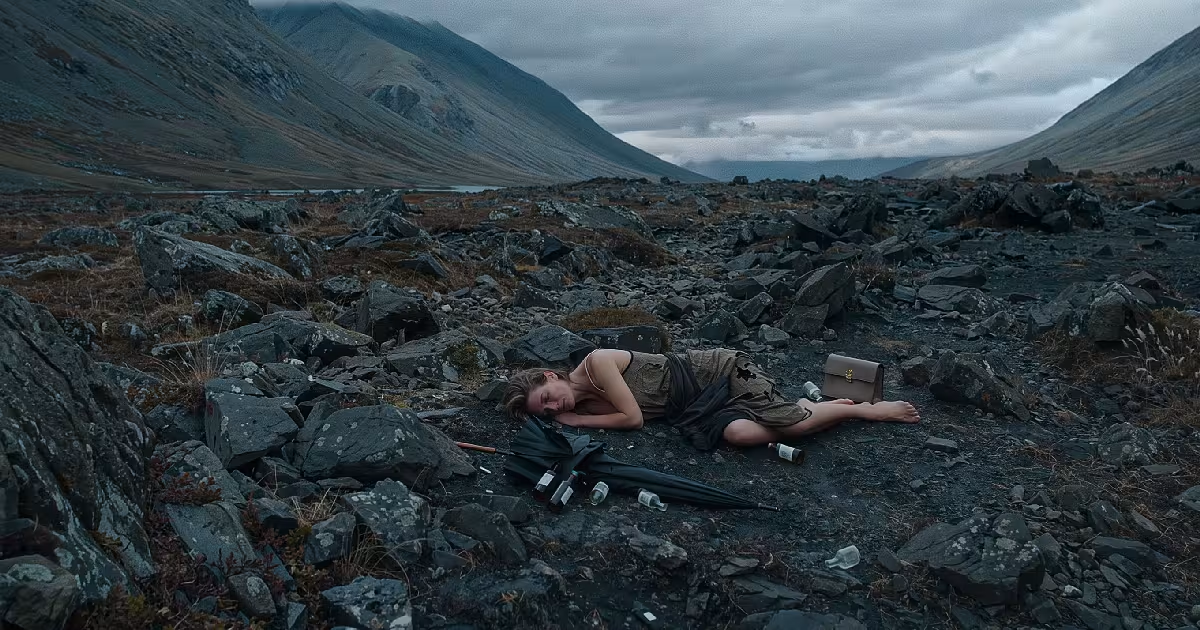
Isdalen site and recovered materials.
Illustration, not a period photograph.
Opening
On 29 November 1970 a hiking party found a burned body in Isdalen, the valley behind Mount Ulriken outside Bergen, Norway. The woman was unidentified. Labels had been cut from her clothes. A wig, multiple passports in use across hotels, and a notepad of letter-number groups sat in luggage later tied to her at the railway station.
The autopsy said she had been alive in the fire. Fenemal sleeping tablets were in her stomach. Petrol was in the ground. Bergen's police chief called it suicide. The grave went unmarked. The name never arrived.
The spine of the file is an unidentified woman whose paper identity had been removed before the fire, and an official close that named the manner of death without naming her. The valley holds a body. The ledger does not hold a person.
Timeline
March through November 1970. Hotel cards later show a woman moving through Oslo, Bergen, Stavanger, Trondheim, and cities outside Norway under more than one name. Staff remember wigs, accent shifts, and a request that rooms face certain ways. A coded list in a notepad matches those dates and places once the letters are read as cities.
Last days of November. She is in the Bergen area. Witnesses later place a woman of her description in town. On the 29th a professor and his daughters find the burned body off the path in Isdalen. Police treat it as a death scene. Suitcases at the station are matched by fingerprints on sunglasses.
December 1970. Autopsy: combination of Fenemal and carbon monoxide, burns contributing, soot in the airways. Chemist Tormod Bones notes petrol. Interpol gets fingerprints. No hit that names her.
Days after the autopsy. Police Director Asbjorn Bryhn tells the press the word that still sits on the file: suicide. He speaks of mania. Many officers, then and later, say they did not believe the valley was a place a woman would choose to burn.
February 1971. Catholic burial in an unmarked grave, zinc coffin, in case a family ever comes. No family comes with a name the state will stamp.
Key figures
The woman is the whole file and also the missing line. Age estimates sat in the thirties. Teeth, isotopes, and later DNA work have narrowed a map without producing a passport name that the grave can wear. She is not "the spy" until someone proves a service. She is a burned unidentified person with a travel list.
Asbjorn Bryhn owns the official word. Suicide is his close. It is a police chief's sentence, not a signed confession from the valley.
The hotel staff and the hikers are the living witnesses to a woman and then to a body. They do not give her a name. The Kripos chemist and the pathologists give the fire and the tablets. They do not give a motive.
Later NRK work and foreign reporters reopen the suitcases. They are not 1970 handlers. They belong on the later-life shelf except where they print the original autopsy and hotel cards.
Physical and documentary trail
On the paper, November 1970 gives you four hard objects and no name.
One: the body in Isdalen on 29 November, burned, with soot in the lungs, Fenemal in the stomach, and petrol in the soil. The autopsy line is combination poisoning, fire contributing. She was alive when the fire took air.
Two: clothing and effects with labels removed, a wig, and the railway-station suitcases matched to her. The removal of marks is a physical act done before the valley. It is not a theory.
Three: hotel registration cards under more than one identity, and the notepad groups that decode as a travel timetable. Bergen police and Kripos case materials, November-December 1970, carry those cards. The list is a diary of movement, not a confession of work.
Four: Bryhn's public close of suicide, and the February 1971 unmarked burial in zinc. The state filed a manner of death and declined to keep a headstone name it did not have.
There is no identified next of kin in 1970. There is no recovered weapon that ends the argument. There is no service file produced by a government that says she was theirs.
Selvmord.
Competing explanations
Suicide in the valley. This is the official 1970 reading. Tablets plus fire, no forced entry story the police would sign. Against it: the place, the petrol, the cut labels, the aliases, and officers who never liked the word. A suicide can be strange. This one asked the public to accept a lot of strangeness at once.
Homicide dressed as a fire. A third person, tablets administered or swallowed under duress, petrol, a body left off the path. Later forensic psychiatrists have said suicide is unlikely. They are not the 1970 autopsy. They are an argument the original file invited by being thin on manner.
Intelligence work. Identities, wigs, routes that later writers lay against Norwegian missile trials. Police in 1970 said they could exclude a spy. Exclusion is a sentence. It is not a cleared desk in another country. No service has stood up to claim her.
Hybrid caution. She erased her labels. Someone, herself or another, lit petrol in a valley. The name is still not in the ledger.
Later life of the case
NRK's long return, DNA and isotope sketches, a possible link into central Europe, and shelves of spy books keep the woman in public without finishing the form. Composite faces change. The grave does not.
I keep the later spy treatments and the television reconstructions on the later-life shelf. I do not treat them as incoming November 1970 field notes. The hotel cards and the autopsy stay first.
Finding
A woman died on a wet slope in the Isdalen in 1970 with the labels cut from her clothes and a trail of trains and hotels behind her. The scene is not a rumor. Bergen police walked it. Someone packed for a life that ended on that stone, and the fjord kept her without giving her back a name the file could live with.
What still will not resolve: her name, tied to a passport that is hers, or a living person who will say they sent her there. A matched dental chart or a relative who can stand at the grave and not guess would finish the only task the case ever had. Until then she is a careful disappearance that still has no owner.