LAKE ANJIKUNI
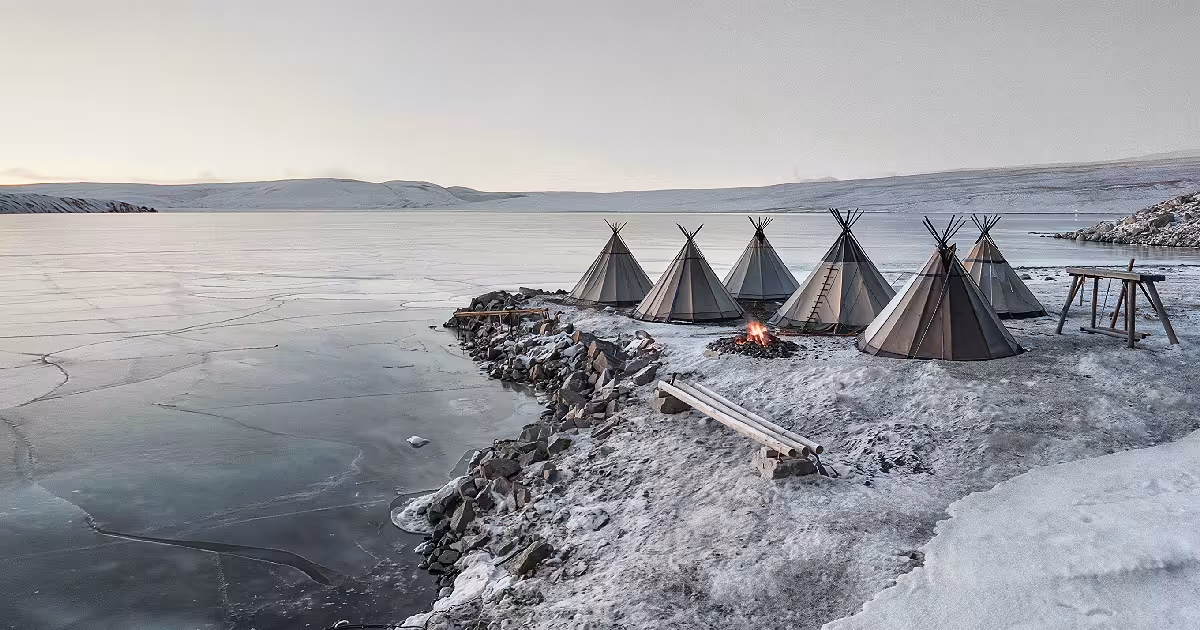
Empty tents and a small fire by a frozen Arctic lake.
Illustration, not a photograph.

Opening
In November 1930 a newspaper story out of The Pas, a fur-trading town in northern Manitoba, told of a trapper named Joe Labelle who had travelled far north to a lake called Anjikuni, in what is now Nunavut. He knew of a small Inuit camp there and expected a welcome. Instead, the story said, he found the camp empty: tents standing, food hanging over the fire, clothes half-sewn with the needles still in them, sled dogs dead of starvation at their posts, and a grave opened. Of the 25 men, women and children who lived there, there was no trace.
It is one of the most famous disappearances in the world, retold in books, television shows and a Dean Koontz novel, and often grown to a village of hundreds or even a thousand people, with strange lights seen in the sky. But the trail behind it is short. It runs back to one article by one reporter, a police sergeant who said there was nothing to it, and a gap of nearly thirty years before anyone told it again.
Timeline
November 1930The story appears under the name of Emmett E. Kelleher, a newsman in The Pas. On 27 November it runs in the Danville Bee in Virginia under the headline "Vanished Eskimo Tribe Gives North Mystery Stranger Than Fiction", describing an empty camp of six tents and 25 missing people. Other papers carry it too.
January 1931Sergeant J. Nelson of the Royal Canadian Mounted Police at The Pas files an internal report. He finds "no foundation for this story", notes that Labelle had only just taken out his first trapping licence that season, doubts that he had been in the territories before, dates one of the photographs used with the story to 1909, and says Kelleher was known for colourful stories.
1931 to 1958The story is largely forgotten.
1959The American broadcaster Frank Edwards includes it in his bestselling book Stranger Than Science, with about 30 people and one grave.
1960s onwardLater books and magazines enlarge it: more people, an empty graveyard, mysterious lights in the sky. Dean Koontz uses it in his 1983 novel Phantoms.
Recent decadesThe RCMP, answering repeated enquiries, describes the story as an urban legend, saying a village that size could never have existed in such a remote place.
Key figures
Joe Labelle is the trapper at the centre of the story. He was a real person, but nothing confirms that he ever found an empty camp at Anjikuni, and the police sergeant who looked into it doubted he had been there at all.
Emmett E. Kelleher wrote the original article from The Pas. His story is the only first-hand source, and the RCMP described him as a writer of colourful tales.
Sergeant J. Nelson of the RCMP wrote the only official assessment from the time, and it dismissed the story.
Frank Edwards revived the tale for a mass audience three decades later.
The Inuit of the Kivalliq region are the people the story claims vanished. There is no record that any community there disappeared.
Physical and documentary trail
What exists: Kelleher's 1930 newspaper article and its reprints; Sergeant Nelson's report of January 1931; Frank Edwards' 1959 book; and the RCMP's modern statements. Some sceptics once believed Kelleher's article had never existed, until copies turned up in old newspapers. The podcaster Brian Dunning, who had doubted it, publicly corrected himself and said the article "does indeed exist", while still calling the story dubious.
What is missing is any trace of the event itself: no list of the missing people, no family who lost relatives, no police search report describing an empty camp, and no Hudson's Bay Company or government record of a vanished community at Anjikuni in 1930.
No foundation for this story.
Things you might not know
- It started as 25 people. The original article spoke of six tents and 25 missing men, women and children. Later versions turned it into a village of 1,000 or more.
- The lights in the sky came later. The strange glowing lights so often linked to the disappearance are not in the 1930 article.
- A photo may have been decades old. Sergeant Nelson dated one of the photographs used with the story to 1909.
- The lake is real and remote. Angikuni Lake, on the Kazan River in Nunavut, covers about 510 square kilometres and is uninhabited today.
- It has another mystery. In 1948 the writer Farley Mowat found a cairn near the lake containing pieces of a dovetailed hardwood box, which he speculated might be linked to the lost Franklin expedition.
- Whitley Strieber used it too. The story also turns up in his novel Majestic, one of several works of fiction that helped spread it.
Competing explanations
A newspaper tall tale. The most likely reading: a reporter in a frontier town wrote up a dramatic story, possibly from a trapper's yarn, and it spread through other papers. The only police assessment at the time found nothing to it, and nobody was ever named as missing.
A real camp that moved. Some suggest that if Labelle did find an abandoned camp, its people may simply have moved, as Inuit groups did with the seasons and the caribou. That would explain an empty camp, though not dead dogs or an opened grave, if those details were real.
A mass disappearance. The version with lights in the sky and a thousand vanished villagers. Nothing from 1930 supports it, and every dramatic detail appears to have been added later.
Later life of the case
The vanishing village of Anjikuni has become a fixture of "unexplained disappearance" lists, documentaries and podcasts around the world, usually in its most dramatic form. The Inuit people of the region, whose ancestors are the supposed victims, have no part in the legend except as its subject. The RCMP still receives questions about it, and still gives the same answer.
Finding
The Anjikuni Lake disappearance begins and ends with one 1930 newspaper story by a reporter in The Pas, which a police sergeant dismissed within weeks, and which was revived nearly thirty years later and enlarged with each retelling. No missing person has ever been named, and no record from the time confirms that the camp existed. The strongest reading is a frontier tall tale that grew into a global mystery.
What still will not resolve: where Kelleher got the story, and whether Joe Labelle ever told it himself.
Evidence signature
3/9 Thin
- Witnesses
- one person, or a tradition
- Instruments
- nothing on record
- Paper
- official records at the time
How well documented the case is, not whether it's true. A strong record can still have an ordinary answer, and a thin one can still be real.
You decide · LAKE ANJIKUNI
What do you think happened?
One vote per case, anonymous. You'll see how other readers voted once you've voted.