DIGHTON ROCK
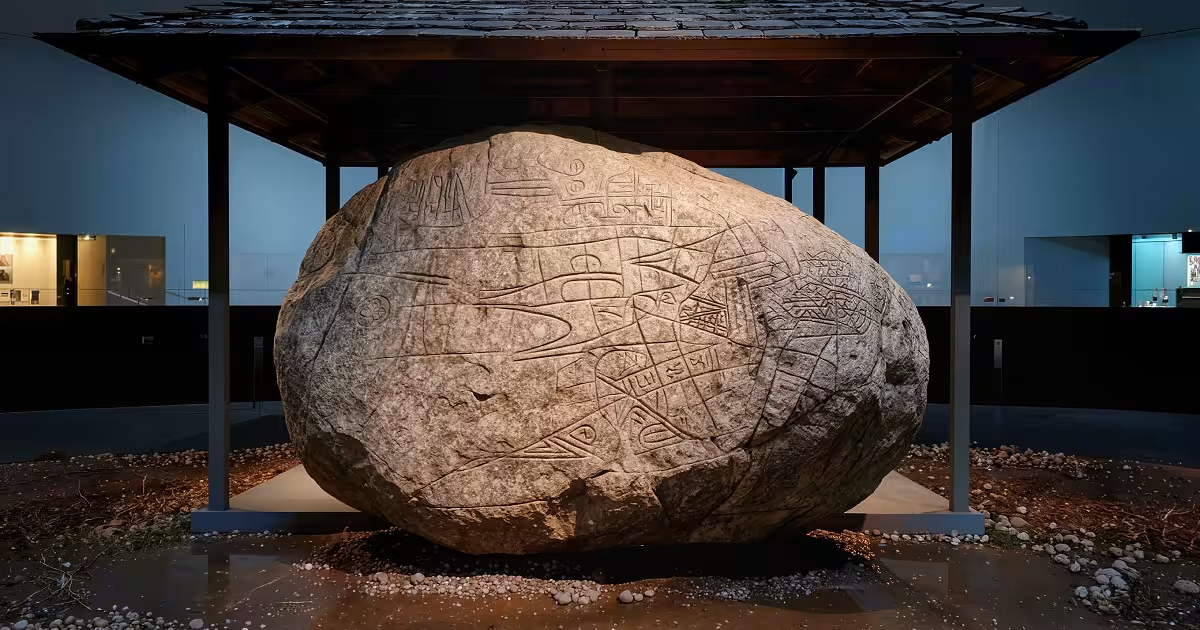
Large inscribed boulder under a small museum roof.
Illustration, not a period photograph.
Opening
Dighton Rock in the Taunton River is a real boulder with pecked marks. Who cut them is still unread as a single author. Norse, Portuguese, Native, and later colonial hands have all been offered. The rock is first. The author is the gap. Keep later prize-essay weather on the shelf unless a reading predicts marks not used to build the reading.
Dighton is a stone that will not sign its name. That unread is the file.
The spine of the file is pecked marks and no agreed hand. Dighton Rock is Massachusetts stone. It is not a signed plaque.
Timeline
Colonial notice of the marks. Nineteenth-century casts and essays.
Later competing authors. No consensus hand.
The rock is moved and housed. The marks stay unread as one author.
Those essays are later life. The pecking is first.
Dighton Rock is a boulder with pecked marks, housed after the river. Norse, Portuguese, Native, and colonial hands have all been offered. No consensus author holds.
Unread marks are a full file. Prize essays are later life unless they predict unused cuts.
Casts of Dighton travelled in the nineteenth century. Authors multiplied. The cuts did not sign a name.
Key figures
The unknown cutters own the marks.
Colonial and later observers own the paper.
Competing schools own the unread names.
The stone owns the gap.
Physical and documentary trail
On the paper, the rock gives you four hard objects and no signed author.
One: a boulder with pecked marks.
Two: early casts and drawings.
Three: competing author theories.
Four: the absence of a consensus hand. Dighton Rock as housed stone and the unread marks, is the originating object.
There is no signed plaque. There is no reading that predicts unused marks both camps accept. There is no doubt of the pecking.
Pecked marks and early casts are the stay-behinds. A reading that predicts unused marks would finish the hand. A signed author both camps take would finish the other door.
Nineteenth-century casts and unread authors are the extra stay-behinds.
The marks are real. The hand is still unread.
Competing explanations
A single known author, Norse or Portuguese or other. This is each school. It has a theory. It has no consensus.
Native pecking later misread. Also on the table.
Colonial graffiti plus wishful reading. Possible at the edges.
Hybrid caution. A stone is cut. Morning had no signed name.
Later life of the case
Later prize essays. I keep those on the later-life shelf. The marks stay first.
Finding
Dighton Rock carries pecked marks that no school has read to a consensus hand. Believe the stone. A river boulder does not invent cutting for a later essay.
What still will not resolve: a reading that predicts unused marks, or a signed author both camps take. Either one would pin the hand. The proving object is still that reading, held against marks not used to build it.