DANCING PLAGUE 1518
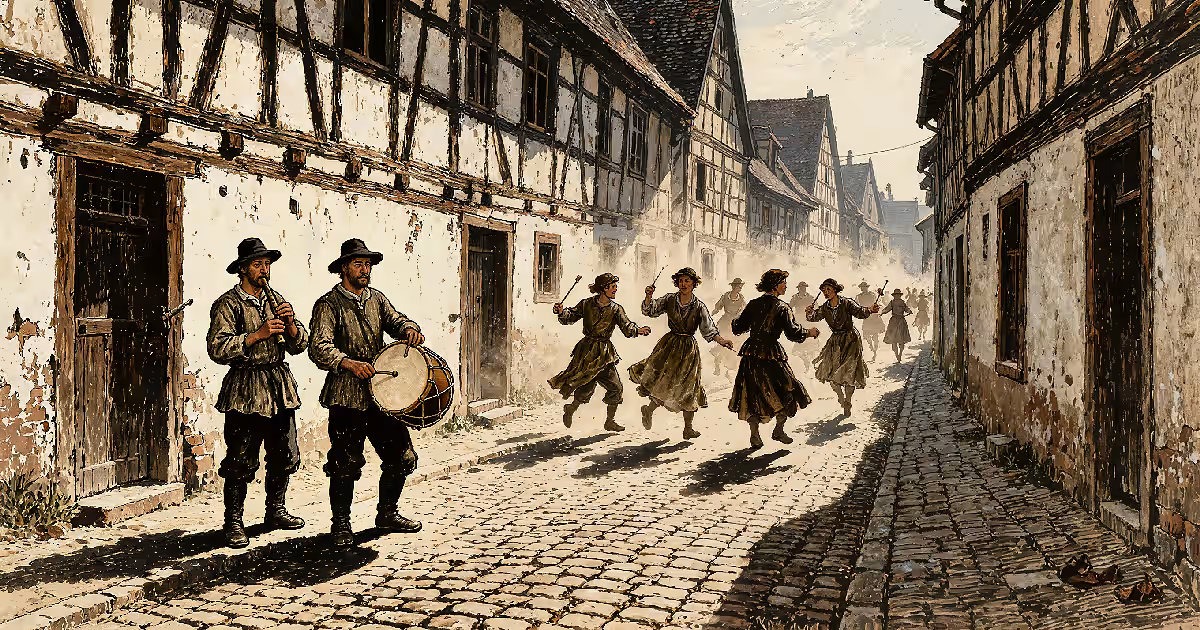
Two musicians with a pipe and a drum leading a line of dancers down a cobbled Strasbourg street of half-timbered houses.
Illustration, not a period photograph.
Opening
In July 1518, in the free city of Strasbourg, a woman began dancing in the street outside her house and did not stop. Within days others joined her. By August dozens, perhaps hundreds, of people were dancing in the city’s streets and squares, apparently unable to stop, while the city council tried first to help them dance it out and then to make them stop. It is one of the best-documented outbreaks of what the period called the dancing mania.
Timeline
Around 14 July 1518. A woman the chronicles call Frau Troffea starts dancing in her street. She ignores her husband’s pleas and keeps going for days, stopping only to sleep. After several days the authorities send her by wagon to the shrine of Saint Vitus at Saverne, some 30 miles away.
Late July. More than thirty people have joined her. Their feet swell and bleed, and some collapse from exhaustion.
Early August. The city council, advised by physicians who blame “hot blood”, decides the dancers must dance it out. It clears guildhalls, puts up platforms in the horse and grain markets, and pays musicians with drums, fiddles, pipes and horns, along with strong men to hold the dancers up and keep them moving. The architect Daniel Specklin later recorded the dance floors. The numbers grow. The Imlin family chronicle says that within a month the plague had seized 400 citizens.
Mid August. The council reverses itself. The stages are pulled down, public dancing and music are banned until September, and people are told to pray. Gambling and prostitution are also banned as penance.
Late August to September. The worst affected are taken by cart to the Saint Vitus shrine at Saverne, as Frau Troffea had been. Priests stand them beneath a wooden carving of the saint, put small crosses in their hands and red shoes on their feet, and paint crosses in holy oil on the soles. The outbreak dies away.
Key figures
Frau Troffea, named in four of the six surviving chronicle accounts as the first dancer. The Strasbourg city council, whose decisions are in its own records. The physicians who advised it, who called it a natural disease caused by overheated blood. Sebastian Brant, author of The Ship of Fools, who as city secretary wrote down the council’s orders. Paracelsus, who visited in 1526 and blamed Frau Troffea for faking it to embarrass her husband, with other women copying her to annoy theirs. Historian John Waller, whose 2008 book A Time to Dance, a Time to Die is the main modern study.
Physical and documentary trail
On the paper: city council records, physicians’ notes, cathedral sermons and several local chronicles, written by people who were in or near the city at the time. They agree that the dancing happened and how the city responded. What they don’t agree on is the scale. Estimates run from about 50 to 400 dancers. Later accounts say up to fifteen people a day died at the peak, but the council’s own records of the time do not mention deaths, and no reliable number exists.
If honourable persons wish to dance at weddings or celebrations of first Mass in their houses, they may do so using stringed instruments, but they are on their conscience not to use tambourines and drums.
Competing explanations
Ergot poisoning. A fungus on rye can cause convulsions and hallucinations. Against it: ergot restricts blood flow to the limbs, which would make days of dancing unlikely, and it would not make so many people behave the same way.
Mass psychogenic illness. Waller’s explanation. Strasbourg had just been through famine, disease and hard winters, and people believed Saint Vitus could curse sinners with dancing. Under that strain, and in that belief, people fell into a trance that spread through the community. The council’s decision to give the dancers a stage and music made it worse. This fits the records best.
A religious movement or deliberate performance. A few writers have suggested the dancers were members of a sect acting on purpose. Paracelsus’s version, of a wife making a scene, is the earliest form of this idea. Nothing in the council’s records supports it.
Later life of the case
At least seven other dancing outbreaks are recorded in the Rhine and Moselle region between the 1370s and 1518, and the same Saint Vitus belief runs through them. Strasbourg’s is the best documented. It has become a standard case in the history of medicine, and a recurring image in art, films and songs about crowds that lose control.
Finding
The dancing plague is real and well documented. Strasbourg’s own records show people dancing in the streets for weeks, a council that hired musicians to help and then banned music, and a cure found at a saint’s shrine. The strongest reading is mass psychogenic illness in a city under severe strain, shaped by a local belief about a dancing curse. The death toll that makes the story famous is the part the records do not support.
What still will not resolve: how many people danced, how many died, and why Frau Troffea began.