SS BAYCHIMO
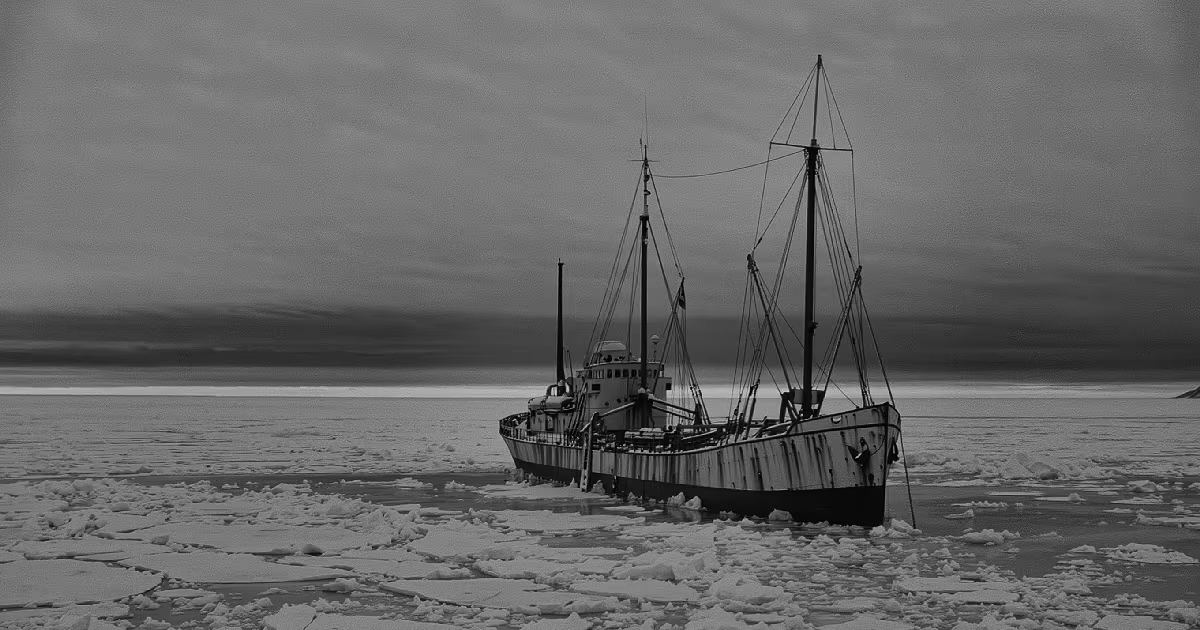
A small steamship with two masts frozen into broken pack ice under a grey Arctic sky, in black and white.
Illustration, not a period photograph.
Opening
In the autumn of 1931, the Hudson’s Bay Company cargo steamer Baychimo was trapped in the ice off the north coast of Alaska and abandoned. The company wrote her off as lost. She wasn’t. For the next thirty-eight years, hunters, traders and ships’ crews kept seeing her drifting in the Beaufort and Chukchi seas with nobody aboard. She became known as the ghost ship of the Arctic.
Timeline
1914. The ship is built at the Lindholmen shipyard in Gothenburg, Sweden, as Ångermanelfven, for a German owner.
After 1918. She passes to Britain as part of German war reparations. In 1921 the Hudson’s Bay Company buys her, renames her Baychimo, and uses her to trade supplies for furs at Inuit settlements in the western Canadian Arctic.
1 October 1931. On her way home loaded with furs, she is caught in pack ice near Barrow, Alaska. She breaks free, then is trapped again a week later.
15 October. Company aircraft fly out 22 of the crew. The rest set up a camp on shore to wait for the ice to clear.
24 November. A blizzard hits. When it clears, the ship is gone from where she was frozen in. A local hunter later reports her about 45 miles away. The remaining crew salvage some of the furs and the company abandons her.
1932. A traveller named Leslie Melvin reports seeing her near Nome.
1933. Inuit hunters board her and are trapped aboard for ten days by a storm. Later that year a party including the Scottish writer Isobel Wylie Hutchison goes aboard.
1939. Captain Hugh Polson boards her and tries to salvage her, but the ice forces him off.
1962. She is reported drifting in the Beaufort Sea.
1969. The last recorded sighting: frozen into the pack ice off the Alaskan coast, 38 years after she was abandoned.
2006. The state of Alaska begins a project to find her. She has not been found.
Key figures
The Hudson’s Bay Company, which wrote her off. Her crew, who waited on shore through the autumn of 1931. The Inuit hunters who boarded her in 1933. Isobel Wylie Hutchison, a botanist and travel writer who described the visit. Captain Hugh Polson, who came closest to reclaiming her.
Physical and documentary trail
On the paper: Hudson’s Bay Company records of the ship and her loss, newspaper reports of sightings, and accounts from people who went aboard. The sightings run for decades and come from different people, several of whom physically boarded her. What is missing is any record of the ship after 1969, and any confirmation of where she finally sank or grounded.
Competing explanations
A sturdy ship carried by the ice. The standard explanation. Baychimo was a steel ship built for northern waters. Once abandoned, she was carried by the circulating ice and currents of the Beaufort Sea, freezing in each winter and drifting each summer. Ships have survived in the ice for years before.
Mistaken sightings. Some later reports, especially after the 1930s, may have been other wrecks or ice formations. That cannot explain the early boardings.
Later life of the case
The Baychimo has become the best-known Arctic ghost ship, retold in sailors’ stories and books. The 2006 search, working on the likely assumption that she has since sunk, has not found her.
Finding
The Baychimo is documented. A steel cargo ship abandoned in 1931 went on drifting in the Arctic ice for decades, and people climbed aboard her more than once. The best explanation is the ice itself, which carried a sound ship around the Beaufort Sea for years. Nothing about her story needs anything stranger than that.
What still will not resolve: where she finally went down, and whether some of what the 1931 crew left behind is still inside her.