MALMSTROM
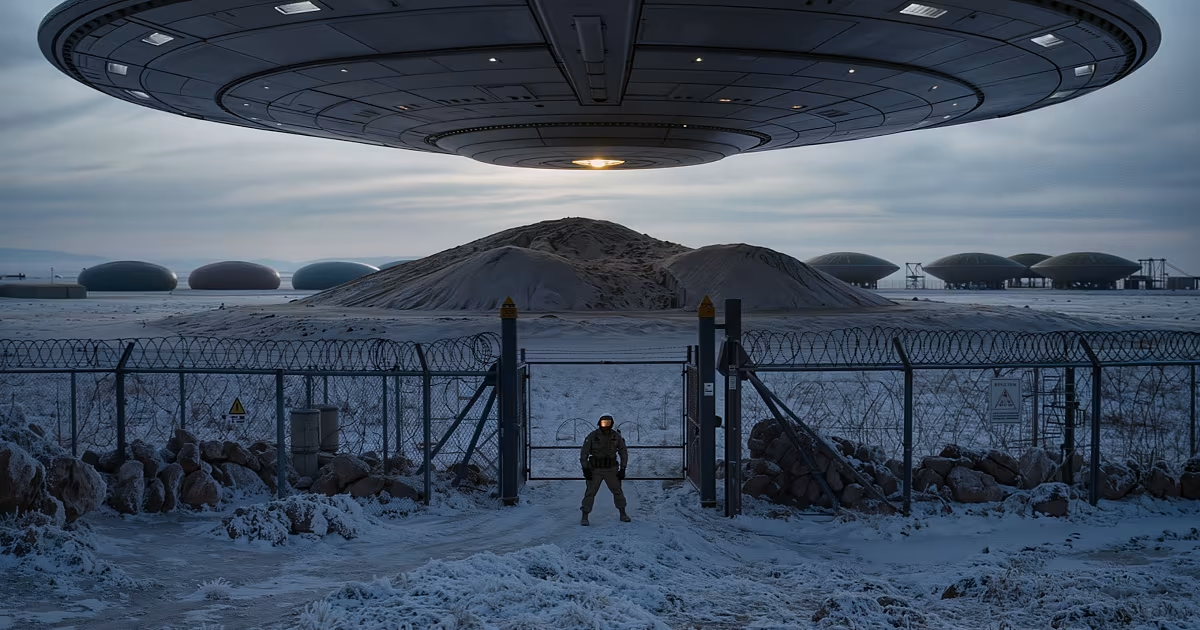
Montana missile prairie. Fence line on a winter morning.
Illustration, not a period photograph.
Opening
On the morning of 16 March 1967 Echo Flight at Malmstrom Air Force Base, Montana, dropped ten Minuteman missiles off alert in a span that the crews did not treat as ordinary maintenance. Launch-control officers wrote the no-go. The wing looked at power, at computers, at the weather. Later testimony, years after, put an object over the field and over the flight. That object is not in the first maintenance paper the way the ten birds are.
Oscar Flight, another Malmstrom squadron, is the night Robert Salas later told: lights over the gate, missiles down. Echo is the documented March morning. The two flights have been welded in books. They are not the same hour on the same board.
The spine of the file is ten missiles that would not fly. Malmstrom is a no-go list. It is not a photograph of a craft sitting on a silo lid.
Timeline
16 March 1967, morning. Echo Flight, 10th Strategic Missile Squadron, Malmstrom. Ten Minuteman I birds drop to no-go or fault in a short window. Crews in the capsule and on the wing notice the cluster. Strategic Air Command does not like clusters.
Same-day and following-day maintenance and engineering looks for a common cause: power ripple, computer, grounding, weather. Paper from the wing exists. A UFO is not the first line on that paper. Lights over the base and over Oscar sit in later interviews, especially from the 1990s onward, when Salas and others put an object in the story.
FOIA drops and memoir nights blur Echo and Oscar. Keep 16 March Echo as the logged dropout. Keep Oscar as a separate night unless a single official page ties them.
The missiles were brought back. No silo opened on a guest. The later hearings and the book circuit are later life.
Echo Flight was ten holes in the ground that were supposed to answer. When they dropped together the capsule wrote it as a squadron event, not a single sick bird. Power and computer shops walked the same morning because that is what you do when a flight goes dark in Montana in 1967.
Oscar Flight sits in later interviews as lights over a gate and another dropout. Keep the nights separate until a single 1967 page ties them. Salas is a later voice with a duty he can name. He is not Echo's maintenance blotter.
Key figures
The Echo Flight capsule crews are the first official eyes. They wrote birds down. That write-up is the exhibit.
Wing maintenance and engineering own the hunt for a common fault. They are why this is a missile paper before it is a saucer paper.
Robert Salas and other later voices own Oscar and the object-over-the-gate telling. Their nights matter. They are not Echo's morning log.
SAC and the later FOIA readers own the argument about how much of the object talk was on the 1967 page.
Physical and documentary trail
On the paper, 16 March 1967 gives you four hard objects and no craft on a lid.
One: the Echo Flight dropout of ten Minuteman missiles off alert in a short window.
Two: same-day wing and maintenance paper hunting a common cause.
Three: the later Oscar Flight testimony of lights and a separate dropout, published decades on.
Four: FOIA and memoir files that weld the two nights. Malmstrom Echo Flight maintenance and crew records, 16 March 1967, are the originating tray.
There is no 1967 photograph of an object over Echo. There is no silo instrument that names a visitor. There is no single page from that morning that reads like Salas's later gate.
The no-go list is the object that does not need a memoir. Ten birds off alert on one flight is already a Strategic Air Command problem. The object talk has to earn its way onto that same morning's paper, not onto a stage thirty years later.
Ten missiles dropped off alert.
Competing explanations
An external object that took the flight down. This is the later telling. It has memoirs. It has thin 1967 glass.
A power or computer fault that hit a squadron. This is the maintenance door. It has to explain a ten-bird cluster that made SAC look twice.
Two nights glued into one legend. Possible. Echo's list still stands without Oscar.
Hybrid caution. Ten missiles went no-go on one morning. Lights enter the file later. Both sentences can be true without being the same sentence.
Later life of the case
Salas, hearings, documentary welds of Echo and Oscar. I keep those on the later-life shelf. The 16 March no-go list stays first.
Finding
Echo Flight at Malmstrom dropped ten Minuteman missiles off alert on the morning of 16 March 1967, and the wing wrote it as a problem that was not ordinary. Believe the capsule. Missile crews do not invent a ten-bird no-go for a magazine.
What still will not resolve: a 1967 photograph or radar file that puts an object over Echo in that window, or a maintenance close that names the common fault without remainder. Either one would finish the morning. The proving object is still that object on the flight, held by a scope from 16 March, not by a memoir from thirty years on.