MINOT AFB
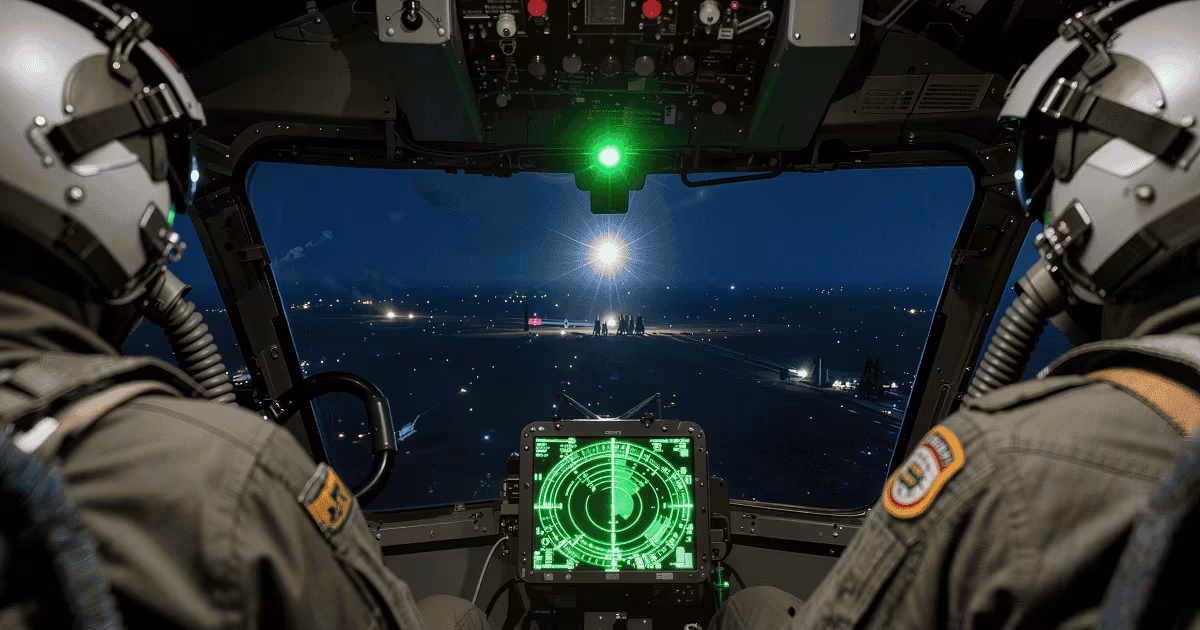
North Dakota night. B-52 and lights over a silo mound.
Illustration, not a period photograph.
Opening
On the night of 24 October 1968 a B-52 on a training run toward Minot Air Force Base, North Dakota, painted a target that the missile field was already talking about. Ground teams at the Oscar-flight area had been watching a light that did not behave like the traffic they knew. The bomber's radar locked something at low altitude. Crew in the cockpit saw a glow. When the aircraft descended toward the field the object appeared to stay with them and then to drop or sit near the ground. Maintenance and security paper from that night exists. A UFO is not the first word on every page. The shared target is.
Minot was a nuclear wing. Lights over silos make people write things down even when they would rather not. The B-52 tape and the ground reports were collected. Blue Book was nearly finished as a project. The night still entered the file.
The spine of the file is a bomber and a missile field looking at the same guest. Minot is a lock from the air and a light from the ground. It is not a craft on an Oscar lid.
Timeline
24 October 1968, evening into night. Security and maintenance on the Minot missile complex report a luminous object near sites. Radio traffic goes up the chain because that is what a nuclear field does with an unknown light.
A B-52, call signs vary in later retellings, inbound. Radar in the aircraft paints a return. Crew comments are logged. The object and the bomber share a piece of sky long enough for the later case to be called radar-visual from two domains, air and ground.
Landing. Interviews. Blue Book and wing paper. No wreck. No silo opened on a visitor. Some pages read like a plasma or a star and a tired crew. Some pages read like a target that had a size.
FOIA later thickens the night. That thickening is later life. The inbound run is first.
Minot was a nuclear missile wing. Lights over silos get written down even when a shop would rather have weather. Ground teams at Oscar-area sites had a light first. The inbound B-52 painted something at low altitude and the cockpit saw a glow. For a stretch the two domains were looking at the same guest.
Blue Book was nearly done as a project. The night still generated wing paper. FOIA later thickened the radio. Keep the inbound run as 24 October, not as a documentary montage.
Key figures
The B-52 crew own the airborne lock and the glow in the windscreen.
Oscar-area security and maintenance own the ground light that started the radios.
Wing command owns the decision to write it at all on a nuclear field.
Blue Book owns a late-project stamp that did not produce a type.
Physical and documentary trail
On the paper, 24 October 1968 gives you four hard objects and no airframe.
One: ground reports of a light over the Minot missile field.
Two: B-52 radar paint and crew visual on inbound.
Three: radio traffic tying the two domains in the same hours.
Four: wing and Blue Book paper. Minot AFB and B-52 aircrew reports, 24 October 1968, are the originating tray.
There is no public gun-camera still that closes a type. There is no landing ring on a silo the wing photographed. There is no named aircraft that accounts for both paints.
Air and ground on one night is the expensive pattern. A star-and-plasma close has to eat a B-52 lock and a silo radio together, not one at a time.
We have a target on radar and a light the field can see.
Competing explanations
An unknown object over a missile wing, seen from a bomber and from the ground. This is the expensive reading. It has two domains. It has no wreck.
A star, a plasma, a ground vehicle light, plus radar weather. The mundane door. Has to carry a B-52 lock.
Ordinary traffic misidentified on a nervous field. Possible. Nuclear wings are allowed to be nervous.
Hybrid caution. Ground and air looked at something in the same hour. Morning had no guest on a lid.
Later life of the case
FOIA packs and nuclear-UFO lists. I keep those on the later-life shelf. The inbound lock stays first.
Finding
A Minot missile field and an inbound B-52 shared a target on the night of 24 October 1968, and both wrote it down because that is what a nuclear wing does with an unknown light. Believe the crew and the ground. A bomber does not invent a lock for a silo team.
What still will not resolve: a frame from that B-52, or a site photograph of the light on the ground. Either one would pin the shared guest. The proving object is still the thing both domains painted, held by a camera that was not running.