FOO FIGHTERS
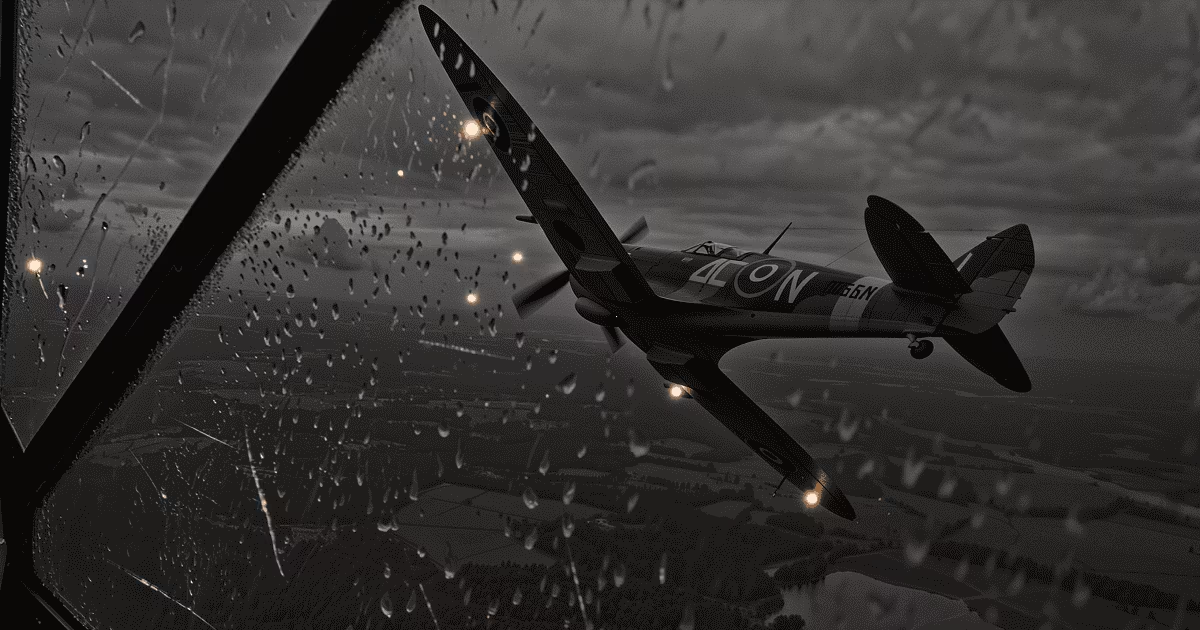
WWII night fighter. Small lights off the wing.
Illustration, not a period photograph.
Opening
From 1944 into the last winter of the European war, Allied night crews over occupied Europe and the Reich began reporting lights that paced their aircraft. Balls of fire, white or orange or red, sometimes in pairs, sometimes seeming to sit on a wingtip and then peel off. The men called them foo fighters, a nonsense name that stuck because no staff type fitted. Intelligence sections collected the reports. They looked for German devices and did not find a crate they could show the squadrons.
Pacific crews filed similar lights. The phenomenon is a wartime file, not a 1947 invention. Pilots who had already seen flak and night fighters still asked what was flying formation with them.
The spine of the file is a night-fighter window and a light that would not be a Messerschmitt. Foo fighters are a wartime pace. They are not a recovered German orb in a Wright Field crate.
Timeline
Late 1944. Reports thicken in the 415th Night Fighter Squadron and neighbouring units over the Western Front. Lights off the nose, off the wing, matching speed, no attack run that ends in a trace. Ground control does not own them as friendly.
Winter 1944-45. Intelligence questionnaires. Theories: St Elmo, flak bursts, a German secret, fatigue. The lights continue into the spring. They do not become a captured device when the Reich collapses.
Pacific theatre files sit in parallel, thinner, same complaint: a light that keeps station. After V-E and V-J the paper goes into archives and waits for 1947 to give it a new name it does not need.
Later UFO books swallow the foos as prologue. That swallow is later life. The squadron reports are first.
The 415th Night Fighter Squadron and neighbours over the Western Front filed enough of these lights that intelligence wrote questionnaires. Balls of fire off the nose or the wing, matching speed, no attack that ended in a traceable burst. Ground control would not own them as friendly. The name foo fighter stuck because no staff type fitted.
Pacific crews filed a thinner parallel. After the surrender no German crate appeared that the squadrons could be shown. The paper went into archives and waited for 1947 to give it a new name it did not need.
Key figures
Night-fighter and bomber crews are the file. Men who already knew enemy aircraft. Their formation lights are the exhibit.
Squadron intelligence officers own the questionnaires that treated this as a possible weapon.
Allied technical air intelligence owns the hunt for a German device that did not appear in a hangar.
German crews, in later thin talk, sometimes described lights too. That talk is supporting, not a captured manual.
Physical and documentary trail
On the paper, 1944-45 give you four hard objects and no crate.
One: multiple squadron reports of lights pacing Allied aircraft at night.
Two: intelligence questionnaires and summaries treating a possible enemy device.
Three: the absence of a captured German orb after the surrender.
Four: parallel Pacific reports. Allied night-fighter and intelligence reports on foo fighters, 1944-1945, are the originating tray.
There is no gun-camera still that closes a type. There is no wreck. There is no Peenemunde page that owns the lights as a named weapon.
Wartime crews who already knew flak and night fighters are expensive witnesses. A St Elmo close has to carry formation lights that peel off. A secret-weapon close has to survive the fact that 1945 produced no orb on a bench.
Balls of fire that kept formation with us and then peeled off.
Competing explanations
An unknown device, German or otherwise, pacing combat aircraft. This is what intelligence feared. It has many crews. It has no crate.
St Elmo's fire, flak, reflections, fatigue. The mundane door. Has to carry lights that match speed and peel.
A secret German weapon lost in the collapse. Possible. Not produced.
Hybrid caution. Night crews were paced. The surrender did not put a machine on a bench.
Later life of the case
UFO prologues and plasma papers. I keep those on the later-life shelf. The squadron notes stay first.
Finding
Allied night crews over Europe in 1944 and 1945 reported lights that kept formation with their aircraft and would not answer as friend or flak. Believe the squadrons. Men who already knew night fighters do not invent a wingtip for a questionnaire.
What still will not resolve: a gun-camera frame that closes a type, or a German technical page that owns the lights. Either one would finish the winter. The proving object is still one of those lights, held by a camera that was pointed at a city instead.