JESSE MARCEL
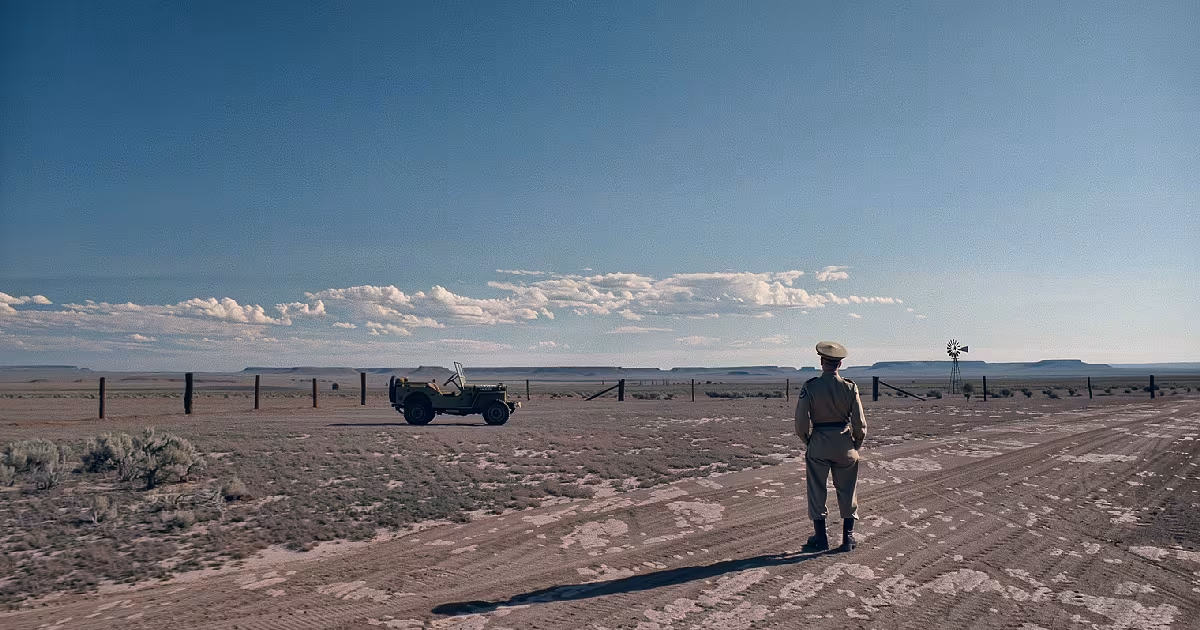
An Army officer in a 1940s uniform seen from behind in a desert.
Illustration, not a photograph.

Opening
Jesse Marcel was the intelligence officer of the 509th Bomb Group at Roswell Army Air Field in July 1947. On 7 July, the sheriff of Chaves County called the base about a rancher who had found wreckage on his land. Marcel was sent out, with Sheridan Cavitt, to see Mac Brazel and drive to the ranch near Corona. The next day the base put out a press release saying the Army had recovered a "flying disc", and it named Marcel as the officer responsible.
By that evening the Army had changed the story to a weather balloon. For thirty years Marcel said little in public. In 1978, then retired, he told the researcher Stanton Friedman that the debris he had handled was not from this world. That interview restarted the Roswell story, and Marcel has been its central witness ever since. He is also the figure whose own account has been checked the hardest.
Timeline
27 May 1907Jesse Antoine Marcel is born at Bayou Blue, Louisiana, the youngest of seven children.
1924He enlists in the Louisiana National Guard for three years, and later serves in the Texas National Guard.
April 1942He is commissioned a second lieutenant in the US Army Air Forces and trains as an intelligence officer.
1943 to 1945He serves with the 5th Bomber Command in the south-west Pacific, flies combat missions and earns two Air Medals and the Bronze Star. He is promoted to major in May 1945.
1946He is attached to the 509th for the Bikini Atoll atomic tests. Brigadier General Roger Ramey writes him a commendation on 26 July.
7 to 8 July 1947Marcel investigates the Brazel debris, then flies a sample to Fort Worth, where he is photographed with it.
February 1978He tells Stanton Friedman that he believes the debris was extraterrestrial.
1979 and 1980The National Enquirer interviews him and publishes the story. On the television series In Search of..., broadcast on 20 September 1980, he says that Ramey's weather balloon explanation was one he and Ramey both knew was false.
23 June 1986Marcel dies at Houma, Louisiana, aged 79.
Key figures
Jesse Marcel Sr. is the subject. After Roswell he went on to Strategic Air Command, then asked for a hardship discharge and returned home to Houma. He worked as a television repairman. His reserve service ended in 1958.
Jesse Marcel Jr., a doctor, said he was about ten when his father brought pieces of debris home and showed him. He gave that account for thirty-five years. It is his own, and has not been independently verified.
Roger Ramey commanded the Eighth Air Force at Fort Worth and presented the weather balloon story. Sheridan Cavitt was with Marcel at the debris field.
Stanton Friedman, the researcher, made Marcel's 1978 account public. In 1991, retired Brigadier General Thomas DuBose said that the weather balloon explanation had been a cover story.
Physical and documentary trail
The record: the 8 July 1947 press release naming Marcel, the Fort Worth press photographs of him with debris, his military service records, and his later interviews. His role is not in doubt: he was the officer who went to the ranch and handled the material. The photographs of him at Fort Worth are real. He later said the material in those pictures was not what he had picked up in the field.
The 1994 Air Force report concluded that the debris was probably from Project Mogul, a classified balloon programme monitoring Soviet nuclear tests.
The researcher Robert Todd and others have questioned parts of Marcel's later biography. He claimed a degree from George Washington University and classes at several other universities, and Todd found no record of attendance. He said he had written the first US report on the Soviet bomb Joe-1, and the archives on it do not mention him. He said he had shot down five enemy aircraft and held a pilot's licence since 1928, whereas his service records show he served as an intelligence officer and state that he had no flying experience. None of this touches the Roswell debris, but it affects how much weight his later account can bear.
Things you might not know
- He was commended after the atomic tests. General Ramey, the man who later gave the weather balloon story, had written Marcel a commendation in 1946.
- He was a Reserve lieutenant colonel by December 1947. He said he did not learn of the promotion at the time.
- He was an amateur radio enthusiast. He learned the hobby as a boy and graduated from Terrebonne High School.
- The silence lasted until 1978. For about thirty years he did not tell the story publicly.
- Two Air Medals were for combat hours. Records say they were for hours flown as an intelligence officer, not for shooting down aircraft.
Competing explanations
A credible witness to something unusual. Marcel was a trained intelligence officer who handled material and said the weather balloon story was false. Others, including DuBose, agreed it was a cover. The case for him is that his core account never changed.
A witness who misremembered Mogul material. The Air Force argued that what he handled was probably balloon train debris, which would have been unfamiliar to an officer outside the programme.
A witness whose account grew. The discrepancies in his later biography suggest that his recollections were embroidered after 1978. That does not show the original event was invented.
Later life of the case
Marcel died in 1986, before most of the Roswell investigations that his interview started. His son has continued to speak about the case. The 1947 press release, the Fort Worth photographs, and the 1994 report remain the three documents that bound the argument.
Finding
Marcel's role is documented: he went to the ranch, brought debris back, and was named in the Army's own announcement. What he said that material was is a different matter, and the evidence is divided. The strongest reading is that he handled real wreckage and that his later account is partly reliable and partly embellished.
What still will not resolve: what exactly he handled, since the debris has never been produced, and whether the pieces in the Fort Worth photographs were the same ones. For the case itself, see Roswell 1947 and Project Mogul.
You decide · JESSE MARCEL
What do you think happened?
One vote per case, anonymous. You'll see how other readers voted once you've voted.