CAPE GIRARDEAU 1941
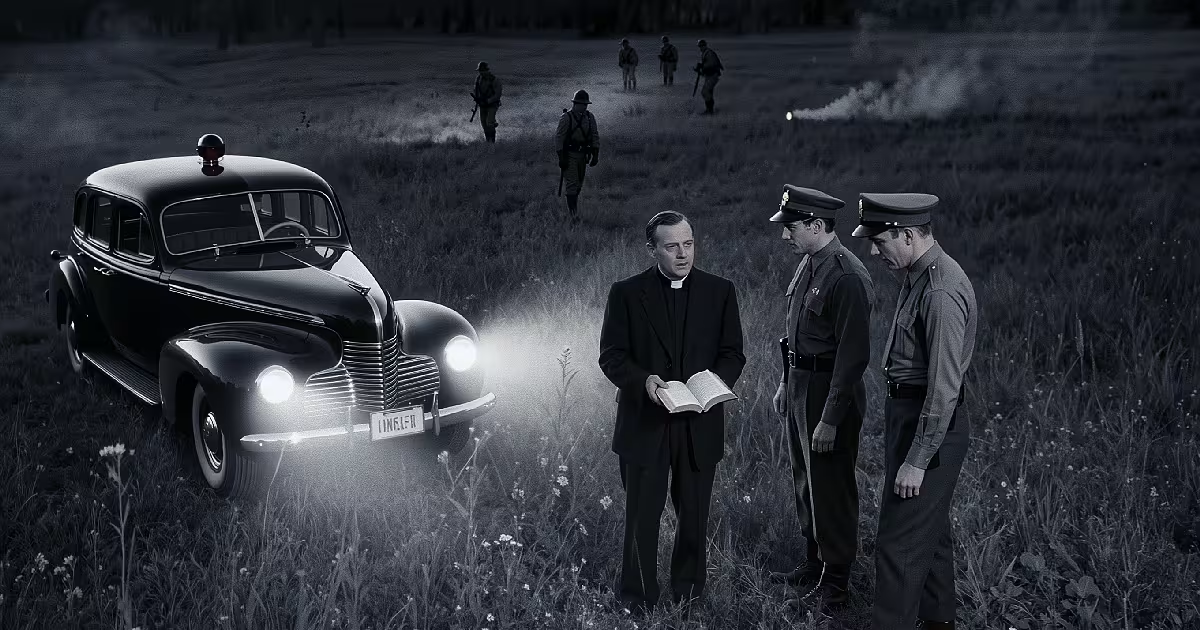
Missouri field at night, 1940s. Car headlights, empty grass.
Illustration, not a period photograph.
Opening
One spring night in 1941, according to his family, the Reverend William Huffman of Red Star Baptist Church in Cape Girardeau, Missouri, was called out by the local sheriff to pray over the victims of a crash in a field outside town. What he found wasn't a plane. He said it was a disc-shaped craft with no visible seams, and three small beings with large heads and big black eyes. Two were dead, and one may still have been alive when he arrived. Soldiers arrived and took over the scene, and he was told never to speak of it. The story came out fifty years later, from his granddaughter. If it's true, it's the earliest crash retrieval in American history, six years before Roswell.
Timeline
Spring 1941 (as told, usually April). Huffman is called to a crash in a field near Cape Girardeau. He sees the craft and the bodies and prays over them. Photographs are taken. Military personnel arrive and remove the wreckage and bodies.
Following days. Huffman tells his wife, Floy, and family members what he saw. He's said to have kept a photograph showing two men holding up one of the dead beings.
1941 onward. The family keep the story private.
1991. Charlette Mann, Huffman's granddaughter, tells researcher Leonard Stringfield the story, which she heard from her grandmother. She says she saw the photograph herself as a young woman. Stringfield publishes it.
1990s to 2000s. Researchers look into church records and local history. The photograph has never surfaced.
2020s. The case gains new attention in the wave of congressional interest in crash retrievals.
Key figures
The Reverend William Huffman was a Baptist minister, and his role at the church is on record.
Floy Huffman, his wife, passed the story on.
Charlette Mann, their granddaughter, made the story public and said she saw the photograph. She signed a sworn statement about what she was told.
Garland Fronabarger, a local photographer, is named in later accounts as the man who took the picture.
Physical and documentary trail
On the paper: Charlette Mann's sworn statement and interviews, Stringfield's report, and later research confirming Huffman's position at the church. Some accounts say local fire or police records note an incident around that time, but I haven't found those records published.
The photograph is the one piece of evidence that could settle the case, and its whereabouts are unknown.
Competing explanations
A real crash retrieval. A minister, called to give last rites, found non-human bodies, and the military took over. His family kept the secret, and the photograph existed. If so, the crash-retrieval programmes later claimed in Congress would have started before the Second World War.
A family story that grew. A real crash, perhaps of a plane or a balloon, became something stranger in the retelling across three generations. The account reached the public second-hand and fifty years after the event.
An invented story. There's no evidence of this, and the family had little to gain from it.
Later life of the case
Cape Girardeau is a fixture of crash-retrieval lore, usually presented as the first case in a chain that runs through Roswell and Kingman. Locals are used to being asked about it.
Finding
A sincere family account, passed from a minister to his wife to his granddaughter, and sworn to by the granddaughter fifty years later. The story is specific and the people in it are real. But no one who was at the field has spoken on the record, and the photograph has never been found. The case is open, and it rests on a family's memory.
What still will not resolve: the photograph, and what really lay in the field outside Cape Girardeau in the spring of 1941.