POVEGLIA
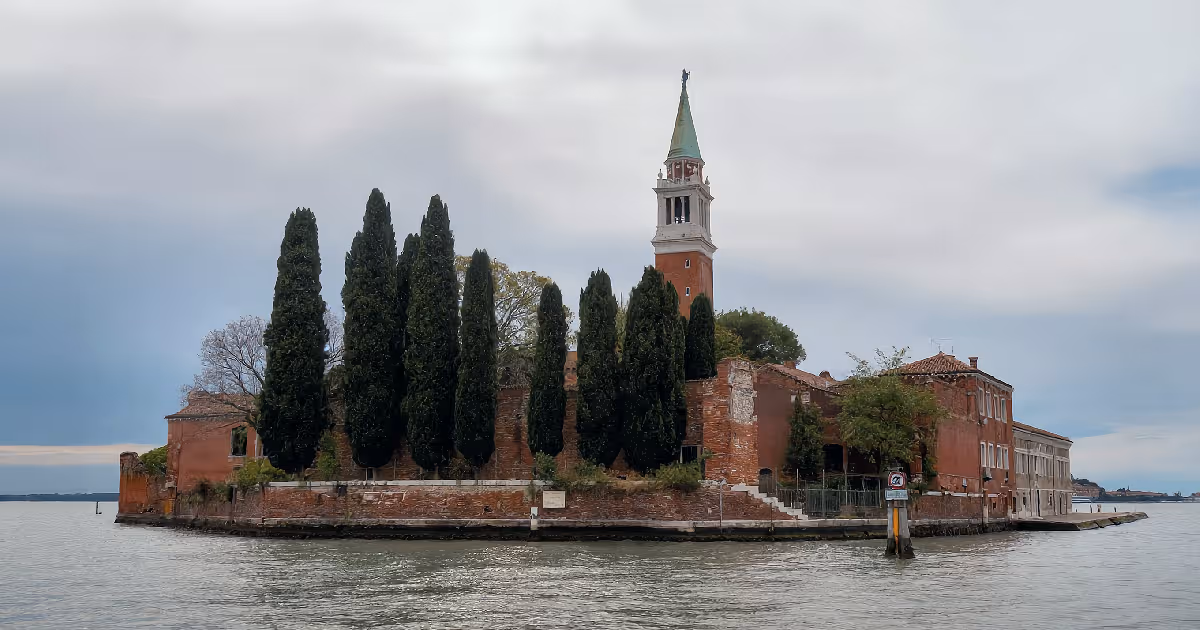
A low island with a bell tower rising from grey lagoon water.
Illustration, not a photograph.

Archive / Paranormal / BOT313-0448
PAR-1922ParanormalFOLKLORE
THE PLAGUE ISLAND AND ITS ASYLUM
Fig. 01 A low island with a bell tower rising from grey lagoon water. Illustration, not a photograph.
Opening
Poveglia is a small island in the southern Venetian Lagoon, between Venice and the Lido of Malamocco. Its documented history runs from a medieval settlement to a quarantine and health-inspection station from the late 18th century, and then, from 1922 to 1968, a hospital for the elderly and long-term sick. When the hospital closed the island passed to the Italian state and was left empty.
Its reputation is far bigger than its records. It is often called the most haunted island in the world, with plague pits holding 100,000 or more dead, a mad doctor who tortured patients and threw himself from the bell tower, and a bell that still rings. None of those stories names a doctor, a patient or a date in a record that can be checked, and the largest of them can be traced to television.
Timeline
421The island first appears in the historical record, traditionally as a refuge for people fleeing barbarian invasions on the mainland.
9th centuryPoveglia is a populated and fortified community living from fishing and salt. By 864 it is a fully settled centre.
1378 to 1381The War of Chioggia between Venice and Genoa brings fighting into the southern lagoon. In 1379 the islanders leave, and the community never recovers. Only a few dozen inhabitants remain.
1772 to 1793The Venetian health magistrate, the Magistrato alla Sanità, takes over the island. From 1793 it is used as a checkpoint and quarantine station for ships and people arriving by sea, a role it keeps in various forms for more than a century.
1806Under Napoleonic rule the church of San Vitale is demolished. Its 12th-century bell tower survives and is converted into a lighthouse.
1922The buildings are converted into a care home and hospital for the elderly and chronically ill. Some accounts call it a psychiatric hospital, and the sources are not consistent on this.
1968The hospital closes, and the island becomes empty state property.
2009The American television series Ghost Adventures films on Poveglia. Its episode popularises the claims of mass plague burials and a haunted asylum.
2014The state auctions a 99-year lease. The businessman Luigi Brugnaro, later mayor of Venice, bids €513,000 with plans for a €20 million restoration, but the lease does not go ahead. A citizens' group, Poveglia per tutti, raises €460,000 from more than 4,500 people to bid for public use.
1 August 2025After years of litigation, in which the regional administrative court of the Veneto twice ruled in its favour, Poveglia per tutti receives a six-year concession over the northern part of the island to create a public lagoon park.
Key figures
The legend's central character, a doctor who experimented on patients and then fell or jumped from the bell tower, has no name in any record I could find, and neither does the nurse said to have seen his death. The real figures in the story are institutional: the Venetian health magistrate, the state agencies that owned the island, Luigi Brugnaro, and the members of Poveglia per tutti. The Venetian historian Alberto Toso Fei has told the New York Times that Poveglia was one of several plague isolation sites in the lagoon and that about 20 people are recorded as dying there.
Physical and documentary trail
The island's early history, its quarantine role and the hospital's dates are documented in general histories of the lagoon. The ruins of the hospital and the bell tower are still visible from the water, and beside the island, on its own islet, stands one of the lagoon's octagonal defensive forts, an earthen rampart faced with brick. The figure of 100,000 or 160,000 plague dead, and the claim that half the island's soil is human remains, appear widely online, and none of the sources that repeat them cites a primary record. They first spread with the 2009 television episode. The two great lagoon plague islands were the Lazzaretto Vecchio and the Lazzaretto Nuovo, where excavations have found mass graves. Poveglia's quarantine years came long after the great plagues of 1576 and 1630.
The records that would settle the hospital's history, including its patient registers and staff lists, would sit in Venetian state and health archives. I have not found any published study of them.
Things you might not know
- The mass plague graves are on other islands. Excavations on the Lazzaretto Vecchio have found more than a thousand plague burials. Poveglia's quarantine use began in 1793, after the great Venetian epidemics.
- The bell tower was a lighthouse. It is the surviving tower of the demolished church of San Vitale.
- The hospital was mainly for the elderly. Most sources describe a care home and long-term hospital. The "asylum" label has grown with the legend.
- A future mayor tried to lease it. Luigi Brugnaro's 2014 bid was the highest, and it did not go through.
- Locals won it back. Poveglia per tutti, a crowdfunded citizens' group, now holds a concession to open part of the island as a park.
Competing explanations
A real quarantine island with a real hospital. Poveglia was a health station where the sick and suspect were kept apart, and later a hospital where many elderly patients would have died. That is a sad history in its own right. On this reading the ghost stories are what a sad, abandoned place becomes once people stop going there.
A legend built on television. The detailed stories, the death tolls and the mad doctor have no source before modern paranormal media, and the 2009 episode is the clearest starting point for the biggest claims. This reading explains the legend without needing an event underneath it.
Real hardship, retold. Mid-20th-century institutions for the elderly and mentally ill were often harsh places. Real memories of poor conditions could have grown into stories of abuse that became more lurid with each retelling. Without the hospital's records, this cannot be tested either way.
Later life of the case
The legend has made Poveglia one of the best-known islands in the lagoon, and the island has been closed to visitors for most of the time the legend has been growing. The 2025 concession may change that. If parts of the island open to the public, the ruins will be easier to see, and the gap between the story and the place will be easier to judge.
Finding
Poveglia's documented history is a lagoon settlement, a health and quarantine station, and a hospital for the elderly, and all three are real. The mass plague graves, the murderous doctor and the ringing bell have no source behind them, and the biggest numbers trace to a television programme, not an archive. The strongest reading is that a real place with a sad history attracted a legend that grew through retelling.
What still will not resolve: what the hospital's own registers say about its patients, staff and deaths between 1922 and 1968, which would show whether any of the rumours of mistreatment have a basis.
Evidence signature
2/9 Thin
- Witnesses
- one person, or a tradition
- Instruments
- nothing on record
- Paper
- press and later accounts
How well documented the case is, not whether it's true. A strong record can still have an ordinary answer, and a thin one can still be real.
You decide · POVEGLIA
What do you think happened?
One vote per case, anonymous. You'll see how other readers voted once you've voted.