MONTE CRISTO
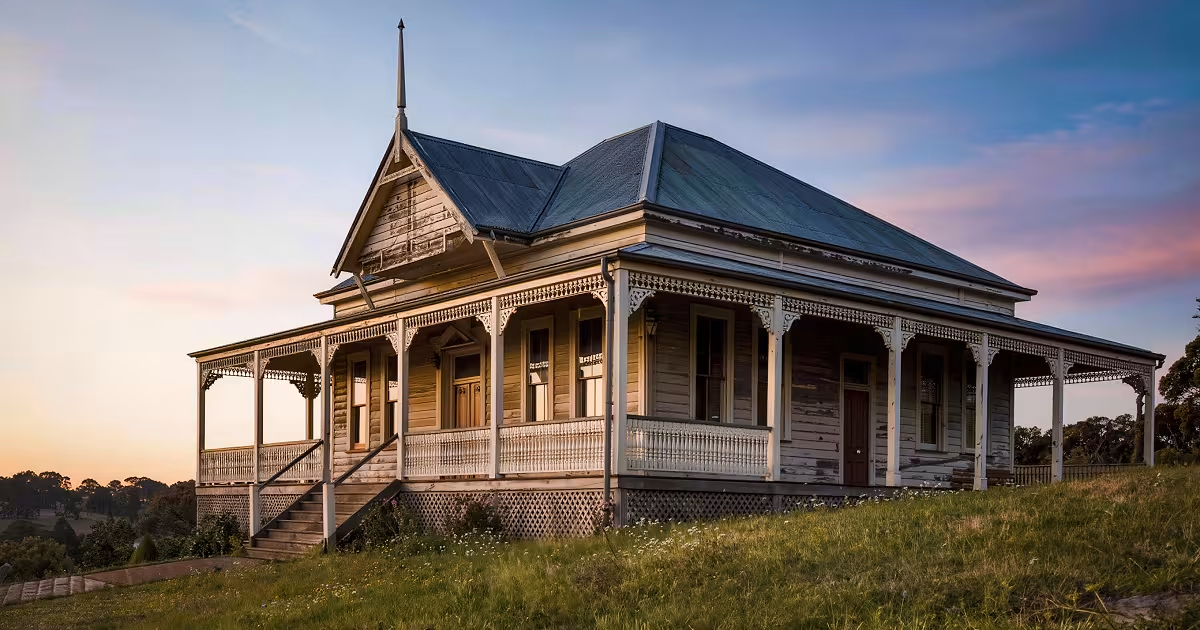
Victorian house on a hill. Empty verandah.
Illustration, not a period photograph.
Opening
Monte Cristo Homestead in Junee, New South Wales, is a late Victorian house that later owners opened as a tour and then, in some seasons, closed the gate again. Brochure talk fills the rooms with a maid, a child, and a caretaker. Dated inquests that match those brochure names are thinner than the script. The house is real. The gate is real. The names need paper.
Monte Cristo is an Australian homestead that sells nights. Keep the fabric first.
The spine of the file is a Junee house and a script. Monte Cristo is clapboard and brick. It is not a set of inquests this card can open for every name.
Timeline
Late nineteenth-century house. Later neglect and a public face.
Tour years. Gate closed and opened with owners.
Brochure names gather. Matching inquests stay thin.
Tour folklore is later life. The homestead is first.
Monte Cristo is a standing Australian house with later haunt trade. Dated household paper for every script name is thinner than the ticket. The timber is first.
A house that sells nights still has to be written as rooms and as claims on two pages, not as a thin caption.
Monte Cristo tour years packed rooms that already stood. Script names still need tags this card does not have.
Key figures
Historic Crawley and later owners own the fabric.
Tour writers own the maid and the child.
Visitors own the nights they paid for.
The gate owns seasons when the script stopped selling.
Physical and documentary trail
On the paper, the house gives you four hard objects and thin inquests for the script.
One: the standing homestead at Junee.
Two: ownership paper.
Three: tour narratives of named dead.
Four: the gap between those names and parish paper. Monte Cristo Homestead fabric and later tour accounts, are the two trays. Keep them apart.
There is no inquest this card will stamp for every brochure figure. There is no doubt the house stands. There is no second homestead required.
Standing house and tour narrative are the stay-behinds. Matching household paper would finish the script. A quiet that ends the trade would finish the other door.
Tour years and missing tags are the extra stay-behinds.
The gate has been open and the gate has been shut.
Competing explanations
A haunted homestead. This is the tour. It has rooms. It has thin inquests.
A house that collected a script because isolated houses do. Fits the fabric.
Named historical deaths under other records. Possible. Not the brochure as written.
Hybrid caution. Stones are real. Several names are a later tray.
Later life of the case
Tour seasons and closed gates. I keep those on the later-life shelf. The homestead stays first.
Finding
Monte Cristo is a real Junee house that later talk dressed in named dead and a ticket gate. Believe the fabric. A homestead does not invent brick for a later night walk.
What still will not resolve: inquests that match the brochure names, or household paper that walks those people through those rooms. Either one would pin the script. The proving object is still that parish paper, held in a roll, not in a tour sentence.