EPWORTH RECTORY
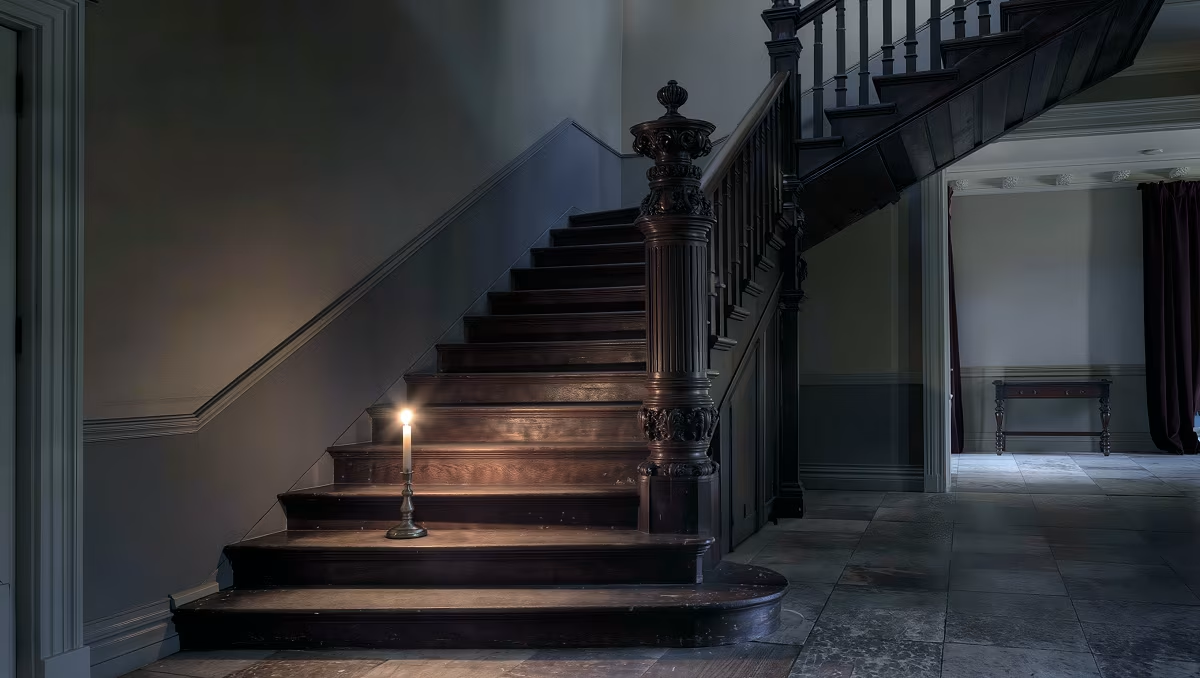
Lincolnshire rectory stairs. Candlelight, empty landing.
Illustration, not a period photograph.
Opening
From December 1716 into January 1717 the Epworth rectory in Lincolnshire, home of Samuel and Susanna Wesley and their children, filled with knocks, groans, and a sound they treated as a man's tread. The children named it Old Jeffrey. John Wesley was away. He collected letters after and printed the household's nights in the Arminian Magazine years later. Susanna wrote at the time. The house already knew political and parish quarrel. The noises still had to be lived through in the rooms.
Servants and children chased the sound. A dog was uneasy. Samuel Wesley challenged whatever walked to come to his study and, in the telling, it did not come as a debate partner. The nights thinned after some weeks. No later Wesley miracle file is required for the rectory to have sounded.
The spine of the file is a parsonage winter and letters written while it lasted. Epworth is Old Jeffrey. It is not a named servant in a dock.
Timeline
December 1716 first knocks. Christmas into January the tread and the children's name.
Susanna's letters sit close to the nights. Samuel's challenge sits in the same winter.
John gathers and later prints. That print is 1784 paper on 1716 rooms. Keep the letters first.
Every later Methodist ghost preface starts here. That preface is later life. The winter is first.
Key figures
Susanna Wesley owns the letters written in the house.
Samuel Wesley owns the rectory and the challenge.
The children own the name Old Jeffrey and the nights they would not sleep.
John Wesley owns the later magazine, not the first knock.
Physical and documentary trail
On the paper, winter 1716-17 gives you four hard objects and no named throat.
One: household accounts of knocks and a tread.
Two: Susanna's contemporary letters.
Three: Samuel's challenge in the study.
Four: John's later collected print. Wesley family letters on the Epworth disturbances, 1716-1717, are the originating tray.
There is no 1716 recording. There is no servant confession the family kept as a close. There is no object that walked into the study as a man.
We have heard it like a man in jack-boots walking.
Competing explanations
A haunting in a parsonage. This is the later Methodist reading. It has letters. It has no throat.
Children, rats, a neighbour's feud, a house settling in frost. The mundane door. Has to carry weeks of a named tread.
A story John improved for the magazine. Weak against Susanna writing at the time.
Hybrid caution. A rectory sounded for a winter. Morning had no man in the study.
Later life of the case
Arminian reprints and Methodist prefaces. I keep those on the later-life shelf. The December letters stay first.
Finding
The Wesley rectory at Epworth spent December 1716 and January 1717 with knocks and a tread the children called Old Jeffrey, and Susanna wrote it while it lasted. Believe the household. A rector's wife does not invent jack-boots for a magazine her son had not yet printed.
What still will not resolve: a named living hand on the knocks, or an object from those rooms that would sit in a case. Either one would pin Jeffrey. The proving object is still that tread, held as joke or as guest by more than a later collected page.